

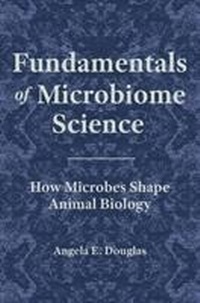
Fundamentals of Microbiome Science
How Microbes Shape Animal Biology
Published on 1. May 2018
Book
Hardback
248 pages
978-0-691-16034-4 (ISBN)
Description
An essential introduction to microbiome science, a new cutting-edge discipline that is transforming the life sciences
This book provides an accessible and authoritative guide to the fundamental principles of microbiome science, an exciting and fast-emerging new discipline that is reshaping many aspects of the life sciences. Resident microbes in healthy animals--including humans-can dictate many traits of the animal host. This animal microbiome is a second immune system conferring protection against pathogens; it can structure host metabolism in animals as diverse as reef corals and hibernating mammals; and it may influence animal behavior, from social recognition to emotional states. These microbial partners can also drive ecologically important traits, from thermal tolerance to diet, and have contributed to animal diversification over long evolutionary timescales.
Drawing on concepts and data across a broad range of disciplines and systems, Angela Douglas provides a conceptual framework for understanding these animal-microbe interactions while shedding critical light on the scientific challenges that lie ahead. Douglas explains why microbiome science demands creative and interdisciplinary thinking-the capacity to combine microbiology with animal physiology, ecological theory with immunology, and evolutionary perspectives with metabolic science.
An essential introduction to a cutting-edge field that is revolutionizing the life sciences, this book explains why microbiome science presents a more complete picture of the biology of humans and other animals, and how it can deliver novel therapies for many medical conditions and new strategies for pest control.
This book provides an accessible and authoritative guide to the fundamental principles of microbiome science, an exciting and fast-emerging new discipline that is reshaping many aspects of the life sciences. Resident microbes in healthy animals--including humans-can dictate many traits of the animal host. This animal microbiome is a second immune system conferring protection against pathogens; it can structure host metabolism in animals as diverse as reef corals and hibernating mammals; and it may influence animal behavior, from social recognition to emotional states. These microbial partners can also drive ecologically important traits, from thermal tolerance to diet, and have contributed to animal diversification over long evolutionary timescales.
Drawing on concepts and data across a broad range of disciplines and systems, Angela Douglas provides a conceptual framework for understanding these animal-microbe interactions while shedding critical light on the scientific challenges that lie ahead. Douglas explains why microbiome science demands creative and interdisciplinary thinking-the capacity to combine microbiology with animal physiology, ecological theory with immunology, and evolutionary perspectives with metabolic science.
An essential introduction to a cutting-edge field that is revolutionizing the life sciences, this book explains why microbiome science presents a more complete picture of the biology of humans and other animals, and how it can deliver novel therapies for many medical conditions and new strategies for pest control.
Reviews / Votes
"Douglas has an encyclopedic knowledge of microbial systems, their ecology, and their metabolic functions with which she explains complex physiological mechanisms and identifies important research gaps. . . . Overall, reading this book is a most satisfying intellectual feast."---Fernando Vega, Science "[Provides] an excellent and comprehensive account of microbiome science that will be valuable to both experts and students in the field."---Martin Kaltenpoth, The Quarterly Review of BiologyMore details
Language
English
Place of publication
New Jersey
United States
Target group
College/higher education
Professional and scholarly
Product notice
Trade binding
Illustrations
76 b/w illus., 2 tables
Dimensions
Height: 245 mm
Width: 164 mm
Thickness: 28 mm
Weight
510 gr
ISBN-13
978-0-691-16034-4 (9780691160344)
Copyright in bibliographic data and cover images is held by Nielsen Book Services Limited or by the publishers or by their respective licensors: all rights reserved.
Schweitzer Classification
Other editions
Additional editions
E-Book
07/2018
1st Edition
Princeton University Press
€32.99
Available for download
Person
Angela E. Douglas is the Daljit S. and Elaine Sarkaria Professor of Insect Physiology and Toxicology at Cornell University. Her books include The Symbiotic Habit (Princeton) and Symbiotic Interactions.