

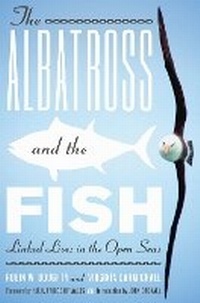
The Albatross and the Fish
Linked Lives in the Open Seas
Published on 1. November 2011
Book
Hardback
336 pages
978-0-292-72682-6 (ISBN)
Description
Breeding on remote ocean islands and spending much of its life foraging for food across vast stretches of seemingly empty seas, the albatross remains a legend for most people. And yet, humans are threatening the albatross family to such an extent that it is currently the most threatened bird group in the world. In this extensively researched, highly readable book, Robin W. Doughty and Virginia Carmichael tell the story of a potentially catastrophic extinction that has been interrupted by an unlikely alliance of governments, conservation groups, and fishermen.
Doughty and Carmichael authoritatively establish that the albatross's fate is linked to the fate of two of the highest-value table fish, Bluefin Tuna and Patagonian Toothfish, which are threatened by unregulated commercial harvesting. The authors tell us that commercial fishing techniques are annually killing tens of thousands of albatrosses. And the authors explain how the breeding biology of albatrosses makes them unable to replenish their numbers at the rate they are being depleted. Doughty and Carmichael set the albatross's fate in the larger context of threats facing the ocean commons, ranging from industrial overfishing to our habit of dumping chemicals, solid waste, and plastic trash into the open seas. They also highlight the efforts of dedicated individuals, environmental groups, fishery management bodies, and governments who are working for seabird and fish conservation and demonstrate that these efforts can lead to sustainable solutions for the iconic seabirds and the entire ocean ecosystem.
Doughty and Carmichael authoritatively establish that the albatross's fate is linked to the fate of two of the highest-value table fish, Bluefin Tuna and Patagonian Toothfish, which are threatened by unregulated commercial harvesting. The authors tell us that commercial fishing techniques are annually killing tens of thousands of albatrosses. And the authors explain how the breeding biology of albatrosses makes them unable to replenish their numbers at the rate they are being depleted. Doughty and Carmichael set the albatross's fate in the larger context of threats facing the ocean commons, ranging from industrial overfishing to our habit of dumping chemicals, solid waste, and plastic trash into the open seas. They also highlight the efforts of dedicated individuals, environmental groups, fishery management bodies, and governments who are working for seabird and fish conservation and demonstrate that these efforts can lead to sustainable solutions for the iconic seabirds and the entire ocean ecosystem.
More details
Language
English
Place of publication
Austin, TX
United States
Target group
College/higher education
Product notice
With dust jacket
Illustrations
13 color photos, 15 b&w photos, 4 b&w maps, 2 charts-graphs
Dimensions
Height: 229 mm
Width: 152 mm
Thickness: 28 mm
Weight
680 gr
ISBN-13
978-0-292-72682-6 (9780292726826)
Copyright in bibliographic data and cover images is held by Nielsen Book Services Limited or by the publishers or by their respective licensors: all rights reserved.
Schweitzer Classification
Persons
Robin W. Doughty is Professor Emeritus in the Department of Geography and the Environment at the University of Texas at Austin. He has authored nine books, whose subjects range from the fad for wild bird millinery that sparked the Audubon Society to the recovery of the whooping crane and the impact of settlers on wildlife populations in both North America and Australia.
Virginia Carmichael's previous book was Framing History: The Rosenberg Story and the Cold War. She taught postcolonial studies as an associate professor at the University of Montana and served as a senior managing auditor at the Texas State Auditor's Office, where she specialized in public and higher education.
Virginia Carmichael's previous book was Framing History: The Rosenberg Story and the Cold War. She taught postcolonial studies as an associate professor at the University of Montana and served as a senior managing auditor at the Texas State Auditor's Office, where she specialized in public and higher education.
Content
Foreword by H.R.H. Prince of Wales
Acknowledgments
Introduction by John Croxall
Milestones: Albatross Encounters and Concerns
Chapter One. Storytelling
Part I: The Albatross
Chapter Two. Plunder
Chapter Three. Science
Chapter Four. Connections
Chapter Five. Home
Chapter Six. Family
Part II: Crossings
Chapter Seven. Migration
Chapter Eight. Globalization
Chapter Nine. Commons
Part III: Birds and Fish
Chapter Ten. Fish
Chapter Eleven. Management
Chapter Twelve. Crisis
Chapter Thirteen. Bycatch
Part IV: Sea Change
Chapter Fourteen. Links
Chapter Fifteen. Engineering
Chapter Sixteen. Turning Point
Part V: Agents of Change
Chapter Seventeen. Fishers
Chapter Eighteen. Governments
Chapter Nineteen. Nongovernmentals
Chapter Twenty. Trade
Chapter Twenty-one. Celebrities
Chapter Twenty-two. Capstone
Conclusion. Hope
Appendix: CCAMLR and Seabird Mortality
Notes
Bibliography
Index
Acknowledgments
Introduction by John Croxall
Milestones: Albatross Encounters and Concerns
Chapter One. Storytelling
Part I: The Albatross
Chapter Two. Plunder
Chapter Three. Science
Chapter Four. Connections
Chapter Five. Home
Chapter Six. Family
Part II: Crossings
Chapter Seven. Migration
Chapter Eight. Globalization
Chapter Nine. Commons
Part III: Birds and Fish
Chapter Ten. Fish
Chapter Eleven. Management
Chapter Twelve. Crisis
Chapter Thirteen. Bycatch
Part IV: Sea Change
Chapter Fourteen. Links
Chapter Fifteen. Engineering
Chapter Sixteen. Turning Point
Part V: Agents of Change
Chapter Seventeen. Fishers
Chapter Eighteen. Governments
Chapter Nineteen. Nongovernmentals
Chapter Twenty. Trade
Chapter Twenty-one. Celebrities
Chapter Twenty-two. Capstone
Conclusion. Hope
Appendix: CCAMLR and Seabird Mortality
Notes
Bibliography
Index