

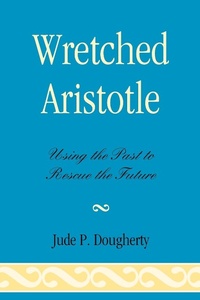
Wretched Aristotle
Using the Past to Rescue the Future
Published on 11. October 2010
Book
Paperback/Softback
246 pages
978-0-7391-4007-9 (ISBN)
Description
About eighty-five years ago, philosophers and literary intellectuals as diverse as Edmund Husserl, George Santayana, and Paul Valery, aware of the declining influence of Christianity, spoke of "the crisis of Western civilization." In Wretched Aristotle: Using the Past to Rescue the Future, Jude P. Dougherty offers an intriguing reexamination of this crisis in contemporary times. Situating his argument in the context of ongoing debate concerning the nature of the public philosophy that underpins ideas of freedom, Dougherty identifies the essential features of Western culture through a series of interrelated essays. Each essay reinforces the idea that modernity cannot be understood apart from its break with classical antiquity. Wretched Aristotle offers a refreshing historical approach to this issue that will make it appealing to those interested in the mutual influence of science and culture and the role of religion in culture.
Reviews / Votes
The work is grand in scope and vision while rich in details and particulars. It is popular without being simple, wide-ranging without being superficial, topical without being ephemeral. -- Peter Simpson, City University of New York This copious book defends the timeless wisdom of the perennial philosophy and the classical-Christian heritage. It exposes the fallacies and shortcomings of doctrines and ideologies that renounce this ancient heritage of Western civilization in the name of science, multiculturalism, globalization, and secularism-all of which fall short in guiding modernity in the pursuit of happiness . . . To read this book from essay to essay is to learn the history of philosophy from its classical beginnings to its modern developments and to gain a greater appreciation for the moral wisdom and rational mind that distinguish Western civilization. This book is a compelling apologia that demonstrates the practical and moral consequences of upholding the venerable perennial philosophy as a great source of human and divine wisdom-a luminous source of truth based on reason and faith that respects the nature of things. This fullness of truth that embodies the noble, the heroic, and the divine makes modern ideologies and materialistic philosophies look like versions of Procrustes' bed-attempts to twist reality by stretching, cutting off, and torturing the legs to fit the ill-contrived bed rather than adapting ideas that conform to reality and making a bed that fits * The Wanderer Newsletter * A salutary reminder of Western culture's enormous debt to its religious and Hellenic roots, Wretched Aristotle also presents a resounding challenge to dismissals and neglect of their persisting importance to contemporary life and thought. On display in these essays are all the erudition and realism, lucidity and common sense characteristic of the best traditions of an American Catholic philosopher. Dougherty does not flinch from engaging many troubling theoretical, social, moral, and political issues of our day. His work has the great virtue of framing those issues against the rich backdrop of philosophy's complex history and within a sustained, passionate reflection on the divinely ordered place of human beings in nature. -- Daniel O. Dahlstrom, Boston University This copious book defends the timeless wisdom of the perennial philosophy and the classical-Christian heritage. It exposes the fallacies and shortcomings of doctrines and ideologies that renounce this ancient heritage of Western civilization in the name of science, multiculturalism, globalization, and secularism-all of which fall short in guiding modernity in the pursuit of happiness . . . To read this book from essay to essay is to learn the history of philosophy from its classical beginnings to its modern developments and to gain a greater appreciation for the moral wisdom and rational mind that distinguish Western civilization. This book is a compelling apologia that demonstrates the practical and moral consequences of upholding the venerable perennial philosophy as a great source of human and divine wisdom-a luminous source of truth based on reason and faith that respects the nature of things. This fullness of truth that embodies the noble, the heroic, and the divine makes modern ideologies and materialistic philosophies look like versions of Procrustes' bed-attempts to twist reality by stretching, cutting off, and torturing the legs to fit the ill-contrived bed rather than adapting ideas that conform to reality and making a bed that fits the actual bodies of human beings. * The Wanderer Newsletter *More details
Language
English
Place of publication
United States
Publishing group
Bloomsbury Publishing Plc
Target group
Professional and scholarly
Product notice
Paperback (trade)
Dimensions
Height: 229 mm
Width: 152 mm
Thickness: 15 mm
Weight
408 gr
ISBN-13
978-0-7391-4007-9 (9780739140079)
Copyright in bibliographic data and cover images is held by Nielsen Book Services Limited or by the publishers or by their respective licensors: all rights reserved.
Schweitzer Classification
Other editions
Additional editions
E-Book
09/2009
1st Edition
Lexington Books
€48.99
Available for download
E-Book
09/2009
1st Edition
Lexington Books
€48.99
Available for download
Person
Jude P. Dougherty is dean emeritus and professor emeritus of philosophy at The Catholic University of America and editor ofThe Review of Metaphysics.
Content
Part 1 I. The Relevance of Antiquity
Chapter 2 Chapter 1.Wretched Aristotle
Chapter 3 Chapter 2.Tom Wolfe's Epictetus
Chapter 4 Chapter 3.Aristotle in North America
Chapter 5 Chapter 4. Ora et Labora: Benedict's Legacy
Chapter 6 Chapter 5.Ancients and Moderns on the Subject of Property
Chapter 7 Chapter 6.The Ontology of the Artifact
Part 8 II. The Role of Religion in Society
Chapter 9 Chapter 7.The Failure of Positivism and the Enduring Legacy of Comte
Chapter 10 Chapter 8.Judicial Decision within the Rule of Law
Chapter 11 Chapter 9.Modern Interpretations of Religion: The Legacy of Hume and Kant
Chapter 12 Chapter 10.Santayana on the Role of Religion in Society
Chapter 13 Chapter 11.Indestructible Islam
Chapter 14 Chapter 12.Science and the Shaping of Modernity: The Reciprocal Influence of Science and Culture
Chapter 15 Chapter 13.The Use and Abuse of Analogy and Metaphor in Scientific Explanation
Part 16 III. Contemporary Moral Issues
Chapter 17 Chapter 14.Morality with and without God
Chapter 18 Chapter 15.Responsibility: Recognition and Limits
Chapter 19 Chapter 16.National Identity
Chapter 20 Chapter 17.The Fragility of Democracy
Chapter 21 Chapter 18.The Socialist Mind
Chapter 22 Chapter 19.The Natural Basis of the Theological Virtue of Hope
Chapter 2 Chapter 1.Wretched Aristotle
Chapter 3 Chapter 2.Tom Wolfe's Epictetus
Chapter 4 Chapter 3.Aristotle in North America
Chapter 5 Chapter 4. Ora et Labora: Benedict's Legacy
Chapter 6 Chapter 5.Ancients and Moderns on the Subject of Property
Chapter 7 Chapter 6.The Ontology of the Artifact
Part 8 II. The Role of Religion in Society
Chapter 9 Chapter 7.The Failure of Positivism and the Enduring Legacy of Comte
Chapter 10 Chapter 8.Judicial Decision within the Rule of Law
Chapter 11 Chapter 9.Modern Interpretations of Religion: The Legacy of Hume and Kant
Chapter 12 Chapter 10.Santayana on the Role of Religion in Society
Chapter 13 Chapter 11.Indestructible Islam
Chapter 14 Chapter 12.Science and the Shaping of Modernity: The Reciprocal Influence of Science and Culture
Chapter 15 Chapter 13.The Use and Abuse of Analogy and Metaphor in Scientific Explanation
Part 16 III. Contemporary Moral Issues
Chapter 17 Chapter 14.Morality with and without God
Chapter 18 Chapter 15.Responsibility: Recognition and Limits
Chapter 19 Chapter 16.National Identity
Chapter 20 Chapter 17.The Fragility of Democracy
Chapter 21 Chapter 18.The Socialist Mind
Chapter 22 Chapter 19.The Natural Basis of the Theological Virtue of Hope