

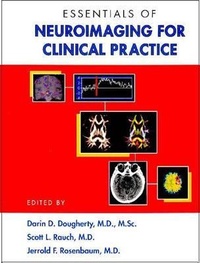
Essentials of Neuroimaging for Clinical Practice
Published on 8. May 2004
Book
Hardback
162 pages
978-1-58562-079-1 (ISBN)
Description
The use of neuroimaging studies in psychiatry is
exploding-and offers tremendous potential for practicing clinicians. Yet if
you're like many psychiatrists, you're sometimes uncertain about which
studies to use in specific situations. Until now, you've had to sort through
the only information available-technical reviews in the literature-for
guidance. But no more.
Essentials of Neuroimaging for Clinical
Practice is an all-in-one resource that explains how to use these
powerful techniques to improve outcomes. It demystifies neuroimaging with
clear, concise, and practical advice on using today's most advanced
applications in the diagnostic workup of patients.
This practical
clinical guide will help you achieve a solid understanding of the full range
of neuroimaging modalities:
* Structural techniques such as computed tomography (CT) and magnetic
resonance imaging (MRI)
* Functional techniques such as positron
emission tomography (PET), single photon emission computed tomography
(SPECT), functional magnetic resonance imaging (fMRI), and magnetic
resonance spectroscopy (MRS)
* Other techniques such as
electroencephalography (EEG)-including quantitative EEG and event-related
potentials-and magnetoencephalography.
For each modality, you'll find:
* A basic review of the technique-trace the development of each
modality, and become familiar with its underlying technology.
*
Guidance on when to use it-learn which techniques are best to use
in specific clinical situations.
* Tips for ordering
studies-discover how to write up orders to obtain the most accurate and
detailed information from each study, including when to use contrast and how
to determine the best acquisition parameters.
* A look at its future
potential in practice and research-explore the current capabilities
of each modality and the most promising strategies for improving diagnostic
results.
Filled with examples of real-life imaging studies,
Essentials of Neuroimaging for Clinical Practice is a must-have
tool for all practicing psychiatrists and psychologists. In addition, it
will serve as an excellent clinical guide for residents-and an outstanding
text for courses in clinical neuroimaging for psychiatrists.
exploding-and offers tremendous potential for practicing clinicians. Yet if
you're like many psychiatrists, you're sometimes uncertain about which
studies to use in specific situations. Until now, you've had to sort through
the only information available-technical reviews in the literature-for
guidance. But no more.
Essentials of Neuroimaging for Clinical
Practice is an all-in-one resource that explains how to use these
powerful techniques to improve outcomes. It demystifies neuroimaging with
clear, concise, and practical advice on using today's most advanced
applications in the diagnostic workup of patients.
This practical
clinical guide will help you achieve a solid understanding of the full range
of neuroimaging modalities:
* Structural techniques such as computed tomography (CT) and magnetic
resonance imaging (MRI)
* Functional techniques such as positron
emission tomography (PET), single photon emission computed tomography
(SPECT), functional magnetic resonance imaging (fMRI), and magnetic
resonance spectroscopy (MRS)
* Other techniques such as
electroencephalography (EEG)-including quantitative EEG and event-related
potentials-and magnetoencephalography.
For each modality, you'll find:
* A basic review of the technique-trace the development of each
modality, and become familiar with its underlying technology.
*
Guidance on when to use it-learn which techniques are best to use
in specific clinical situations.
* Tips for ordering
studies-discover how to write up orders to obtain the most accurate and
detailed information from each study, including when to use contrast and how
to determine the best acquisition parameters.
* A look at its future
potential in practice and research-explore the current capabilities
of each modality and the most promising strategies for improving diagnostic
results.
Filled with examples of real-life imaging studies,
Essentials of Neuroimaging for Clinical Practice is a must-have
tool for all practicing psychiatrists and psychologists. In addition, it
will serve as an excellent clinical guide for residents-and an outstanding
text for courses in clinical neuroimaging for psychiatrists.
More details
Language
English
Place of publication
VA
United States
Target group
College/higher education
Professional and scholarly
US School Grade: College Graduate Student and over
Product notice
Laminated cover
Illustrations
27 Tables, unspecified; 9 Line drawings, black and white; 28 Illustrations, color; 71 Halftones, black and white
Dimensions
Height: 279 mm
Width: 216 mm
Thickness: 9 mm
Weight
844 gr
ISBN-13
978-1-58562-079-1 (9781585620791)
Copyright in bibliographic data and cover images is held by Nielsen Book Services Limited or by the publishers or by their respective licensors: all rights reserved.
Schweitzer Classification
Other editions
Additional editions
Darin D. Dougherty | Scott L. Rauch | J. F. Rosenbaum
Essentials of Neuroimaging for Clinical Practice
E-Book
12/2004
1st Edition
American Psychiatric Publishing
€82.29
Available for download
Persons
Darin D. Dougherty, M.D., M.Sc., is Assistant
Director of Psychiatric Neuroimaging Research in the Departments of
Psychiatry and Radiology at Massachusetts General Hospital, and Assistant
Professor of Psychiatry at Harvard Medical School in Boston,
Massachusetts.
Scott L. Rauch, M.D., is Associate Chief of
Psychiatry for Neuroscience Research and Director of Psychiatric
Neuroimaging Research in the Departments of Psychiatry and Radiology at
Massachusetts General Hospital, and Associate Professor of Psychiatry at
Harvard Medical School in Boston, Massachusetts.
Jerrold F.
Rosenbaum, M.D., is Chief of Psychiatry at Massachusetts General
Hospital and Professor of Psychiatry at Harvard Medical School in Boston,
Massachusetts.
Director of Psychiatric Neuroimaging Research in the Departments of
Psychiatry and Radiology at Massachusetts General Hospital, and Assistant
Professor of Psychiatry at Harvard Medical School in Boston,
Massachusetts.
Scott L. Rauch, M.D., is Associate Chief of
Psychiatry for Neuroscience Research and Director of Psychiatric
Neuroimaging Research in the Departments of Psychiatry and Radiology at
Massachusetts General Hospital, and Associate Professor of Psychiatry at
Harvard Medical School in Boston, Massachusetts.
Jerrold F.
Rosenbaum, M.D., is Chief of Psychiatry at Massachusetts General
Hospital and Professor of Psychiatry at Harvard Medical School in Boston,
Massachusetts.
Content
Contributors
Introduction
Chapter 1. Computed
tomography
Chapter 2. Magnetic resonance imaging
Chapter 3. Positron
emission tomography and single photon emission computed
tomography
Chapter 4. Functional magnetic resonance imaging
Chapter
5. Magnetic resonance spectroscopy
Chapter 6. Electroencephalography,
event-related potentials, and magnetoencephalography
Chapter 7.
Neuroimaging in psychiatric practice: what might the future
hold?
Index
Introduction
Chapter 1. Computed
tomography
Chapter 2. Magnetic resonance imaging
Chapter 3. Positron
emission tomography and single photon emission computed
tomography
Chapter 4. Functional magnetic resonance imaging
Chapter
5. Magnetic resonance spectroscopy
Chapter 6. Electroencephalography,
event-related potentials, and magnetoencephalography
Chapter 7.
Neuroimaging in psychiatric practice: what might the future
hold?
Index