

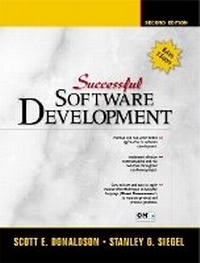
Successful Software Development
2nd Edition
Published on 8. January 2001
Book
Hardback
784 pages
978-0-13-086826-8 (ISBN)
Description
For courses in Software Engineering and Software Reliability.
Successful Software Development takes a systematic approach to consistently successful software development. It proceeds from the fact that there is no one way to develop software systems and introduces a model for a mature software development process that accommodates flexibility, the Systems Engineering Environment (SEE). This model comprises two fundamental, interlocked elements: the policies and procedures that define how software development is performed and the technologies available to get the job done.
Successful Software Development takes a systematic approach to consistently successful software development. It proceeds from the fact that there is no one way to develop software systems and introduces a model for a mature software development process that accommodates flexibility, the Systems Engineering Environment (SEE). This model comprises two fundamental, interlocked elements: the policies and procedures that define how software development is performed and the technologies available to get the job done.
More details
Edition
2nd edition
Language
English
Place of publication
Upper Saddle River
United States
Publishing group
Pearson Education (US)
Target group
College/higher education
Dimensions
Width: 260 mm
Thickness: 50 mm
Weight
2345 gr
ISBN-13
978-0-13-086826-8 (9780130868268)
Copyright in bibliographic data and cover images is held by Nielsen Book Services Limited or by the publishers or by their respective licensors: all rights reserved.
Schweitzer Classification
Other editions
Previous edition
Scott E. Donaldson | Stanley G. Siegel
Cultivating Successful Software Development
A Practitioner's View
Book
03/1997
Prentice Hall
€37.13
Article exhausted; check for reprint
Persons
SCOTT E. DONALDSON, Corporate Vice President with Science Applications International Corporation, has more than 25 years of software engineering experience. He has served as the Chief Technology Officer for a $250 million organization and as a Deputy Group Manager for a $65 million business. He was responsible for helping more than 300 software professionals achieve SEI Level 3 certification.
STANLEY G. SIEGEL, Vice President with Science Applications International Corporation, has been in the software industry since 1970. He co-authored the first textbook on software configuration management. He has specialized in software product assurance since 1976. He lectures internationally on software engineering subjects.
STANLEY G. SIEGEL, Vice President with Science Applications International Corporation, has been in the software industry since 1970. He co-authored the first textbook on software configuration management. He has specialized in software product assurance since 1976. He lectures internationally on software engineering subjects.
Content
1. Business Case.
Introduction. Business Case Key Ideas. What Makes Good Business Sense? Software Systems Development Concepts. Product "Goodness" and Process "Goodness." Requisite Software Systems Development Disciplines. Generic Four-Stage Software Systems Development Life Cycle. User, Buyer, and Seller Organizations Involved in Software Systems Development. Obstacles to Improving Software Systems Development Cultures. Alternative Approaches to Software Process Improvement. Preview of the Rest of Book.
2. Project Planning Process.
Introduction. Project Planning Key Ideas. Life Cycle Role in Project Planning. Ideal, Real, and Realistic Project Planning. Risk Assessment and Project Planning. Project Planning Process. Project Plan Contents. Project Planning Summary.
3. Software Systems Development Process.
Introduction. Software Systems Development Process Key Ideas. Software Systems Development Process Overview. Customer. Seller Process Engineering Group. Customer/Seller Development Team and Change Control Board (CCB). Seller Senior Management. Software Systems Development Process Summary.
4. Change Control Process.
Introduction. Change Control Process Key Ideas. Planned and Unplanned Change. The Processing of Changes. Examination of the Change Control Board. Paperwork Support of the Change Control Board. Change Control Process Summary.
5. Product and Process Reviews.
Introduction. Product and Process Reviews Key Ideas. A Taxonomy of Product and Process Reviews. Combining Reviews for Software Audits. Product and Process Reviews Summary.
6. Measurement.
Introduction. Measurement Key Ideas. Product Integrity. Process Integrity. Capability Maturity Model (CMM) for Software. Other Process-Related Measurements. Measurement Summary.
7. Cultural Change.
Introduction. Cultural Change Key Ideas. Process Engineering Group (PEG). Seller Project Participants and Project Managers. Buyer/User Project Management. Buyer/User Senior Management. Seller Senior Management. Cultural Change Summary.
8. Process Improvement Planning.
Introduction. SEE Implementation Planning Key Ideas. Key SEE Implementation Planning Issues. Making Successful Software Development Happen.
Appendix A. How to Measure Strategic Information Management (SIM).
Strategic Information Management. Quantifying Strategic Information Management. Diagnostic Areas and Diagnostic Criteria. OM Measurement Map and Measurement Trends. Summary.
Appendix B. List of Figures.
Appendix C. List of Tables.
Bibliography.
Index.
Introduction. Business Case Key Ideas. What Makes Good Business Sense? Software Systems Development Concepts. Product "Goodness" and Process "Goodness." Requisite Software Systems Development Disciplines. Generic Four-Stage Software Systems Development Life Cycle. User, Buyer, and Seller Organizations Involved in Software Systems Development. Obstacles to Improving Software Systems Development Cultures. Alternative Approaches to Software Process Improvement. Preview of the Rest of Book.
2. Project Planning Process.
Introduction. Project Planning Key Ideas. Life Cycle Role in Project Planning. Ideal, Real, and Realistic Project Planning. Risk Assessment and Project Planning. Project Planning Process. Project Plan Contents. Project Planning Summary.
3. Software Systems Development Process.
Introduction. Software Systems Development Process Key Ideas. Software Systems Development Process Overview. Customer. Seller Process Engineering Group. Customer/Seller Development Team and Change Control Board (CCB). Seller Senior Management. Software Systems Development Process Summary.
4. Change Control Process.
Introduction. Change Control Process Key Ideas. Planned and Unplanned Change. The Processing of Changes. Examination of the Change Control Board. Paperwork Support of the Change Control Board. Change Control Process Summary.
5. Product and Process Reviews.
Introduction. Product and Process Reviews Key Ideas. A Taxonomy of Product and Process Reviews. Combining Reviews for Software Audits. Product and Process Reviews Summary.
6. Measurement.
Introduction. Measurement Key Ideas. Product Integrity. Process Integrity. Capability Maturity Model (CMM) for Software. Other Process-Related Measurements. Measurement Summary.
7. Cultural Change.
Introduction. Cultural Change Key Ideas. Process Engineering Group (PEG). Seller Project Participants and Project Managers. Buyer/User Project Management. Buyer/User Senior Management. Seller Senior Management. Cultural Change Summary.
8. Process Improvement Planning.
Introduction. SEE Implementation Planning Key Ideas. Key SEE Implementation Planning Issues. Making Successful Software Development Happen.
Appendix A. How to Measure Strategic Information Management (SIM).
Strategic Information Management. Quantifying Strategic Information Management. Diagnostic Areas and Diagnostic Criteria. OM Measurement Map and Measurement Trends. Summary.
Appendix B. List of Figures.
Appendix C. List of Tables.
Bibliography.
Index.