

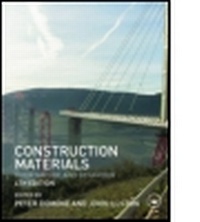
Construction Materials
Their Nature and Behaviour, Fourth Edition
4th Edition
Published on 21. May 2010
Book
Hardback
568 pages
978-0-415-46515-1 (ISBN)
Description
So far in the twenty-first century, there have been many developments in our understanding of materials' behaviour and in their technology and use. This new edition has been expanded to cover recent developments such as the use of glass as a structural material. It also now examines the contribution that material selection makes to sustainable construction practice, considering the availability of raw materials, production, recycling and reuse, which all contribute to the life cycle assessment of structures. As well as being brought up-to-date with current usage and performance standards, each section now also contains an extra chapter on recycling.
Covers the following materials:
metals
concrete
ceramics (including bricks and masonry)
polymers
fibre composites
bituminous materials
timber
glass.
This new edition maintains our familiar and accessible format, starting with fundamental principles and continuing with a section on each of the major groups of materials. It gives you a clear and comprehensive perspective on the whole range of materials used in modern construction. A must have for Civil and Structural engineering students, and for students of architecture, surveying or construction on courses which require an understanding of materials.
Covers the following materials:
metals
concrete
ceramics (including bricks and masonry)
polymers
fibre composites
bituminous materials
timber
glass.
This new edition maintains our familiar and accessible format, starting with fundamental principles and continuing with a section on each of the major groups of materials. It gives you a clear and comprehensive perspective on the whole range of materials used in modern construction. A must have for Civil and Structural engineering students, and for students of architecture, surveying or construction on courses which require an understanding of materials.
Reviews / Votes
"Some of the civil engineering and architecture schools, however, now have less dedicated courses in materials and a significant part of the required materials knowledge is provided within other courses. A textbook such as this will hence not only be useful as a reference book for a number of these courses, but will also be helpful in providing a unified perspective to students learning about materials under these conditions."-D. Gunaratnam, Architectural Science Review
Praise for Previous Editions
"Comprehensive and entirely appropriate for our students. Recommended reading." -Lecturer in Architectural Technology, London Southbank University
"A broad-based, yet sufficiently deep materials book to cover most undergraduate materials needs."
-Lecturer in Construction Materials, Kingston University, UK
More details
Edition
4th New edition
Language
English
Place of publication
London
United Kingdom
Target group
College/higher education
Professional and scholarly
Edition type
New edition
Product notice
Paper over boards
Illustrations
68 s/w Tabellen, 58 s/w Photographien bzw. Rasterbilder, 345 s/w Zeichnungen
345 Line drawings, black and white; 58 Halftones, black and white; 68 Tables, black and white
Dimensions
Height: 248 mm
Width: 189 mm
Weight
1293 gr
ISBN-13
978-0-415-46515-1 (9780415465151)
Copyright in bibliographic data and cover images is held by Nielsen Book Services Limited or by the publishers or by their respective licensors: all rights reserved.
Schweitzer Classification
Other editions
Additional editions
E-Book
10/2018
4th Edition
CRC Press
€52.99
Available for download
E-Book
10/2018
4th Edition
CRC Press
€52.99
Available for download
Book
05/2010
4th Edition
Taylor & Francis
€75.70
Article exhausted; check different version
Previous edition

Book
08/2001
3rd Edition
Spon Press
€202.04
Article exhausted; check for reprint
Persons
Peter Domone is Senior Lecturer in Concrete Technology at University College London with extensive experience teaching materials courses to first, second and third year civil engineering undergraduates.
John Illston is a retired Civil Engineer and Lecturer.
John Illston is a retired Civil Engineer and Lecturer.
Content
Part 1 Fundamentals
Revised and updated by Peter Domone, with acknowledgements to the previous authors, Bill Biggs, Ian McColl and Bob Moon
Introduction
Atoms, Bonding, Energy and Equilibrium
Mechanical Properties of Solids
The Structure of Solids
Fracture and toughness
Liquids, Viscoelasticity and Gels
Surfaces
Electrical and Thermal Properties
Further Reading for Part 1
Part 2 Metals and Alloys
Revised and updated by Peter Domone, with acknowledgements to the previous authors, Bill Biggs, Ian McColl and Bob Moon
Introduction
Deformation and Strengthening of Metals
Forming of Metals
Oxidation and Corrosion
Iron and Steel
Aluminium
Further reading for Part 2
Part 3 Concrete
Peter Domone
Introduction
Portland cements 87
Admixtures 99
Additions
Other types of cement
Aggregates for concrete
Properties of fresh concrete
Early age properties of concrete
Deformation of concrete
Strength and failure of concrete
Concrete mix design
Non-destructive testing of hardened concrete
Durability of concrete
Special concretes
Recycling of concrete
Further reading for Part 3
Part 4 Bituminous materials
Gordon Airey
Introduction
Components of bituminous materials
Viscosity, stiffness and deformation of bituminous materials
Strength and failure of bituminous materials
Durability of bituminous structures
Design and production of bituminous materials
Recycling of bituminous materials
Further reading for Part 4
Part 5 Masonry: Brickwork, blockwork and stonework
Bob de Vekey
Introduction
Materials and Components for Masonry
Masonry Construction and Forms
Structural Behaviour and Movement of Masonry
Non-Structural Physical Properties of Masonry
Deterioration and Conservation of Masonry
Further Reading for Part 5
Part 6 Polymers
Len Hollaway
Introduction
Polymers: Types, Properties and Applications
Part 7 Fibre Composites
Introduction
Section 1: Polymer Composites
Len Hollaway
Introduction
Fibres for Polymer Composites
Analysis of the Behaviour of Polymer Composites
Manufacturing Techniques for Polymer Composites Used in Construction
Durability and design of polymer composites
Applications of FRP Composites in Civil Engineering
Bibliography
Section 2: Fibre-Reinforced Cements and Concrete
Phil Purnell
Introduction
Terminology for FRC
Component Materials
Interface and Bonding
Reinforcement Layouts
Mechanical behaviour of FRC
Manufacturing of FRC
Applications
Durability and Recycling
Part 8 Timber
John Dinwoodie
Introduction
Structure of Timber and the Presence of Moisture
Deformation in Timber
Strength and Failure in Timber
Durability of Timber
Processing and Recycling of Timber
Further Reading for Part 8
Part 9 Glass
Graham Dodd
Introduction
Manufacture and Processing
Properties and Performance
Design and applications
Service and End of Life
Part Selection and sustainable use of construction materials
Peter Domone
Introduction
Mechanical Properties of Materials
Sustainability and Construction Materials
Further Reading for Part
Index
Revised and updated by Peter Domone, with acknowledgements to the previous authors, Bill Biggs, Ian McColl and Bob Moon
Introduction
Atoms, Bonding, Energy and Equilibrium
Mechanical Properties of Solids
The Structure of Solids
Fracture and toughness
Liquids, Viscoelasticity and Gels
Surfaces
Electrical and Thermal Properties
Further Reading for Part 1
Part 2 Metals and Alloys
Revised and updated by Peter Domone, with acknowledgements to the previous authors, Bill Biggs, Ian McColl and Bob Moon
Introduction
Deformation and Strengthening of Metals
Forming of Metals
Oxidation and Corrosion
Iron and Steel
Aluminium
Further reading for Part 2
Part 3 Concrete
Peter Domone
Introduction
Portland cements 87
Admixtures 99
Additions
Other types of cement
Aggregates for concrete
Properties of fresh concrete
Early age properties of concrete
Deformation of concrete
Strength and failure of concrete
Concrete mix design
Non-destructive testing of hardened concrete
Durability of concrete
Special concretes
Recycling of concrete
Further reading for Part 3
Part 4 Bituminous materials
Gordon Airey
Introduction
Components of bituminous materials
Viscosity, stiffness and deformation of bituminous materials
Strength and failure of bituminous materials
Durability of bituminous structures
Design and production of bituminous materials
Recycling of bituminous materials
Further reading for Part 4
Part 5 Masonry: Brickwork, blockwork and stonework
Bob de Vekey
Introduction
Materials and Components for Masonry
Masonry Construction and Forms
Structural Behaviour and Movement of Masonry
Non-Structural Physical Properties of Masonry
Deterioration and Conservation of Masonry
Further Reading for Part 5
Part 6 Polymers
Len Hollaway
Introduction
Polymers: Types, Properties and Applications
Part 7 Fibre Composites
Introduction
Section 1: Polymer Composites
Len Hollaway
Introduction
Fibres for Polymer Composites
Analysis of the Behaviour of Polymer Composites
Manufacturing Techniques for Polymer Composites Used in Construction
Durability and design of polymer composites
Applications of FRP Composites in Civil Engineering
Bibliography
Section 2: Fibre-Reinforced Cements and Concrete
Phil Purnell
Introduction
Terminology for FRC
Component Materials
Interface and Bonding
Reinforcement Layouts
Mechanical behaviour of FRC
Manufacturing of FRC
Applications
Durability and Recycling
Part 8 Timber
John Dinwoodie
Introduction
Structure of Timber and the Presence of Moisture
Deformation in Timber
Strength and Failure in Timber
Durability of Timber
Processing and Recycling of Timber
Further Reading for Part 8
Part 9 Glass
Graham Dodd
Introduction
Manufacture and Processing
Properties and Performance
Design and applications
Service and End of Life
Part Selection and sustainable use of construction materials
Peter Domone
Introduction
Mechanical Properties of Materials
Sustainability and Construction Materials
Further Reading for Part
Index