

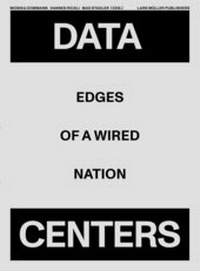
Data Centers
Edges of a Wired Nation
1st Edition
Published in October 2020
Book
Hardback
344 pages
978-3-03778-645-1 (ISBN)
Description
Often hidden in plain sight, data centers are the backbone of our Internet. They store, communicate, and transport the information we produce and access along invisible pathways. Unlike industrial plants, data centers come entwined with an iconography of generic, bland, and sterile architectures: placeless, inconspicuous, anonymous structures - buildings, cable ducts, junction boxes and landing sites that could be anywhere, generating a »cloud« that is both everywhere and nowhere.
Bringing together photographic works, essays and case studies Data Centers explores the mutual, typically fraught entanglements of place, past and digital infrastructure, taking Switzerland as their example. Underneath the official storyline - Switzerland's favorable alpine climate, the relatively low energy-costs, the political stability of the area, and its strategic positioning in central Europe - Data Centers uncovers a more varied, inconclusive set of trajectories: narratives of techno-nationalist aspirations; of Swiss-Chinese interdependencies; of deregulation and once-mighty telecommunications enterprises; of cold-war legacies and the multi-billion-dollar business of data security.
More details
Persons
MONIKA DOMMANN is Professor of Modern History at the University of Zurich. Topics in her research and teaching are the intertwining of the Old and New Worlds, media-, economic- and legal history, the history of knowledge and science as well as the methods of historical science. She has a special focus on the history of material cultures, immaterial goods, logistics and data centers.
HANNES RICKLI is a visual artist and has held a professorship at the Zurich University of the Arts since 2004. From 1988 to 1994, he worked as a freelance photographer for various newspapers and magazines and has staged visual art exhibitions in Switzerland and abroad since 1991. In 2004, he was awarded the Meret Oppenheim Prize from the Swiss Federal Office for Culture. His teaching and research focus on the instrumental use of media and space.
MAX STADLER is a post-doctoral researcher at ETH Zurich (Science Studies and Collegium Helveticum). He has received a Ph.D. in the history of science, technology and medicine from CHoSTM, Imperial College, London. His research interests center on the history of "high-tech," labor, and the human sciences.
HANNES RICKLI is a visual artist and has held a professorship at the Zurich University of the Arts since 2004. From 1988 to 1994, he worked as a freelance photographer for various newspapers and magazines and has staged visual art exhibitions in Switzerland and abroad since 1991. In 2004, he was awarded the Meret Oppenheim Prize from the Swiss Federal Office for Culture. His teaching and research focus on the instrumental use of media and space.
MAX STADLER is a post-doctoral researcher at ETH Zurich (Science Studies and Collegium Helveticum). He has received a Ph.D. in the history of science, technology and medicine from CHoSTM, Imperial College, London. His research interests center on the history of "high-tech," labor, and the human sciences.