

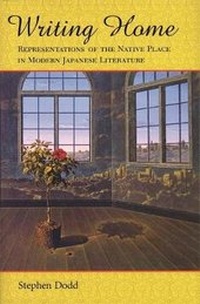
Writing Home
Representations of the Native Place in Modern Japanese Literature
Published on 1. January 2005
Book
Hardback
320 pages
978-0-674-01652-1 (ISBN)
Description
This book examines the development of Japanese literature depicting the native place (furusato) from the mid-Meiji period through the late 1930s as a way of articulating the uprootedness and sense of loss many experienced as Japan modernized. The 1890s witnessed the appearance of fictional works describing a city dweller who returns to his native place, where he reflects on the evils of urban life and the idyllic past of his childhood home. The book concentrates on four authors who typify this trend: Kunikida Doppo, Shimazaki Toson, Sato Haruo, and Shiga Naoya.
All four writers may be understood as trying to make sense of contemporary Japan. Their works reflect their engagement with the social, intellectual, economic, and technological discourses that created a network of shared experience among people of a similar age. This common experience allows the author to chart how these writers' works contributed to the general debate over Japanese national identity in this period. By exploring the links between furusato literature and the theme of national identity, he shows that the debate over a common language that might "transparently" express the modern experience helped shape a variety of literary forms used to present the native place as a distinctly Japanese experience.
All four writers may be understood as trying to make sense of contemporary Japan. Their works reflect their engagement with the social, intellectual, economic, and technological discourses that created a network of shared experience among people of a similar age. This common experience allows the author to chart how these writers' works contributed to the general debate over Japanese national identity in this period. By exploring the links between furusato literature and the theme of national identity, he shows that the debate over a common language that might "transparently" express the modern experience helped shape a variety of literary forms used to present the native place as a distinctly Japanese experience.
Reviews / Votes
In a welcome addition to the growing number of theme-based studies of modern Japanese literature, Stephen Dodd takes up the topic of literary representation of the furusato, what he calls the native place, in fiction published between the mid-Meiji and early Showa period. The theme is a particularly fascinating one since none of the four major authors discussed-Kunikida Doppo, Shimazaki Toson, Sato Haruo, and Shiga Naoya-presents the native place as merely an idyllic site to which the weary urban writer turns for replenishment. Indeed, the beauty of Dodd's study lies in its emphasis on the dynamic relationship that exists between these authors' urban experiences and their creative remembering of the past. In each case, it is the city that mediates, to varying degrees, the authors' representation of home. -- Davinder Bhowmik * Journal of Japanese Studies *More details
Series
Language
English
Place of publication
Cambridge
United States
Target group
Professional and scholarly
Illustrations
none
Dimensions
Thickness: 25 mm
Weight
590 gr
ISBN-13
978-0-674-01652-1 (9780674016521)
Copyright in bibliographic data and cover images is held by Nielsen Book Services Limited or by the publishers or by their respective licensors: all rights reserved.
Schweitzer Classification
Person
Stephen Dodd is Lecturer in Japanese at the School of Oriental and African Studies, University of London.