

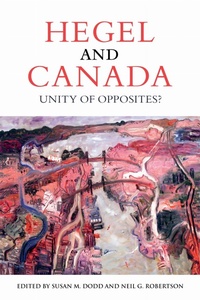
Hegel and Canada
Unity of Opposites?
Published on 1. February 2018
Book
Hardback
408 pages
978-1-4426-4447-2 (ISBN)
Description
Hegel has had a remarkable, yet largely unremarked, role in Canada's intellectual development. In the last half of the twentieth-century, as Canada was coming to define itself in the wake of World War Two, some of Canada's most thoughtful scholars turned to the work of G.W.F. Hegel for insight.
Hegel and Canada is a collection of essays that analyses the real, but under-recognized, role Hegel has played in the intellectual and political development of Canada. The volume focuses on the generation of Canadian scholars who emerged after World War Two: James Doull, Emil Fackenheim, George Grant, Henry S. Harris, and Charles Taylor. These thinkers offer a uniquely Canadian view of Hegel's writings, and, correspondingly, of possible relations between situated community and rational law. Hegel provided a unique intellectual resource for thinking through the complex and opposing aspects that characterize Canada. The volume brings together key scholars from each of these five schools of Canadian Hegel studies and provides a richly nuanced account of the intellectually significant connection of Hegel and Canada.
Hegel and Canada is a collection of essays that analyses the real, but under-recognized, role Hegel has played in the intellectual and political development of Canada. The volume focuses on the generation of Canadian scholars who emerged after World War Two: James Doull, Emil Fackenheim, George Grant, Henry S. Harris, and Charles Taylor. These thinkers offer a uniquely Canadian view of Hegel's writings, and, correspondingly, of possible relations between situated community and rational law. Hegel provided a unique intellectual resource for thinking through the complex and opposing aspects that characterize Canada. The volume brings together key scholars from each of these five schools of Canadian Hegel studies and provides a richly nuanced account of the intellectually significant connection of Hegel and Canada.
Reviews / Votes
"This volume provides...a multi-chromatic overview of the Hegel-Canada relation as the site of a complex problem set, embodied still in the very life of the Canadian polity."- Charlene Elsby (CSCP)
More details
Language
English
Place of publication
Toronto
Canada
Target group
College/higher education
Professional and scholarly
Product notice
sewn/stitched
Cloth over boards
With dust jacket
Dimensions
Height: 231 mm
Width: 150 mm
Thickness: 38 mm
Weight
748 gr
ISBN-13
978-1-4426-4447-2 (9781442644472)
Copyright in bibliographic data and cover images is held by Nielsen Book Services Limited or by the publishers or by their respective licensors: all rights reserved.
Schweitzer Classification
Persons
Susan Dodd is an associate professor of humanities and social sciences at the University of King's College, in Halifax.
Neil G. Robertson is an associate professor of humanities and social sciences and Director of the Foundation Year Program at University of King's College, in Halifax.
Neil G. Robertson is an associate professor of humanities and social sciences and Director of the Foundation Year Program at University of King's College, in Halifax.
Content
Contents
1. Introduction: Unity of Opposites? Hegel and Canada, by Susan Dodd
HEGEL AND CANADIAN POLITICAL PHILOSOPHY
2. Hegel in Canada, by John Burbidge
3. Jewish and Post-Christian Interpretations of Hegel: Emil Fackenheim and Henry S. Harris, by George di Giovanni
4. Fackenheim on Self-making, Divine and Human, by Daniel Brandes
5. Conscience, Religion, and Multiculturalism: A Canadian Hegel, by John Russon
6. Conquering Finitude: Towards a Renewed Hegelian Middle, by Jim Vernon
7. Hegel's Theory of Mind, by Charles Taylor
8. Negativity: Charles Taylor, Hegel and the Problem of Modern Freedom, by Kenneth Kierans
HEGEL IN CANADIAN POLITICS
9. Early Canadian Political Culture: Hegelian Adaptations and John Watson, by Elizabeth Trott
10. Idealism and Empire: John Watson, Michael Ignatieff and the moral warrant for "liberal imperialism," by Robert Sibley
11. Beyond 'Hegel's time': Made in the USA. Not Available in Canada, by David
MacGregor
12. Freedom and the Tradition: George Grant, James Doull and the Character of Modernity, by
Neil Robertson
13.Grant, Hegel and the 'Impossibility of Canada,' by Robert Sibley
14. Hegel and Canada's Constitution, by Graeme Nicholson
15. Hegel's Laurentian Fragments, by Barry Cooper
16. Hegel and the Challenges of Cross-Cultural Feminism, by Shannon Hoff
17. Conclusion Canada and the Unity of Opposites?, by Neil Robertson
1. Introduction: Unity of Opposites? Hegel and Canada, by Susan Dodd
HEGEL AND CANADIAN POLITICAL PHILOSOPHY
2. Hegel in Canada, by John Burbidge
3. Jewish and Post-Christian Interpretations of Hegel: Emil Fackenheim and Henry S. Harris, by George di Giovanni
4. Fackenheim on Self-making, Divine and Human, by Daniel Brandes
5. Conscience, Religion, and Multiculturalism: A Canadian Hegel, by John Russon
6. Conquering Finitude: Towards a Renewed Hegelian Middle, by Jim Vernon
7. Hegel's Theory of Mind, by Charles Taylor
8. Negativity: Charles Taylor, Hegel and the Problem of Modern Freedom, by Kenneth Kierans
HEGEL IN CANADIAN POLITICS
9. Early Canadian Political Culture: Hegelian Adaptations and John Watson, by Elizabeth Trott
10. Idealism and Empire: John Watson, Michael Ignatieff and the moral warrant for "liberal imperialism," by Robert Sibley
11. Beyond 'Hegel's time': Made in the USA. Not Available in Canada, by David
MacGregor
12. Freedom and the Tradition: George Grant, James Doull and the Character of Modernity, by
Neil Robertson
13.Grant, Hegel and the 'Impossibility of Canada,' by Robert Sibley
14. Hegel and Canada's Constitution, by Graeme Nicholson
15. Hegel's Laurentian Fragments, by Barry Cooper
16. Hegel and the Challenges of Cross-Cultural Feminism, by Shannon Hoff
17. Conclusion Canada and the Unity of Opposites?, by Neil Robertson