

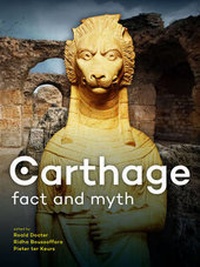
Carthage
Published on 12. May 2015
Book
Hardback
144 pages
978-90-8890-311-3 (ISBN)
Description
Carthage is mainly known as the city that was utterly destroyed by the Romans in 146 BC. This book tells the story about this fascinating city, which for centuries was the centre of a far-flung trade network in the Mediterranean.
Carthage was founded by Phoenician migrants, who settled in the north of what is now Tunisia, probably in the ninth century BC. The city's strategic location was key to its success. From here, the Carthaginians could dominate both seafaring trade and the overland trade with the African interior.
Carthage, Fact and Myth presents the most recent views of Carthaginian society, its commerce and politics, and the way its society was organised. Chapters, written by leading experts, describe the founding of Carthage, its merchant and war fleets, and the devastating wars with Rome. These include the campaigns of the famous Carthaginian commander Hannibal who crossed the Alps with his army and elephants to pose a grave threat to Rome, but he was ultimately unable to prevail.
Tunisian experts describe Roman Carthage- the city as it was rebuilt by the Emperor Augustus - and discuss the later Christian period. Finally, the reader encounters a wealth of information about European images of Carthage, from 16th-century prints to the Alix series of comics.
Carthage was founded by Phoenician migrants, who settled in the north of what is now Tunisia, probably in the ninth century BC. The city's strategic location was key to its success. From here, the Carthaginians could dominate both seafaring trade and the overland trade with the African interior.
Carthage, Fact and Myth presents the most recent views of Carthaginian society, its commerce and politics, and the way its society was organised. Chapters, written by leading experts, describe the founding of Carthage, its merchant and war fleets, and the devastating wars with Rome. These include the campaigns of the famous Carthaginian commander Hannibal who crossed the Alps with his army and elephants to pose a grave threat to Rome, but he was ultimately unable to prevail.
Tunisian experts describe Roman Carthage- the city as it was rebuilt by the Emperor Augustus - and discuss the later Christian period. Finally, the reader encounters a wealth of information about European images of Carthage, from 16th-century prints to the Alix series of comics.
Reviews / Votes
"...lavishly illustrated... and with good quality content and attractive physical production..." * Ancient West & East *More details
Language
English
Place of publication
Leiden
Netherlands
Illustrations
10x01 | 100x02
Dimensions
Height: 280 mm
Width: 210 mm
ISBN-13
978-90-8890-311-3 (9789088903113)
Copyright in bibliographic data and cover images is held by Nielsen Book Services Limited or by the publishers or by their respective licensors: all rights reserved.
Schweitzer Classification
Content
1. Carthage: Fact and Myth
2. Phoenicia: From Place of Transit to Trading Nation
3. Punic Carthage
4. The Punic writing system
5. The Tophet of Carthage
6. Egyptian Influence in Carthage
7. Carthage as a Maritime Power
8. Carthage & the local Libyan-Numidian Population
9. The Punic Wars
10. The Mahdia Shipwreck
11. Roman Carthage: History and Monuments
12. Christian Carthage
13. Dido and Hannibal through Western eyes
14. Foreigners on an Unfamiliar Coast: The Rediscovery of Carthage
15. Reflections of Carthage in 19th century art
16. Images of Carthage in the 20th and 21st Centuries: Films, Comics & Games
17. Ancient Carthage in the 21st Century: A Timeless Message
2. Phoenicia: From Place of Transit to Trading Nation
3. Punic Carthage
4. The Punic writing system
5. The Tophet of Carthage
6. Egyptian Influence in Carthage
7. Carthage as a Maritime Power
8. Carthage & the local Libyan-Numidian Population
9. The Punic Wars
10. The Mahdia Shipwreck
11. Roman Carthage: History and Monuments
12. Christian Carthage
13. Dido and Hannibal through Western eyes
14. Foreigners on an Unfamiliar Coast: The Rediscovery of Carthage
15. Reflections of Carthage in 19th century art
16. Images of Carthage in the 20th and 21st Centuries: Films, Comics & Games
17. Ancient Carthage in the 21st Century: A Timeless Message