

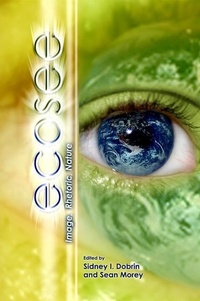
Ecosee
Image, Rhetoric, Nature
Will be published approx. on 16. April 2009
Book
Hardback
339 pages
978-1-4384-2583-2 (ISBN)
Description
Examines the rhetorical role of images in communicating environmental ideas.
How do supporters of the environmental movement manipulate and promote images of "nature" to achieve support and sympathy? From the Sierra Club's use of Ansel Adams's stark and pristine portraits of the western United States to close-ups of plastic bottles and dead fish floating in Rust Belt waterways, visual depictions of landscapes and the degradation caused by humans have profoundly shaped popular notions of environmentalism and the environment. Despite the rhetorical power of images connected with the environmental movement over the past forty years, scholarship in environmental communication has focused almost exclusively on verbal rather than visual rhetoric. Ecosee offers a deeper and fuller understanding of the communicative strategies and power of the environmental movement by looking closely at the visual rhetorics involved in photographs, paintings, television and filmic images, video games, and other forms of image-based media.
How do supporters of the environmental movement manipulate and promote images of "nature" to achieve support and sympathy? From the Sierra Club's use of Ansel Adams's stark and pristine portraits of the western United States to close-ups of plastic bottles and dead fish floating in Rust Belt waterways, visual depictions of landscapes and the degradation caused by humans have profoundly shaped popular notions of environmentalism and the environment. Despite the rhetorical power of images connected with the environmental movement over the past forty years, scholarship in environmental communication has focused almost exclusively on verbal rather than visual rhetoric. Ecosee offers a deeper and fuller understanding of the communicative strategies and power of the environmental movement by looking closely at the visual rhetorics involved in photographs, paintings, television and filmic images, video games, and other forms of image-based media.
Reviews / Votes
"...Ecosee ... makes major contributions to analysis of the visual rhetorics in environmental discourses." - The Year's Work in Critical and Cultural Theory"By making visible just how visual communication plays a powerful role in shaping public opinions about the environment, Morey and Ecosee offer useful concepts and theories to continue studying visual rhetorics related to the environment ... This collection particularly encourages us to think about research approaches that go beyond the textual and beyond the social constructionist perspective." - JAC
"The contributors have provided thoughtful, smart essays that initiate a useful discussion for the field." - Stuart C. Brown, coeditor of Green Culture: Environmental Rhetoric in Contemporary America
More details
Language
English
Place of publication
Albany, NY
United States
Target group
College/higher education
US School Grade: From College Freshman to College Graduate Student
Product notice
Laminated cover
Illustrations
28 Halftones, black and white
Dimensions
Height: 229 mm
Width: 152 mm
Thickness: 18 mm
Weight
544 gr
ISBN-13
978-1-4384-2583-2 (9781438425832)
Copyright in bibliographic data and cover images is held by Nielsen Book Services Limited or by the publishers or by their respective licensors: all rights reserved.
Schweitzer Classification
Other editions
Additional editions
E-Book
04/2009
1st Edition
State University of New York Press
€37.99
Available for download
Persons
Sidney I. Dobrin is Associate Professor of English at the University of Florida and has written or edited many books, including (with Christopher J. Keller) Writing Environments and (with Christian R. Weisser) Natural Discourse: Toward Ecocomposition, both also published by SUNY Press. Sean Morey is a PhD candidate in English at the University of Florida.
Content
List of Figures
Acknowledgments
Introduction: Ecosee: A First Glimpse
Sidney I. Dobrin and Sean Morey
Part 1. How We See
1. A Rhetorical Look at Ecosee
Sean Morey
2. Ecoporn: On the Limits of Visualizing the Nonhuman
Bart H. Welling
3. Ecology, Images, and Scripto-Visual Rhetoric
Heather Dawkins
4. Field Guides to Birds: Images and Image/Text Positioned as Reference
Spencer Schaffner
5. Eduardo Kac: Networks as Medium and Trope
Simone Osthoff
Part 2. Seeing Animals
6. From Dead Meat to Glow-in-the-Dark Bunnies: Seeing "the Animal Question" in Contemporary Art
Cary Wolfe
7. "They're There, and That's How We're Seeing It": Olly and Suzi in the Antarctic"
Steve Baker
8. Connecting with Animals: The Aquarium and the Dreamer Fish
Eleanor Morgan
Part 3. Seeing Landscapes and Seascapes
9. Farming on Irish Film: An Ecological Reading
Pat Brereton
10. Postcards from the Andes: Politics of Representation in a Reimagined Peru
Teresa E. P. Delfin
11. That's Not a Reef. Now That's a Reef: A Century of (Re)Placing the Great Barrier Reef
Kathryn Ferguson
Part 4. Seeing in Space and Time
12. Evading Capture: The Productive Resistance of Photography in Environmental Representation
Quinn R. Gorman
13. The Test of Time: McLuhan, Space, and the Rise of Civilization
Tom Tyler
14. Seeing the Climate?: The Problematic Status of Visual Evidence in Climate Change Campaigning
Julie Doyle
15. Afterword
M. Jimmie Killingsworth and Jacqueline S. Palmer
List of Contributors
Index
Acknowledgments
Introduction: Ecosee: A First Glimpse
Sidney I. Dobrin and Sean Morey
Part 1. How We See
1. A Rhetorical Look at Ecosee
Sean Morey
2. Ecoporn: On the Limits of Visualizing the Nonhuman
Bart H. Welling
3. Ecology, Images, and Scripto-Visual Rhetoric
Heather Dawkins
4. Field Guides to Birds: Images and Image/Text Positioned as Reference
Spencer Schaffner
5. Eduardo Kac: Networks as Medium and Trope
Simone Osthoff
Part 2. Seeing Animals
6. From Dead Meat to Glow-in-the-Dark Bunnies: Seeing "the Animal Question" in Contemporary Art
Cary Wolfe
7. "They're There, and That's How We're Seeing It": Olly and Suzi in the Antarctic"
Steve Baker
8. Connecting with Animals: The Aquarium and the Dreamer Fish
Eleanor Morgan
Part 3. Seeing Landscapes and Seascapes
9. Farming on Irish Film: An Ecological Reading
Pat Brereton
10. Postcards from the Andes: Politics of Representation in a Reimagined Peru
Teresa E. P. Delfin
11. That's Not a Reef. Now That's a Reef: A Century of (Re)Placing the Great Barrier Reef
Kathryn Ferguson
Part 4. Seeing in Space and Time
12. Evading Capture: The Productive Resistance of Photography in Environmental Representation
Quinn R. Gorman
13. The Test of Time: McLuhan, Space, and the Rise of Civilization
Tom Tyler
14. Seeing the Climate?: The Problematic Status of Visual Evidence in Climate Change Campaigning
Julie Doyle
15. Afterword
M. Jimmie Killingsworth and Jacqueline S. Palmer
List of Contributors
Index