

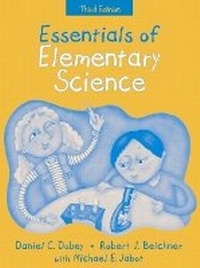
Essentials of Elementary Science, (Part of the Essentials of Classroom Teaching Series), MyLab School Edition
3rd Edition
Published on 24. January 2005
Book
Mixed media product
240 pages
978-0-205-46373-2 (ISBN)
Description
Essentials of Elementary Science presents pertinent research, valued classroom methodology, and current practice in teaching elementary science at a length, format, and price perfect for the undergraduate course in science methods.
It is ideal for "block" courses where more than one content area's methods are taught, or for general methods courses where the instructor would like more coverage of specific subjects.
It is ideal for "block" courses where more than one content area's methods are taught, or for general methods courses where the instructor would like more coverage of specific subjects.
More details
Edition
3rd edition
Language
English
Place of publication
United States
Publishing group
Pearson Education (US)
Target group
Professional and scholarly
Dimensions
Height: 235 mm
Width: 178 mm
Weight
481 gr
ISBN-13
978-0-205-46373-2 (9780205463732)
Copyright in bibliographic data and cover images is held by Nielsen Book Services Limited or by the publishers or by their respective licensors: all rights reserved.
Schweitzer Classification
Other editions
Previous edition
Daniel C. Dobey | Robert J. Beichner | Michael E. Jabot
Essentials of Elementary Science, (Part of the Essentials of Classroom Teaching Series)
Book
02/2004
3rd Edition
Pearson
€85.71
Article exhausted; check for reprint
Content
Preface.
Prologue.
1. The National Science Education Standards and Today's Elementary Science Classroom.
National Science Education Standards.
Observing the Problems Approach to Science Teaching in Action.
What Is Science? Who Is a Scientist?
Science Activity to Try: Autumn Splendor: Leaves.
Principles of Teaching Elementary School Science.
2. The Learner.
What Children Think About Science and Scientists.
How Children Learn Science.
3. The Teacher.
Why Teachers Fear Science.
Science Activity to Try: Batteries and Bulbs.
Organizational Patterns.
Planning for Group Instruction.
Using Instructional Materials.
Science and Reading
Science and the Special Student.
Evaluating Science Learning.
4. The Science Program.
Some Science Program Philosophies.
Is There a Best Approach?
Programs for the 21st Century.
Integrating Science with other Subjects.
5. Integrating Technology into Today's Elementary Science Classroom.
Teacher Laboratory.
Using the Tools.
Using the World Wide Web.
6. Teaching Children About Themselves, Plants, and Animals.
Being Receptive to Student Questions.
The Human Body.
Plants.
Science Activity to Try: Seed Dispersal.
Animals.
Science Activity to Try: Owl Pellets.
Interrelationships.
7. Teaching Children About the Earth and the Universe.
Earth Science-A "Natural" Topic.
The Earth.
Science Activity to Try: Rain Clouds.
The Universe.
Science Activity to Try: Scale the Solar System.
8. Teaching Children About Heat, Light, and Sound.
Heat.
Science Activity to Try: Hot, Cold, Fast, and Slow Moving Molecules.
Light.
Science Activity to Try: Mixing Colors.
Sound.
9. Teaching Children About Machines, Magnetism, and Electricity.
Machines.
Magnetism.
Science Activity to Try: Mysterious Magnetism.
Electricity.
10. Science in the Community and Everyday Life.
Understanding Current Events.
Energy Concerns.
Dealing with Pollution.
Science Activity to Try: Plastics in Our World.
Earth Day
Learning to Make Wise Decisions.
Seeing Science in the World Around Them.
Index.
Prologue.
1. The National Science Education Standards and Today's Elementary Science Classroom.
National Science Education Standards.
Observing the Problems Approach to Science Teaching in Action.
What Is Science? Who Is a Scientist?
Science Activity to Try: Autumn Splendor: Leaves.
Principles of Teaching Elementary School Science.
2. The Learner.
What Children Think About Science and Scientists.
How Children Learn Science.
3. The Teacher.
Why Teachers Fear Science.
Science Activity to Try: Batteries and Bulbs.
Organizational Patterns.
Planning for Group Instruction.
Using Instructional Materials.
Science and Reading
Science and the Special Student.
Evaluating Science Learning.
4. The Science Program.
Some Science Program Philosophies.
Is There a Best Approach?
Programs for the 21st Century.
Integrating Science with other Subjects.
5. Integrating Technology into Today's Elementary Science Classroom.
Teacher Laboratory.
Using the Tools.
Using the World Wide Web.
6. Teaching Children About Themselves, Plants, and Animals.
Being Receptive to Student Questions.
The Human Body.
Plants.
Science Activity to Try: Seed Dispersal.
Animals.
Science Activity to Try: Owl Pellets.
Interrelationships.
7. Teaching Children About the Earth and the Universe.
Earth Science-A "Natural" Topic.
The Earth.
Science Activity to Try: Rain Clouds.
The Universe.
Science Activity to Try: Scale the Solar System.
8. Teaching Children About Heat, Light, and Sound.
Heat.
Science Activity to Try: Hot, Cold, Fast, and Slow Moving Molecules.
Light.
Science Activity to Try: Mixing Colors.
Sound.
9. Teaching Children About Machines, Magnetism, and Electricity.
Machines.
Magnetism.
Science Activity to Try: Mysterious Magnetism.
Electricity.
10. Science in the Community and Everyday Life.
Understanding Current Events.
Energy Concerns.
Dealing with Pollution.
Science Activity to Try: Plastics in Our World.
Earth Day
Learning to Make Wise Decisions.
Seeing Science in the World Around Them.
Index.