

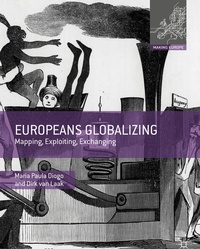
Europeans Globalizing
Description
Over the course of 150 years, Europe's protean technologies inspired and underpinned the globalizing ambitions of European nations. This book aims to show how technology mediated European influence in the rest of the world and how this mediation in turn transformed Europeans. Europeans mapped, they exploited, and they exchanged - their interactions ranged from technological and biological genocide to treaties of cooperation and the construction of elaborate colonial infrastructures. Quite aside from the enormous variety of political settings, cultures and colonial programs, interrelations created dependencies on both sides. Cultural transfers were rarely unidirectional, and often a kind of Pidgin-knowledge emerged, a hybrid fusion of European and local knowledge and skills. As observers have rightly pointed out, Europe played both the role of 'Prometheus unbound' and the 'Sorcerer's apprentice'.
Reviews / Votes
"Europeans Globalizing is part of an ambitious research agenda that questions Europe's history through a transnational history of technology. . the range and scope of the book as well as the thoughtfulness with which the authors discuss their disparate topics are impressive. . the transnational approach provides a refreshing perspective on Europe's identity and connections to the world. It is a welcome and important contribution to the literature on Europe's place in the technological Great Divergence." (Marten Boon, EuropeNow Journal, europenowjournal.org, April, 2017)More details
Persons
Dirk van Laak is Full Professor of Contemporary History at the History Department, Justus Liebig University Giessen, Germany. He has worked on German, European, colonial and global history, as well as the history of technology and intellectual history. He also pioneered the history of infrastructures, and most recently devoted himself to a cultural and everyday history of public works. He has published and (co)edited several books on a wide range of topics.
Content
1. Europeans Mapping and being Mapped
2. Europe's Significant Others
3. Wars and Peace at Home and Abroad
4. Scrambling for Eurafrica: Resources and Axes of Infrastructure
5. From the Raj to the Yellow Peril
6. A New World Order and the Collapse of Colonialism
7. The Reconstruction Period