

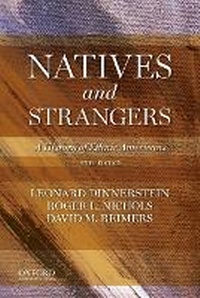
Natives and Strangers
A History of Ethnic Americans
6th Edition
Published on 24. October 2014
Book
Paperback/Softback
320 pages
978-0-19-930341-0 (ISBN)
Description
"Who is an American?" "How does a person who is not an American become one?"Now in its sixth edition, Natives and Strangers: A History of Ethnic Americans addresses these and many other vital questions. Comprehensive and accessible, this unique volume explores various aspects of American minority group history. Examining the impact that America has had on minority peoples and cultures--and vice versa--authors Leonard
Dinnerstein, Roger L. Nichols, and David M. Reimers provide insights into the different conditions, conflicts, and contradictions that members of American minority groups experienced. They integrate the experiences of various
racial, religious, and national minorities from around the globe--including American Indians, African Americans, and immigrants from Europe, Asia, Latin America, and other parts of the world--explaining how their histories intertwined with the emergence of modern America. The authors conclude with reflections on where the nation stands today as an ethnically and racially diverse society.
Dinnerstein, Roger L. Nichols, and David M. Reimers provide insights into the different conditions, conflicts, and contradictions that members of American minority groups experienced. They integrate the experiences of various
racial, religious, and national minorities from around the globe--including American Indians, African Americans, and immigrants from Europe, Asia, Latin America, and other parts of the world--explaining how their histories intertwined with the emergence of modern America. The authors conclude with reflections on where the nation stands today as an ethnically and racially diverse society.
Reviews / Votes
Abel A. Bartley, Clemson UniversityI really like the current edition. This reads like a cultural or ethnic history of the US, starting with the Colonial Era. For students this book will be easy to read and understandEL The organization is logical and vary thorough. I would not really change much organizationallyEL The chapter on the Civil War and Reconstruction could use a few pages on the Black exodus to the WestEL This is a good book. You would really benefit by adding more pictures. There are so many different groups students
would benefit from having visual images to tie to their storiesEL Yes, I would use this book again. There are very few competitors.
Nikitah Okembe-RA Imani, University of Nebraska, Omaha
I think the text is greatEL A great book for giving students a historical context for contemporary lines of social and cultural challenge in the United StatesEL Very comprehensive and perhaps at times to a fault for my more limited purposes. I thought it was the best book of its kind which is why I stuck with it for so long.
Mark G. Jaede, St. Cloud State University
It's the best survey text I have found. As you see, I supplement it with a document collection and with a brief text on the late 20th centuryEL It is a straightforward narrative approach. It provides a reasonably broad range of information. I find the narrative approach accessibleEL The narrative is reasonably comprehensive. While one can always add more detail, I would not like to see the book grow much larger. What's missing is a theoretical framework (or frameworks) for understanding the
narrativeEL Coverage of the borderlands, Mexico, Mexicans, and Mexican-Americans is generally weakEL The problem here is that there are very few competing books for a class like mine. Most are either limited
to a particular time period or a particular racial group. So the coverage in this book is the best I have found, despite the limitations I have noted.
More details
Edition
6th edition
Language
English
Place of publication
New York
United States
Target group
Professional and scholarly
ISBN-13
978-0-19-930341-0 (9780199303410)
Copyright in bibliographic data and cover images is held by Nielsen Book Services Limited or by the publishers or by their respective licensors: all rights reserved.
Schweitzer Classification
Persons
Leonard Dinnerstein is Professor Emeritus at The University of Arizona.
Roger L. Nichols is Professor Emeritus of History at The University of Arizona.
David M. Reimers is Professor Emeritus of History at New York University.
Roger L. Nichols is Professor Emeritus of History at The University of Arizona.
David M. Reimers is Professor Emeritus of History at New York University.
Content
Preface
1. Colonial Foundations (1600-1780s)
Coming of the Spanish
Coming of the English
Indians and Anglo-Americans
Attracting Settlers
Development of Slavery and Racism
European Minorities
Colonial Economic and Social Structure
Minorities and the Revolution
2. Forging a New Nation (1776-1840s)
A New Situation
Indian Relations
Southern Antislavery Falters
Free Blacks
Slavery in the Old South
New People in an Emerging Nation
Crisis over Immigration in the 1790s
National Territorial Growth
Beyond the Appalachians
Urban and Industrial Growth
Renewal of Immigration
Manifest Destiny
3. Civil War and Immigration (1840-1880s)
Settlement patterns
The Germans and the Irish
Finding Employment
Immigrant Life and Society
The Mining Frontier
The Chinese
Indians
Animosity Toward Foreigners
Anti-Catholicism
Political Nativism
The Coming of the Civil War
Blacks and the Domestic Crisis
The Mormons
Postwar Immigration
The Railroads
4. Burgeoning Industrialism and a Massive Movement of Peoples (1880s-1930s)
Industrial Expansion
Uprooted Peoples
Immigrant Settlement
The New European Immigrants
Ranching
Framers
The Japanese
The Koreans and Asian Indians
The Mexicans
The Filipinos
Black Migration North
5. The Process of Adjustment (1880s-1930s)
Wages and Working Conditions
The Tenement Districts
Voluntary Associations
Black Associations
Cultural and Recreational Activities
The Churches and Parochial Education
Public Education
Indian Experiences
The Minority Press
Maintaining Old World Ties
Politics
Social Mobility
Assimilation
6. Ethnic Tensions and Conflicts (1880s-1945)
Pseudoscientific Racism
Triumph of Jim Crowism
Treatment of Indians
Attitudes Toward Asians
Attitudes Toward Europeans
Interethnic Conflict
Religious Bigotry
World War I
Immigration Restriction
Economic Depression and Increased Tensions
"Concentration Camps U.S.A."
7. Movement, Mobility, and Cultural Adaptation (1941-2014)
The Impact of World War II
Southerners Move North
Suburbs and the Rise of the Sun Belt and the West
American Indian Migration
Renewed European Immigration
Prosperity and Mobility
Retaining Ethnic Ties
Ethnic Groups and Politics
8. The Struggle for Equality (1945-2014)
The Deprived Minorities
Toward civil Rights
The Movement for Black Power
The Post-Civil Rights Era
The Hispanics
The Asians
The Indians
The White Ethnic Groups
9. A New Global Immigration
Beyond Europe: The Global Immigrants
Mexicans
Cubans
Other Latinos
New Asian Immigrants
Middle Easterners
Other Immigrants from the Caribbean
New African Immigrants
Renewed Anxiety over Immigration
Afterword
Selected Bibliography
Index
1. Colonial Foundations (1600-1780s)
Coming of the Spanish
Coming of the English
Indians and Anglo-Americans
Attracting Settlers
Development of Slavery and Racism
European Minorities
Colonial Economic and Social Structure
Minorities and the Revolution
2. Forging a New Nation (1776-1840s)
A New Situation
Indian Relations
Southern Antislavery Falters
Free Blacks
Slavery in the Old South
New People in an Emerging Nation
Crisis over Immigration in the 1790s
National Territorial Growth
Beyond the Appalachians
Urban and Industrial Growth
Renewal of Immigration
Manifest Destiny
3. Civil War and Immigration (1840-1880s)
Settlement patterns
The Germans and the Irish
Finding Employment
Immigrant Life and Society
The Mining Frontier
The Chinese
Indians
Animosity Toward Foreigners
Anti-Catholicism
Political Nativism
The Coming of the Civil War
Blacks and the Domestic Crisis
The Mormons
Postwar Immigration
The Railroads
4. Burgeoning Industrialism and a Massive Movement of Peoples (1880s-1930s)
Industrial Expansion
Uprooted Peoples
Immigrant Settlement
The New European Immigrants
Ranching
Framers
The Japanese
The Koreans and Asian Indians
The Mexicans
The Filipinos
Black Migration North
5. The Process of Adjustment (1880s-1930s)
Wages and Working Conditions
The Tenement Districts
Voluntary Associations
Black Associations
Cultural and Recreational Activities
The Churches and Parochial Education
Public Education
Indian Experiences
The Minority Press
Maintaining Old World Ties
Politics
Social Mobility
Assimilation
6. Ethnic Tensions and Conflicts (1880s-1945)
Pseudoscientific Racism
Triumph of Jim Crowism
Treatment of Indians
Attitudes Toward Asians
Attitudes Toward Europeans
Interethnic Conflict
Religious Bigotry
World War I
Immigration Restriction
Economic Depression and Increased Tensions
"Concentration Camps U.S.A."
7. Movement, Mobility, and Cultural Adaptation (1941-2014)
The Impact of World War II
Southerners Move North
Suburbs and the Rise of the Sun Belt and the West
American Indian Migration
Renewed European Immigration
Prosperity and Mobility
Retaining Ethnic Ties
Ethnic Groups and Politics
8. The Struggle for Equality (1945-2014)
The Deprived Minorities
Toward civil Rights
The Movement for Black Power
The Post-Civil Rights Era
The Hispanics
The Asians
The Indians
The White Ethnic Groups
9. A New Global Immigration
Beyond Europe: The Global Immigrants
Mexicans
Cubans
Other Latinos
New Asian Immigrants
Middle Easterners
Other Immigrants from the Caribbean
New African Immigrants
Renewed Anxiety over Immigration
Afterword
Selected Bibliography
Index