

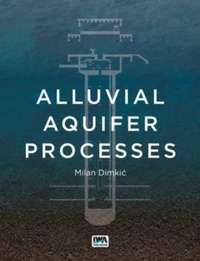
Alluvial Aquifer Processes
Published on 15. March 2021
Book
Paperback/Softback
625 pages
978-1-78906-089-8 (ISBN)
Description
The global population is expected to grow from more than seven billion at present to nine billion by the year 2050. As a result, resource issues are becoming increasingly severe. The questions raised in connection with natural resources are practical, but also philosophical and political.
Alluvial groundwater is becoming increasingly important for the drinking water supply, but also for agriculture and other human needs. Human civilisations developed in alluviums during the Holocene. Armies, roads, trade and agglomerations largely concentrated in river valleys. Alluviums are resource treasuries (water, forests, farmland, etc.), but at the same time, they are exposed to pressures from the population and economy. These threats to alluvial plains and alluvial aquifers require very careful planning and persistent implementation of protection measures.
Sudden social and natural changes increasingly lead the world into a tangle of global events and problems whose outcomes are not easy to perceive, let alone influence. One of the factors that can help is knowledge or, in other words, expertise focusing on a single problem or area. The ability to synthesise information and master comprehensive models is also extremely important.
This book, a monograph, is a modest attempt to contribute to the understanding of planetary water management, groundwater and certain natural processes in alluviums. It comprehensively encompasses current topics associated with the state, processes and problems of alluvial aquifers and is devoted to professionals, experts, professors and students in advanced stages of learning.
The book is a continuation of sorts of another book released in 2008 by IWA Publishing, Groundwater Management in Large River Basins, edited by Milan A. Dimkic, Heinz-Juergen Brauch and Michael Kavanaugh.
Alluvial groundwater is becoming increasingly important for the drinking water supply, but also for agriculture and other human needs. Human civilisations developed in alluviums during the Holocene. Armies, roads, trade and agglomerations largely concentrated in river valleys. Alluviums are resource treasuries (water, forests, farmland, etc.), but at the same time, they are exposed to pressures from the population and economy. These threats to alluvial plains and alluvial aquifers require very careful planning and persistent implementation of protection measures.
Sudden social and natural changes increasingly lead the world into a tangle of global events and problems whose outcomes are not easy to perceive, let alone influence. One of the factors that can help is knowledge or, in other words, expertise focusing on a single problem or area. The ability to synthesise information and master comprehensive models is also extremely important.
This book, a monograph, is a modest attempt to contribute to the understanding of planetary water management, groundwater and certain natural processes in alluviums. It comprehensively encompasses current topics associated with the state, processes and problems of alluvial aquifers and is devoted to professionals, experts, professors and students in advanced stages of learning.
The book is a continuation of sorts of another book released in 2008 by IWA Publishing, Groundwater Management in Large River Basins, edited by Milan A. Dimkic, Heinz-Juergen Brauch and Michael Kavanaugh.
More details
Language
English
Place of publication
London
United Kingdom
Target group
College/higher education
Professional and scholarly
Dimensions
Height: 244 mm
Width: 190 mm
Thickness: 42 mm
Weight
1370 gr
ISBN-13
978-1-78906-089-8 (9781789060898)
Copyright in bibliographic data and cover images is held by Nielsen Book Services Limited or by the publishers or by their respective licensors: all rights reserved.
Schweitzer Classification
Other editions
Additional editions
Content
The Editor
Preface
Chapter 1
Introduction
Chapter 2
Water management in large alluvial plains
Milan Dimkic, Srdan Kovacevic, Aleksandar Calenic and Ivan Zavadsky
Chapter 3
Alluvial aquifer - The legacy of the quaternary period
Jelena Zaric, David Mitrinovic and Milan Dimkic
Chapter 4
Oxic conditions of alluvial aquifers
Milan Dimkic, Mirjana Vojinovic Miloradov and Ivana Mihajlovic
Chapter 5
Iron incrustation of water wells
Milan Dimkic, Milenko Pusic, David Mitrinovic and Slobodan Vujasinovic
Chapter 6
Pharmaceutical attenuation processes during filtration in groundwater
Srdan Kovacevic and Milan Dimkic
Chapter 7
Removal of pesticides from groundwater by filtration
Nevena Zivancev and Milan Dimkic
Chapter 8
Transformation of nitrogen compounds in groundwater
Marija Perovic and Milan Dimkic
Chapter 9
Methods for trace analysis of pharmaceuticals and pesticides in water and sediment samples
Ivana Matic-Bujagic, Svetlana Grujic, Tatjana Durkic and Mila Lausevic
Chapter 10
Artificial aquifer recharge and the compression of layers of a hydrogeological complex due to groundwater abstraction
Milan Dimkic, Slobodan Vujasinovic and Milan Dotlic
Chapter 11
Drought and alluvial groundwater resources
Dejan Dimkic, Milan Dimkic and Slobodan Vujasinovic
Appendix 1
Surface tension, capillarity and viscosity
Srdan Kovacevic, Slobodan Vujasinovic and Milan Dimkic
Appendix 2
Determining the coefficient of filtration based on data on the granulometric composition of soil
Srdan Kovacevic, Slobodan Vujasinovic and Milan Dimkic
Appendix 3
Chemical structure and selected properties that influence the fate of pesticides in the environment
Nevena Zivancev
Appendix 4
The chronology of the quaternary period
David Mitrinovic and Jelena Zaric
Index
Preface
Chapter 1
Introduction
Chapter 2
Water management in large alluvial plains
Milan Dimkic, Srdan Kovacevic, Aleksandar Calenic and Ivan Zavadsky
Chapter 3
Alluvial aquifer - The legacy of the quaternary period
Jelena Zaric, David Mitrinovic and Milan Dimkic
Chapter 4
Oxic conditions of alluvial aquifers
Milan Dimkic, Mirjana Vojinovic Miloradov and Ivana Mihajlovic
Chapter 5
Iron incrustation of water wells
Milan Dimkic, Milenko Pusic, David Mitrinovic and Slobodan Vujasinovic
Chapter 6
Pharmaceutical attenuation processes during filtration in groundwater
Srdan Kovacevic and Milan Dimkic
Chapter 7
Removal of pesticides from groundwater by filtration
Nevena Zivancev and Milan Dimkic
Chapter 8
Transformation of nitrogen compounds in groundwater
Marija Perovic and Milan Dimkic
Chapter 9
Methods for trace analysis of pharmaceuticals and pesticides in water and sediment samples
Ivana Matic-Bujagic, Svetlana Grujic, Tatjana Durkic and Mila Lausevic
Chapter 10
Artificial aquifer recharge and the compression of layers of a hydrogeological complex due to groundwater abstraction
Milan Dimkic, Slobodan Vujasinovic and Milan Dotlic
Chapter 11
Drought and alluvial groundwater resources
Dejan Dimkic, Milan Dimkic and Slobodan Vujasinovic
Appendix 1
Surface tension, capillarity and viscosity
Srdan Kovacevic, Slobodan Vujasinovic and Milan Dimkic
Appendix 2
Determining the coefficient of filtration based on data on the granulometric composition of soil
Srdan Kovacevic, Slobodan Vujasinovic and Milan Dimkic
Appendix 3
Chemical structure and selected properties that influence the fate of pesticides in the environment
Nevena Zivancev
Appendix 4
The chronology of the quaternary period
David Mitrinovic and Jelena Zaric
Index