


Breaking the Cycle
How Schools Can Overcome Urban Challenges
Published on 24. October 2013
Book
Hardback
166 pages
978-1-4758-0610-6 (ISBN)
Description
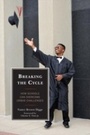
Breaking the Cycle tells the inspiring story of young people whom many would write off as a lost cause but who, thanks to a remarkable school, are headed for success. We learn about their world from teens like Shawna, the daughter of a crack-addicted mother. Or Andre, the only one in his family not on drugs. Or Daron, kicked out of his home by an abusive father. Challenged by the pernicious factors of their environment-drugs, violence, fatherless homes, and poor educational backgrounds-students at the Dayton Early College Academy are nevertheless beating the odds. All are headed for college, from which the vast majority will graduate.
The book reveals how this school is succeeding when so many fail. It conveys the hopeful message that others can replicate much of what "DECA" does and save a generation mired in despair.
America's failure to educate its urban children is evidenced by our woeful statistics. If it is possible to turn around this bleak picture-and it is-this is a story well worth telling. And this is what Breaking the Cycle aims to do.
For more information on the book, including interviews with the author please check out www.nancybdiggs.com.
The book reveals how this school is succeeding when so many fail. It conveys the hopeful message that others can replicate much of what "DECA" does and save a generation mired in despair.
America's failure to educate its urban children is evidenced by our woeful statistics. If it is possible to turn around this bleak picture-and it is-this is a story well worth telling. And this is what Breaking the Cycle aims to do.
For more information on the book, including interviews with the author please check out www.nancybdiggs.com.
Reviews / Votes
With Breaking the Cycle, Nancy Brown Diggs has provided eloquent, powerful, and stimulating analysis of the troubles in our neighborhoods and the people assiduously working with interest and clear thinking to effectively protect them. Reading this book is recommended since it offers some hope to the hopeless. * The Journal of Negro Education * A "must read" for teachers, educators, sociologists, and reformers concerned about lost generations of at-risk students in dysfunctional, ineffective urban schools. Breaking the Cycle gives hope to educators and decision markers, and a model for how to change lives of at-risk students and potential dropouts. Young people who face seemingly insurmountable odds of being successful because of family and neighborhood environments with drugs, violence, single parent families, attitudes toward education, and poor schools are provided with the opportunity to succeed in this model school. "Cuddles, challenges, and cooperation" are keys to all students' entering college-and completion. Readers will take away rich and moving descriptions of the challenges faced by urban young people, the work of teachers to meet their needs, and a model for structuring creative schools and classes. -- Jeanne Ballantine, Wright State University In Breaking the Cycle Nancy Diggs captures the voices of DECA - students and teachers, school leaders and founders - to tell the story of how an amazing school, against all odds, is preparing inner city students to succeed in college. This book inspires hope for the future and will serve as a guide to urban educators across the country. -- Bob Taft, Governor of Ohio 1999-2007; Distinguished Research Associate, University of Dayton For a long time now, researchers have asked 'what about the schools and classrooms that are doing a great job in the most difficult circumstances?' This account of the DECA Charter School in Dayton, Ohio by Nancy Brown Diggs provides one clear answer to that question. Here is the story of a school that has dramatically raised the bar on the meaning of success for high needs urban students. Anyone engaged with urban education needs to read it. -- James Fraser, senior vice president for programs at Woodrow Wilson National Fellowship Foundation and professor of history and education at New York University, author of "Preparing America's Teachers: A History"More details
Series
Language
English
Place of publication
United States
Publishing group
Bloomsbury Publishing Plc
Dimensions
Height: 235 mm
Width: 157 mm
Thickness: 14 mm
Weight
401 gr
ISBN-13
978-1-4758-0610-6 (9781475806106)
Copyright in bibliographic data and cover images is held by Nielsen Book Services Limited or by the publishers or by their respective licensors: all rights reserved.
Schweitzer Classification
Other editions
Additional editions
E-Book
10/2013
1st Edition
Rowman & Littlefield Education
€38.49
Available for download
E-Book
10/2013
1st Edition
Rowman & Littlefield Education
€38.49
Available for download
Person
Nancy Brown Diggs' long interest in other cultures is reflected by her Ph.D. in East Asian Studies, as well as her fluency in French, Spanish, and German. With Breaking the Cycle, the author of Meet the Japanese, Steel Butterflies, Looking Beyond the Mask, Hidden in the Heartland, and, with Tanya Higgins, A Look at Life in Northern Ireland explores a culture closer to home, that of inner-city teens, describing how, with the help of good schools, they, too, can achieve the American dream.
Content
Foreword
Preface
Introduction
Part I: Challenges
Chapter 1 - Drugs
Chapter 2 - Violence
Chapter 3 - Single Mothers
Chapter 4 - "Acting White"
Chapter 5 - Inadequate Schools
Part II: Overcoming the Challenges
Chapter 6 - DECA: The Family
Chapter 7 - The Miracle Workers
Chapter 8 - Academics
Chapter 9 - Raising the Bar
Chapter 10 - Bumps in the Road
Conclusion
References
Preface
Introduction
Part I: Challenges
Chapter 1 - Drugs
Chapter 2 - Violence
Chapter 3 - Single Mothers
Chapter 4 - "Acting White"
Chapter 5 - Inadequate Schools
Part II: Overcoming the Challenges
Chapter 6 - DECA: The Family
Chapter 7 - The Miracle Workers
Chapter 8 - Academics
Chapter 9 - Raising the Bar
Chapter 10 - Bumps in the Road
Conclusion
References