

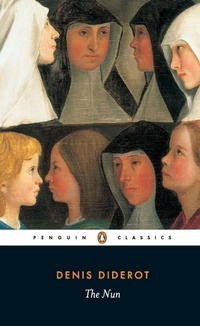
The Nun
Published on 28. February 1974
Book
Paperback/Softback
192 pages
978-0-14-044300-4 (ISBN)
Description
In 1758 Diderot's friend the Marquis de Croismare became interested in the cause celebre of a nun who was appealing to be allowed to leave a Paris convent. Less than a year later, in an affectionate attempt to trick his friend, Diderot created this masterpiece - a fictitious set of desperate and pleading letters to the Marquis from a teenage girl forced into the nunnery because she is illegitimate. In these letters, the impressionable and innocent Suzanne Simonin describes the cruelty and abuse she has suffered in an institution poisoned by vicious gossip, intrigues, persecutions and deviance. Considered too subversive during Diderot's lifetime, The Nun first appeared in print in 1796 following the Revolution. Part gripping novel, part licentious portrayal of sexual fervour and part damning attack on oppressive religious institutions, it remains one of the most utterly original works of the many eighteenth-century.
More details
Language
English
Place of publication
London
United Kingdom
Publishing group
Penguin Books Ltd
Product notice
Paperback (UK-B)
Dimensions
Height: 181 mm
Width: 111 mm
Thickness: 12 mm
Weight
185 gr
ISBN-13
978-0-14-044300-4 (9780140443004)
Copyright in bibliographic data and cover images is held by Nielsen Book Services Limited or by the publishers or by their respective licensors: all rights reserved.
Schweitzer Classification
Other editions
Additional editions
Persons
Denis Diderot was born at Langres in eastern France in 1713. After graduating in Paris in 1732, he was nominally a law student for ten years, but was actually leading a precarious bohemian but studious existence. In the early 1740s he met three contemporaries who were of great significance to him and to the age: a'Alembert, Condillac and Rousseau, who assisted Diderot in the compilation of the Encyclopedie, which he worked on until its completion in 1773. Interested in the mind-body dichotomy, his work was a bold mixture of science and philosophy. He died in 1784.