

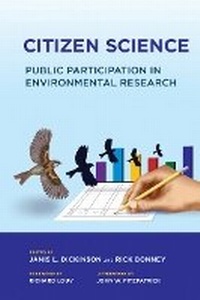
Citizen Science
Public Participation in Environmental Research
Published on 29. January 2015
Book
Paperback/Softback
304 pages
978-0-8014-5674-9 (ISBN)
Description
Citizen science enlists members of the public to make and record useful observations, such as counting birds in their backyards, watching for the first budding leaf in spring, or measuring local snowfall. The large numbers of volunteers who participate in projects such as Project FeederWatch or Project BudBurst collect valuable research data, which, when pooled together, create an enormous body of scientific data on a vast geographic scale. In return, such projects aim to increase participants' connections to science, place, and nature, while supporting science literacy and environmental stewardship. In Citizen Science, experts from a variety of disciplines-including scientists and education specialists working at the Cornell Lab of Ornithology, where many large citizen science programs use birds as proxies for biodiversity-share their experiences of creating and implementing successful citizen science projects, primarily those that use massive data sets gathered by citizen scientists to better understand the impact of environmental change.
This first and foundational book for this developing field of inquiry addresses basic aspects of how to conduct citizen science projects, including goal-setting, program design, and evaluation, as well as the nuances of creating a robust digital infrastructure and recruiting a large participant base through communications and marketing. An overview of the types of research approaches and techniques demonstrates how to make use of large data sets arising from citizen science projects. A final section focuses on citizen science's impacts and its broad connections to understanding the human dimensions and educational aspects of participation. Citizen Science teaches teams of program developers and researchers how to cross the bridge from success at public engagement to using citizen science data to understand patterns and trends or to test hypotheses about how ecological processes respond to change at large geographic scales. Intended as a resource for a broad audience of experts and practitioners in natural sciences, information science, and social sciences, this book can be used to better understand how to improve existing programs, develop new ones, and make better use of the data resources that have accumulated from citizen science efforts. Its focus on harnessing the impact of "crowdsourcing" for scientific and educational endeavors is applicable to a wide range of fields, especially those that touch on the importance of massive collaboration aimed at understanding and conserving what we can of the natural world.
This first and foundational book for this developing field of inquiry addresses basic aspects of how to conduct citizen science projects, including goal-setting, program design, and evaluation, as well as the nuances of creating a robust digital infrastructure and recruiting a large participant base through communications and marketing. An overview of the types of research approaches and techniques demonstrates how to make use of large data sets arising from citizen science projects. A final section focuses on citizen science's impacts and its broad connections to understanding the human dimensions and educational aspects of participation. Citizen Science teaches teams of program developers and researchers how to cross the bridge from success at public engagement to using citizen science data to understand patterns and trends or to test hypotheses about how ecological processes respond to change at large geographic scales. Intended as a resource for a broad audience of experts and practitioners in natural sciences, information science, and social sciences, this book can be used to better understand how to improve existing programs, develop new ones, and make better use of the data resources that have accumulated from citizen science efforts. Its focus on harnessing the impact of "crowdsourcing" for scientific and educational endeavors is applicable to a wide range of fields, especially those that touch on the importance of massive collaboration aimed at understanding and conserving what we can of the natural world.
Reviews / Votes
Citizen Science succeeds in showcasing a path to knowledge that is unfamiliar to-and, at first glance, unwanted by-many professional scientists. Its well-written, wide-ranging, and accessible chapters make a compelling argument that engaging the public in scientific research is important in order to increase our environmental knowledge and build a citizenry that values and uses what sciences produces. This book inspires the professional to see the scientist in everyone and to broaden our research programs, which will stoke the fire of scientific curiosity that burns within each of us.- John M. Merzluff (BioScience) A timely review of recent developments, seeking to provide an overview, with relevant case studies, of the growth of large-scale citizen science projects since the late 1980s. One of the book's merits is its breadth, seeking to explore not just the practical issues of delivering robust science through volunteers but also the benefits this brings to a variety of environmental research fields and the impacts - educational, social and behavioural - it has on the participants themselves.
- Mark Eaton (Ibis) Dickinson and Bonney's volume, Citizen Science, represents an important foundation text to launch the burgeoning arena of citizen science.... This book provides the 'recipes' for all scientists to undertake an aspect of citizen science as part of their research portfolio. My overall reaction is 'Awesome!'.
- Meg Lowman (Ecology) Not only does this research allow for extensive data collection, but it makes research relevant to the general public and provides additional teaching tools for K-12 education. This book also explores the impact of the increased use of social media on the success of citizen science projects and investigates potential future uses of social media for such projects. It incorporates the views of many subject experts, with each chapter written by those with firsthand experience of the respective topics. An extensive bibliography provides sources for further information. Summing Up: Highly recommended.
- D.L. King (Choice)
More details
Language
English
Place of publication
Ithaca
United States
Publishing group
Cornell University Press
Product notice
Paperback (trade)
Illustrations
5 halftones, 1 line figure, 6 tables, 28 charts/graphs - 5 Halftones, black and white - 6 Illustrations, color - 29 Halftones, unspecified
Dimensions
Height: 235 mm
Width: 155 mm
Thickness: 18 mm
Weight
907 gr
ISBN-13
978-0-8014-5674-9 (9780801456749)
Copyright in bibliographic data and cover images is held by Nielsen Book Services Limited or by the publishers or by their respective licensors: all rights reserved.
Schweitzer Classification
Other editions
Additional editions
Janis L. Dickinson | Richard E. Bonney
Citizen Science
Public Participation in Environmental Research
E-Book
04/2012
Comstock Publishing Associates
€26.49
Available for download
Persons
Janis L. Dickinson is Professor of Natural Resources at Cornell University and Arthur A. Allen Director of Citizen Science at the Cornell Lab of Ornithology. Rick Bonney is Director of Program Development and Evaluation at the Cornell Lab of Ornithology. Richard Louv is the author of Last Child in the Woods and The Nature Principle. John W. Fitzpatrick is the Louis Agassiz Fuertes Director of the Cornell Lab of Ornithology and Professor of Ecology and Evolutionary Biology at Cornell University.
Content
Foreword by Richard Louv
Notes on Contributors
AcknowledgmentsIntroduction: Why Citizen Science?
by Janis L. Dickinson and Rick BonneyPart I. The Practice of Citizen Science1. Overview of Citizen Science
by Rick Bonney and Janis L. Dickinson2. Projects and Possibilities: Lessons from Citizen Science ProjectsFrom Backyard Observations to Continent-Wide Trends: Lessons from the First Twenty-Two Years of Project FeederWatch
by David N. BonterMonitoring Monarchs: Citizen Science and a Charismatic Insect
by Karen S. OberhauserNeighborhood Nestwatch: Mentoring Citizens in the Urban Matrix
by Peter P. Marra and Robert ReitsmaProject BudBurst: Citizen Science for All Seasons
by Sandra Henderson, Dennis L. Ward, Kirsten K. Meymaris, Paul Alaback, and Kayri Havens3. Using Bioinformatics in Citizen Science
by Steve Kelling4. Growing the Base for Citizen Science: Recruiting and Engaging Participants
by Miyoko Chu, Patricia Leonard, and Flisa Stevenson5. What Is Our Impact? Toward a Unified Framework for Evaluating Outcomes of Citizen Science Participation
by Tina Phillips, Rick Bonney, and Jennifer L. ShirkPart II. Impacts of Citizen Science on Conservation Research6. The Opportunities and Challenges of Citizen Science as a Tool for Ecological Research
by Caren B. Cooper, Wesley M. Hochachka, and Andre A. Dhondt7. Widening the Circle of Investigation: The Interface between Citizen Science and Landscape Ecology
by Benjamin Zuckerberg and Kevin McGarigal8. Using Data Mining to Discover Biological Patterns in Citizen Science Observations
by Daniel Fink and Wesley M. Hochachka9. Developing a Conservation Research Program with Citizen Science
by Ralph S. Hames, James D. Lowe, and Kenneth V. Rosenberg10. Citizens, Science, and Environmental Policy: A British Perspective
by Jeremy J. D. GreenwoodPart III. Educational, Social, and Behavioral Aspects of Citizen Science11. Cognitive Considerations in the Development of Citizen Science Projects
by Rebecca C. Jordan, Joan G. Ehrenfeld, Steven A. Gray, Wesley R. Brooks, David V. Howe, and Cindy E. Hmelo-Silver12. Who Poses the Question? Using Citizen Science to Help K-12 Teachers Meet the Mandate for Inquiry
by Nancy M. Trautmann, Jennifer L. Shirk, Jennifer Fee, and Marianne E. Krasny13. A Gateway to Science for All: Celebrate Urban Birds
by Karen Purcell, Cecilia Garibay, and Janis L. Dickinson14. Children and Nature: Following the Trail to Environmental Attitudes and Behavior
by Nancy M. Wells and Kristi S. Lekies15. Internet-Based Social Networking and Collective Action Models of Citizen Science: Theory Meets Possibility
by Heather A. Triezenberg, Barbara A. Knuth, Y. Connie Yuan, and Janis L. Dickinson16. A Role for Citizen Science in Disaster and Conflict Recovery and Resilience
by Keith G. Tidball and Marianne E. KrasnyAfterword by John W. FitzpatrickLiterature Cited
Index
Notes on Contributors
AcknowledgmentsIntroduction: Why Citizen Science?
by Janis L. Dickinson and Rick BonneyPart I. The Practice of Citizen Science1. Overview of Citizen Science
by Rick Bonney and Janis L. Dickinson2. Projects and Possibilities: Lessons from Citizen Science ProjectsFrom Backyard Observations to Continent-Wide Trends: Lessons from the First Twenty-Two Years of Project FeederWatch
by David N. BonterMonitoring Monarchs: Citizen Science and a Charismatic Insect
by Karen S. OberhauserNeighborhood Nestwatch: Mentoring Citizens in the Urban Matrix
by Peter P. Marra and Robert ReitsmaProject BudBurst: Citizen Science for All Seasons
by Sandra Henderson, Dennis L. Ward, Kirsten K. Meymaris, Paul Alaback, and Kayri Havens3. Using Bioinformatics in Citizen Science
by Steve Kelling4. Growing the Base for Citizen Science: Recruiting and Engaging Participants
by Miyoko Chu, Patricia Leonard, and Flisa Stevenson5. What Is Our Impact? Toward a Unified Framework for Evaluating Outcomes of Citizen Science Participation
by Tina Phillips, Rick Bonney, and Jennifer L. ShirkPart II. Impacts of Citizen Science on Conservation Research6. The Opportunities and Challenges of Citizen Science as a Tool for Ecological Research
by Caren B. Cooper, Wesley M. Hochachka, and Andre A. Dhondt7. Widening the Circle of Investigation: The Interface between Citizen Science and Landscape Ecology
by Benjamin Zuckerberg and Kevin McGarigal8. Using Data Mining to Discover Biological Patterns in Citizen Science Observations
by Daniel Fink and Wesley M. Hochachka9. Developing a Conservation Research Program with Citizen Science
by Ralph S. Hames, James D. Lowe, and Kenneth V. Rosenberg10. Citizens, Science, and Environmental Policy: A British Perspective
by Jeremy J. D. GreenwoodPart III. Educational, Social, and Behavioral Aspects of Citizen Science11. Cognitive Considerations in the Development of Citizen Science Projects
by Rebecca C. Jordan, Joan G. Ehrenfeld, Steven A. Gray, Wesley R. Brooks, David V. Howe, and Cindy E. Hmelo-Silver12. Who Poses the Question? Using Citizen Science to Help K-12 Teachers Meet the Mandate for Inquiry
by Nancy M. Trautmann, Jennifer L. Shirk, Jennifer Fee, and Marianne E. Krasny13. A Gateway to Science for All: Celebrate Urban Birds
by Karen Purcell, Cecilia Garibay, and Janis L. Dickinson14. Children and Nature: Following the Trail to Environmental Attitudes and Behavior
by Nancy M. Wells and Kristi S. Lekies15. Internet-Based Social Networking and Collective Action Models of Citizen Science: Theory Meets Possibility
by Heather A. Triezenberg, Barbara A. Knuth, Y. Connie Yuan, and Janis L. Dickinson16. A Role for Citizen Science in Disaster and Conflict Recovery and Resilience
by Keith G. Tidball and Marianne E. KrasnyAfterword by John W. FitzpatrickLiterature Cited
Index