

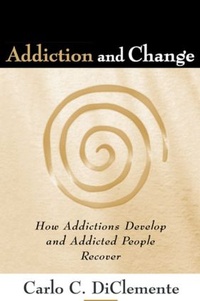
Addiction and Change, First Edition
How Addictions Develop and Addicted People Recover
1st Edition
Published on 6. July 2006
Book
Paperback/Softback
318 pages
978-1-59385-344-0 (ISBN)
Description
The stages-of-change model has become widely known as a framework for conceptualizing recovery. Less well known are the processes that drive movement through the stages or how the stages apply to becoming addicted. From Carlo C. DiClemente, codeveloper of the transtheoretical model, this book offers a panoramic view of the entire continuum of addictive behavior change. The author illuminates the common path that individuals travel as they establish and reinforce new patterns of behavior, whether they are developing an addiction or struggling to free themselves from one, and regardless of the specific addictive behavior. The book addresses crucial questions of why, when, and how to intervene to bolster recovery in those already addicted and reach out effectively to people at risk.
Reviews / Votes
The transtheoretical model has fundamentally changed how Western professionals think about and address addictive behavior. In this new and original work, Dr. DiClemente extends this influential model to describe the development as well as the resolution of problems with drugs, sex, eating, and money. He thereby offers a comprehensive and fruitful framework to stimulate professional thought on addiction policy, prevention, research, and treatment. - William R. Miller, PhD, Department of Psychology, University of New MexicoThis volume combines cutting-edge research, theory, and practice....Based on the transtheoretical model, the book offers an innovative, integrative approach to understanding addiction and change. It is a welcome contribution for those who teach and those who treat addictions. - James O. Prochaska, PhD, Cancer Prevention Research Center, University of Rhode Island The transtheoretical model has fundamentally changed how Western professionals think about and address addictive behavior. In this new and original work, Dr. DiClemente extends this influential model to describe the development as well as the resolution of problems with drugs, sex, eating, and money. He thereby offers a comprehensive and fruitful framework to stimulate professional thought on addiction policy, prevention, research, and treatment. - William R. Miller, PhD, Department of Psychology, University of New Mexico
More details
Series
Language
English
Place of publication
New York
United States
Target group
College/higher education
Professional and scholarly
Dimensions
Height: 229 mm
Width: 152 mm
Weight
470 gr
ISBN-13
978-1-59385-344-0 (9781593853440)
Copyright in bibliographic data and cover images is held by Nielsen Book Services Limited or by the publishers or by their respective licensors: all rights reserved.
Schweitzer Classification
Other editions
New editions
Carlo C. DiClemente
Addiction and Change, Second Edition
How Addictions Develop and Addicted People Recover
Book
03/2018
2nd Edition
Guilford Press
€56.00
Shipment within 15-20 days
Additional editions
Carlo C. DiClemente
Addiction and Change, First Edition
How Addictions Develop and Addicted People Recover
Book
05/2003
1st Edition
Guilford Publications
€67.03
Article exhausted; check different version
Person
Carlo C. DiClemente, PhD, is a Professor in the Department of Psychology at the University of Maryland, Baltimore County. He received his MA in Psychology from the New School for Social Research and his PhD in Psychology from the University of Rhode Island. The codeveloper with Dr. James Prochaska of the transtheoretical model (TTM) of behavior change, Dr. DiClemente has published numerous articles, chapters, and books. For over 20 years, he has conducted funded research in health and addictive behaviors. He has directed an outpatient alcoholism treatment program and serves as a consultant to private and public treatment programs. The recipient of the Maryland Psychological Association's 2002 Distinguished Contribution to Scientific Psychology award, Dr. DiClemente was also one of five winners of the 2002 Innovators Combating Substance Abuse award given by the Robert Wood Johnson Foundation.
Content
I. Understanding Addictions in Terms of Change
1. Models of Addiction and Change
2. The Process of Human Intentional Behavior Change
3. The Well-Maintained Addiction: An Ending and a Beginning
II. The Road to Addiction: The Journey through the Stages of Addiction
4. Exploring the Precontemplation, Contemplation, and Preparation Stages of Becoming Addicted
5. Repeated and Regular Use: Moving from Preparation to Action on the Road to Addiction
III. Quitting an Addiction: The Journey through the Stages of Recovery
6. Precontemplation for Recovery: Cultivating Seeds for Change
7. The Decision to Change: Moving from the Contemplation to the Preparation Stage of Recovery
8. Preparing for Action: Creating a Plan
9. Taking Action to Change an Addiction
10. The Long Haul: Well-Maintained Recovery
IV. Designing Interventions to Match the Process of Change
11. Prevention: Interfering with the Process of Becoming Addicted
12. Designing Interventions for Recovery
13. Research on Addiction and Change
1. Models of Addiction and Change
2. The Process of Human Intentional Behavior Change
3. The Well-Maintained Addiction: An Ending and a Beginning
II. The Road to Addiction: The Journey through the Stages of Addiction
4. Exploring the Precontemplation, Contemplation, and Preparation Stages of Becoming Addicted
5. Repeated and Regular Use: Moving from Preparation to Action on the Road to Addiction
III. Quitting an Addiction: The Journey through the Stages of Recovery
6. Precontemplation for Recovery: Cultivating Seeds for Change
7. The Decision to Change: Moving from the Contemplation to the Preparation Stage of Recovery
8. Preparing for Action: Creating a Plan
9. Taking Action to Change an Addiction
10. The Long Haul: Well-Maintained Recovery
IV. Designing Interventions to Match the Process of Change
11. Prevention: Interfering with the Process of Becoming Addicted
12. Designing Interventions for Recovery
13. Research on Addiction and Change