

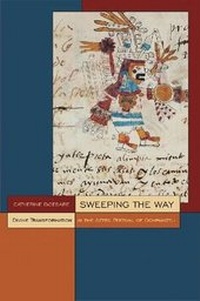
Sweeping the Way
Divine Transformation in the Aztec Festival of Ochpaniztli
Published on 31. May 2009
Book
Hardback
248 pages
978-0-87081-943-8 (ISBN)
Description
Incorporating human sacrifice, flaying, and mock warfare, the pre-Columbian Mexican ceremony known as Ochpaniztli, or "Sweeping", has long attracted attention. Although among the best known of eighteen annual ceremonies, Ochpaniztli's significance has nevertheless been poorly understood. Ochpaniztli is known mainly from early colonial illustrated manuscripts produced in cross-cultural collaboration between Spanish missionary-chroniclers and native Mexican informants and artists. Although scholars typically privilege the manuscripts' textual descriptions, the book examines the fundamental role of their pictorial elements, which significantly expand the information contained in the texts. DiCesare emphasises the primacy of the regalia, ritual implements, and adornments of the patron "goddess" as the point of intersection between sacred, cosmic forces and ceremonial celebrants. The associations of these paraphernalia indicate that Ochpaniztli was a period of purification rituals, designed to transform and protect individual and communal bodies alike.
Spanish friars were unable to apprehend the complex nature of the festival's patroness, ultimately fragmenting her identity into categories meeting their expectations, which continues to vex modern investigations. Taken together, the variety of Ochpaniztli sources offer a useful tool for addressing myriad issues of translation and transformation in pre-Columbian and post-conquest Mexico, as Christian friars and native Mexicans together negotiated a complex body of information about outlawed ritual practices and proscribed sacred entities.
Spanish friars were unable to apprehend the complex nature of the festival's patroness, ultimately fragmenting her identity into categories meeting their expectations, which continues to vex modern investigations. Taken together, the variety of Ochpaniztli sources offer a useful tool for addressing myriad issues of translation and transformation in pre-Columbian and post-conquest Mexico, as Christian friars and native Mexicans together negotiated a complex body of information about outlawed ritual practices and proscribed sacred entities.
More details
Language
English
Place of publication
Colorado
United States
Target group
College/higher education
Dimensions
Height: 229 mm
Width: 152 mm
Weight
487 gr
ISBN-13
978-0-87081-943-8 (9780870819438)
Copyright in bibliographic data and cover images is held by Nielsen Book Services Limited or by the publishers or by their respective licensors: all rights reserved.
Schweitzer Classification
Person
Catherine DiCesare is an assistant professor of art history at Colorado State University. Her specialty is pre-Columbian art history/arts of the Americas, with research focusing on the conquest period in central Mexico.
Content
FOREWORD BY ELIZABETH HILL BOONE; XV INTRODUCTION; I CHAPTER ONE I 7 Sources for Ochpaniztli: Negotiating Text and Image in Early Colonial Mexican Manuscripts CHAPTER TWO; 35 Visualizing the Sacred in the Ochpaniztli Festival CHAPTER THREE; 69 Purification and Renewal during the Festival of Ochpaniztli CHAPTER FOUR; I03 The Colonial Image of Tlazolteotl CHAPTER FIVE; 123 Ochpaniztli in the Mexican Codex Borbonicus CONCLUSION; 155 NOTES; 167 BIBLIOGRAPHY; 209;