

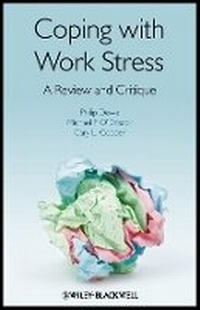
Coping with Work Stress
A Review and Critique
1st Edition
Published on 17. September 2010
Book
Hardback
200 pages
978-0-470-99766-6 (ISBN)
Description
Coping with Work Stress: A Review and Critique highlights current research relating to the coping strategies of individuals and organizations, and provides best practice techniques for dealing with the growing epidemic of stress and lack of overall well-being at work.
Reviews and critiques the most current research focusing on workplace stress
Provides 'best practice' techniques for dealing with stress at the workplace
Extends beyond stress to cover broader issues of well-being at work
Reviews and critiques the most current research focusing on workplace stress
Provides 'best practice' techniques for dealing with stress at the workplace
Extends beyond stress to cover broader issues of well-being at work
Reviews / Votes
"Richly referenced to open further research and understanding, this book is an amazing and indispensable study of a difficult working condition. It is hoped that it will receive a wide circulation in every industry whose workforce is at risk of neglected work stress." (RoSPA Occupational Safety & Health Journal, 1 July 2011) "Dewe (organizational behavior, U. of London, UK) et al. review issues surrounding work stress and coping research, what is needed to sustain this research, and possible new coping strategies for individuals and organizations to use when dealing with work stress and improving health and well-being." (Reference and Research Book News, February 2011)More details
Language
English
Place of publication
Hoboken
United Kingdom
Publishing group
John Wiley and Sons Ltd
Target group
Professional and scholarly
Dimensions
Height: 233 mm
Width: 164 mm
Thickness: 17 mm
Weight
425 gr
ISBN-13
978-0-470-99766-6 (9780470997666)
Copyright in bibliographic data and cover images is held by Nielsen Book Services Limited or by the publishers or by their respective licensors: all rights reserved.
Schweitzer Classification
Other editions
Additional editions
Philip J. Dewe | Michael P. O'Driscoll | Cary L. Cooper
Coping with Work Stress
A Review and Critique
E-Book
10/2010
1st Edition
Wiley-Blackwell
€46.99
Available for download

Book
09/2010
1st Edition
Wiley
€54.41
Shipment within 10-20 days
Persons
Philip J. Dewe is Vice-Master of Birkbeck and Professor of Organizational Behaviour in the Department of Organizational Psychology, Birkbeck, University of London. He is a member of the editorial board of Work and Stress and the International Journal of Stress Management, and an Associate Editor of the American Journal of Heath Promotion. Michael P. O'Driscoll is Professor of Psychology at the University of Waikato, New Zealand. He is the co-author of several books relating to work stress, has served on the editorial boards of several academic journals, and was editor of the New Zealand Journal of Psychology, 2001-2006.
Cary L. Cooper, CBE, is Distinguished Professor of Organizational Psychology and Health at Lancaster University. He is also Chair of the Academy of Social Sciences, President of the British Association of Counselling and Psychotherapy, Editor of the journal Stress and Health and was lead scientist on the UK government's Foresight project on Mental Capital and Wellbeing.
Cary L. Cooper, CBE, is Distinguished Professor of Organizational Psychology and Health at Lancaster University. He is also Chair of the Academy of Social Sciences, President of the British Association of Counselling and Psychotherapy, Editor of the journal Stress and Health and was lead scientist on the UK government's Foresight project on Mental Capital and Wellbeing.
Content
1 Work stress and coping: Setting the scene. The term 'stress'.
The costs of stress.
Sickness absence.
Labour turnover.
Presenteeism.
Work and mental health generally.
The changing work context and work stressors.
Work stressors: Some issues.
Changing work stressors.
2 Coping: The measurement debate.
A history and some definitional issues surrounding coping.
Defi ning coping and definitional issues.
The measurement of coping.
Coping checklists.
Classifying coping and creating scales.
3 New directions for coping research.
New developments in appraisal.
The infl uence of positive psychology.
From positive psychology to proactive coping.
Other developments in coping.
Progress towards understanding coping effectiveness.
From stress to emotions to positive emotions and coping.
4 Coping with specific work-related stressors.
Types of coping.
Coping with work stressors.
Coping strategies used by specific occupational groups.
Future directions in research on coping with specific work stressors.
5 Coping with work-life conflict.
Social support.
Personal control.
Personal coping strategies.
Organizational strategies to ameliorate work-life conflict.
Conclusions.
6 Stress management interventions.
Conceptual framework for stress management interventions.
Evaluating stress management interventions.
Factors infl uencing the effectiveness of stress management interventions.
Some guidelines for effective interventions.
Conclusions.
7 Coping with work stress: An agenda for the future.
Continuing debates: Emerging context.
Building a future research agenda from the themes of the past.
The characteristics of coping and coping types.
Assessment of coping behaviours.
Coping styles versus coping strategies.
The role of meaning in coping research.
Coping effectiveness.
Personal coping versus organizational stress management interventions.
From stress to well-being.
Conclusions.
References.
Index.
The costs of stress.
Sickness absence.
Labour turnover.
Presenteeism.
Work and mental health generally.
The changing work context and work stressors.
Work stressors: Some issues.
Changing work stressors.
2 Coping: The measurement debate.
A history and some definitional issues surrounding coping.
Defi ning coping and definitional issues.
The measurement of coping.
Coping checklists.
Classifying coping and creating scales.
3 New directions for coping research.
New developments in appraisal.
The infl uence of positive psychology.
From positive psychology to proactive coping.
Other developments in coping.
Progress towards understanding coping effectiveness.
From stress to emotions to positive emotions and coping.
4 Coping with specific work-related stressors.
Types of coping.
Coping with work stressors.
Coping strategies used by specific occupational groups.
Future directions in research on coping with specific work stressors.
5 Coping with work-life conflict.
Social support.
Personal control.
Personal coping strategies.
Organizational strategies to ameliorate work-life conflict.
Conclusions.
6 Stress management interventions.
Conceptual framework for stress management interventions.
Evaluating stress management interventions.
Factors infl uencing the effectiveness of stress management interventions.
Some guidelines for effective interventions.
Conclusions.
7 Coping with work stress: An agenda for the future.
Continuing debates: Emerging context.
Building a future research agenda from the themes of the past.
The characteristics of coping and coping types.
Assessment of coping behaviours.
Coping styles versus coping strategies.
The role of meaning in coping research.
Coping effectiveness.
Personal coping versus organizational stress management interventions.
From stress to well-being.
Conclusions.
References.
Index.