

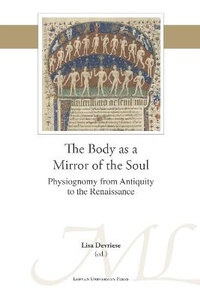
The Body as a Mirror of the Soul
Physiognomy from Antiquity to the Renaissance
Published on 5. October 2021
Book
Paperback/Softback
232 pages
978-94-6270-292-9 (ISBN)
Description
The idea of the body as a mirror of the soul has fascinated mankind throughout history. Being able to see through an individual, and drawing conclusions on their character solely based on a selection of external features, is the subject of physiognomy, and has a long tradition running well into recent times. However, the pre-modern, especially medieval background of this discipline has remained underexplored. The selected case studies in this volume each contribute to a better understanding of the history of physiognomy from antiquity to the Renaissance, and offer discussions on unedited treatises and on the application, development, and reception of this field of knowledge, as well as on visual sources inspired by physiognomic theory.
Contributors: Eniko Bekes (Hungarian Academy of Sciences), Joel Biard (University of Tours), Lisa Devriese (KU Leuven), Maria Fernanda Ferrini (University of Macerata), Christophe Grellard (Ecole Pratique des Hautes Etudes), Luis Campos Ribeiro (University of Lisbon), Maria Michela Sassi (University of Pisa), Oleg Voskoboynikov (Higher School of Economics Moscow), Steven J. Williams (New Mexico Highlands University), Joseph Ziegler (University of Haifa), Gabriella Zuccolin (University of Pavia)
Contributors: Eniko Bekes (Hungarian Academy of Sciences), Joel Biard (University of Tours), Lisa Devriese (KU Leuven), Maria Fernanda Ferrini (University of Macerata), Christophe Grellard (Ecole Pratique des Hautes Etudes), Luis Campos Ribeiro (University of Lisbon), Maria Michela Sassi (University of Pisa), Oleg Voskoboynikov (Higher School of Economics Moscow), Steven J. Williams (New Mexico Highlands University), Joseph Ziegler (University of Haifa), Gabriella Zuccolin (University of Pavia)
Reviews / Votes
Assurement, le lecteur reste fascine par les tres nombreux aspects des cultures antique, medievale et moderne que le sujet permet d'aborder : les contributions, tout en etant d'un niveau scientifique tres eleve, restent tout a fait abordables. La force de ce recueil est d'offrir une approche chronologique qui facilite une comprehension globale des questionnements sur la physiognomonie. En effet, les AA. parviennent bien a mettre en avant tout ce que son etude peut offrir et reussissent conjointement a livrer une excellente introduction interdisciplinaire et transperiodique. Ninon Dubourg, Revue d'Histoire ecclesiastique, vol. 117/3-4, 2022 This careful and deeply researched volume absolutely highlights the richness of early physiognomic thought while offering methodological interventions around how to navigate limited sources. It is a robust chronological framing that combines historical, textual, and literary analysis, visual culture, anthropology, and translation studies to anchor medieval and Renaissance physiognomy both in antiquity and modern discourse. The book emerged from a conference; such an approach is often organized more around topic than theme and argument. The editor does an excellent job framing the texts in a way that is both coherent and cross-cutting, while at the same time allowing the chapters to stand alone as scholarly and pedagogical interventions, offering methodological and historical insights. Clear and cogent, this volume is accessible while remaining robust and rich; scholars will be taking up its provocations for many years to come.Sharrona Pearl, Isis, Volume 114, Number 1, March 2023 https://doi.org/10.1086/723688 Le miroir est-il le reflet de l'ame? Depuis l'Antiquite, les auteurs specialistes du savoir qu'on appelle physiognomonie en sont persuades : un rapport d'expressivite unit le corps et l'ame, et laisse transparaitre a travers les particularites physiques d'un individu, ses aptitudes intellectuelles et surtout son caractere. L'objet de cet ouvrage, suite de dix etudes reunies et prefacees par Lisa Devriese, est d'examiner la tradition textuelle propre a cette discipline jusqu'au XVIIe s. Distribuees selon la chronologie, les contributions envisagent, principalement, les textes eux-memes et leur reception. Deux interventions sont consacrees a l'influence ou aux reflets dans l'image, de la tradition physiognomonique. Une alternance fait se succeder des etudes a visees generales et d'autres plus ponctuelles : on apprecie ce parti. - N. Laneyrie-Dagen, Scriptorium 2022 Le travail de recherche a interroge la legitimite du statut singulier de cette discipline, pour la distinguer de la philosophie, la medecine, l'ethique ou la psychologie, et eprouve le rayonnement et l'autorite du traite pseudo-aristotelicien Physiognomonica de Bartholomee de Messine (xiiie siecle), dans l'histoire des textes et des idees, au cote de quatre autres traites physiognomoniques anterieurs influents, tout au long des periodes etudiees : l'usuel de Polemon aujourd'hui perdu, la compilation latine anonyme sur la physiognomonie synthetisant les apports de Loxus, Aristote et Polemon du ive siecle, le manuel de medecine de l'auteur arabe Rhazes (Liber ad Almansorem, ixe siecle) traduit en latin par Gerard de Cremone, et le texte arabe du Secretum secretorum (xe siecle), largement diffuse dans l'Occident latinophone medieval. - Alice Lamy, << Comptes rendus >>, Le Moyen Age, 2023/2 (Tome CXXIX), p. 533a-653a. DOI : 10.3917/rma.292.0533a. URL : https://www.cairn.info/revue-le-moyen-age-2023-2-page-533a.htm
More details
Series
Language
English
Place of publication
Leuven
Belgium
Target group
College/higher education
US School Grade: College Graduate Student and over
Illustrations
Illustrated b/w
Dimensions
Height: 234 mm
Width: 156 mm
Thickness: 13 mm
Weight
360 gr
ISBN-13
978-94-6270-292-9 (9789462702929)
Copyright in bibliographic data and cover images is held by Nielsen Book Services Limited or by the publishers or by their respective licensors: all rights reserved.
Schweitzer Classification
Other editions
Additional editions
E-Book
10/2021
Leuven University Press
€55.49
Available for download
Person
Lisa Devriese is professor at the De Wulf-Mansion Centre for Ancient, Medieval, and Renaissance Philosophy (KU Leuven) and director of the Aristoteles Latinus project.
Content
Illustrations Acknowledgements
Lisa Devriese Physiognomy from Antiquity to the Renaissance : an Introduction
Maria Michela Sassi The Beginnings of Physiognomy in Ancient Greece
Maria Fernanda Ferrini O??????/A??????: Manuscript Tradition and Conjecture
Eniko Bekes The Physiognomy of Apostle Paul: Between Texts and Images
Steven J. Williams Some Observations on the Scholarly Reception of Physiognomy in the Thirteenth and Early Fourteenth Century: Success, and the Limits of Success
Lisa Devriese First Medieval Attestations of the Physiognomonica
Oleg Voskoboynikov Michael Scotus' Physiognomy: Notes on Text and Context
Joel Biard and Christophe Grellard La place des Questiones circa librum de physionomia dans le systeme philosophique de Jean Buridan
Gabriella Zuccolin Towards a Critical Edition of Michele Savonarola's Speculum Physionomie
Joseph Ziegler and Luis Campos Ribeiro Astral Physiognomy in the Fifteenth Century : the Case of the Illuminated Opening Folio of Rolandus Scriptoris' Reductorium Phisonomie
Notes on Contributors Index codicum manu scriptorum Index nominum
Lisa Devriese Physiognomy from Antiquity to the Renaissance : an Introduction
Maria Michela Sassi The Beginnings of Physiognomy in Ancient Greece
Maria Fernanda Ferrini O??????/A??????: Manuscript Tradition and Conjecture
Eniko Bekes The Physiognomy of Apostle Paul: Between Texts and Images
Steven J. Williams Some Observations on the Scholarly Reception of Physiognomy in the Thirteenth and Early Fourteenth Century: Success, and the Limits of Success
Lisa Devriese First Medieval Attestations of the Physiognomonica
Oleg Voskoboynikov Michael Scotus' Physiognomy: Notes on Text and Context
Joel Biard and Christophe Grellard La place des Questiones circa librum de physionomia dans le systeme philosophique de Jean Buridan
Gabriella Zuccolin Towards a Critical Edition of Michele Savonarola's Speculum Physionomie
Joseph Ziegler and Luis Campos Ribeiro Astral Physiognomy in the Fifteenth Century : the Case of the Illuminated Opening Folio of Rolandus Scriptoris' Reductorium Phisonomie
Notes on Contributors Index codicum manu scriptorum Index nominum