

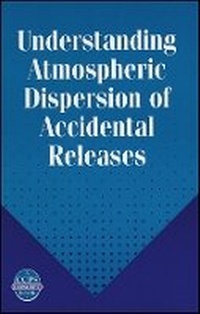
Understanding Atmospheric Dispersion of Accidental Releases
1st Edition
Published on 1. December 1995
Book
Hardback
58 pages
978-0-8169-0681-9 (ISBN)
Description
A brief introduction to a complex topic, giving a description of the processes involved in an accidental or emergency release and the resulting downwind transport and dilution of gases, vapors, and aerosols.
More details
Series
Language
English
Place of publication
United States
Publishing group
John Wiley & Sons Inc
Target group
College/higher education
Professional and scholarly
Dimensions
Height: 245 mm
Width: 161 mm
Thickness: 11 mm
Weight
308 gr
ISBN-13
978-0-8169-0681-9 (9780816906819)
Copyright in bibliographic data and cover images is held by Nielsen Book Services Limited or by the publishers or by their respective licensors: all rights reserved.
Schweitzer Classification
Other editions
Additional editions
George E. Devaull | John A. King | Ronald J. Lantzy
Understanding Atmospheric Dispersion of Accidental Releases
E-Book
09/2010
Wiley-AIChE
€83.99
Available for download
Persons
George E. Devaull is the author of Understanding Atmospheric Dispersion of Accidental Releases, published by Wiley.
John A. King is the author of Understanding Atmospheric Dispersion of Accidental Releases, published by Wiley.
Ronald J. Lantzy is the author of Understanding Atmospheric Dispersion of Accidental Releases, published by Wiley.
David J. Fontaine is the author of Understanding Atmospheric Dispersion of Accidental Releases, published by Wiley.
John A. King is the author of Understanding Atmospheric Dispersion of Accidental Releases, published by Wiley.
Ronald J. Lantzy is the author of Understanding Atmospheric Dispersion of Accidental Releases, published by Wiley.
David J. Fontaine is the author of Understanding Atmospheric Dispersion of Accidental Releases, published by Wiley.
Content
Preface. Nomenclature.
Chapter 1. Introduction.
1.1. Purpose.
1.2. Release/Dispersion Scenario Overview.
1.3. Hazards.
Chapter 2. Meteorology.
2.1. The Atmosphere.
2.2. Turbulence in the Atmosphere.
2.3. Mechanically Generated Turbulence'.
2.4. Vertical Density Stratification and Buoyancy.
2.5. Atmospheric Stability Classifications.
2.6. Similarity Scaling in the Atmospheric Boundary Layer.
2.7. Changes Over Time in the Atmospheric Boundary Layer.
Chapter 3. Source Estimates-Leaks and Ruptures.
3.1. Leaks and Small Holes.
3.2. Phase Changes in Released Fluids.
3.3. Aerosol Formation in Liquid of Flashing Liquid Releases.
3.4. Transient Vessel Inventory Loss.
3.5. Catastrophic Vessel Failures.
Chapter 4. Sources-Liquid Pools.
4.1. Boiling Liquid Pools.
4.2. Evaporation of Volatile Liquids.
4.3. Evaporation of Relatively Nonvolatile Liquids.
4.4. Multicomponent Mixture Spills.
Chapter 5. Buoyant and Dense-Gas Jet Releases.
5.1. Jet Length Scales.
5.2. Momentum and Buoyancy.
5.3. The Effect of Wind and Ambient Turbulence.
Chapter 6. Low-Velocity Dense-Gas Releases.
6.1. Source Specification.
6.2. Source Area Region.
6.3. Stably-Stratified Region.
6.4. Passive Dispersion Region.
Chapter 7. Passive Dispersion.
7.1. The Mechanics of Turbulent Dispersion.
7.2. Passive Dispersion from Elevated Releases.
7.3. Near-Ground Passive Dispersion.
7.4. Dispersion Averaging Times.
Chapter 8. Complex Flow Considerations.
8.1. Building Wakes and Stack Downwash.
8.2. Gravity-Driven Flows and the Effects of Terrain.
8.3. Aerosol Rainout.
8.4. Fanning Plumes and Subsidence.
Chapter 9. Hazard Evaluations.
9.1. Chemical Toxicity.
9.2. Flammability.
Chapter 10. Computer Models.
References.
Chapter 1. Introduction.
1.1. Purpose.
1.2. Release/Dispersion Scenario Overview.
1.3. Hazards.
Chapter 2. Meteorology.
2.1. The Atmosphere.
2.2. Turbulence in the Atmosphere.
2.3. Mechanically Generated Turbulence'.
2.4. Vertical Density Stratification and Buoyancy.
2.5. Atmospheric Stability Classifications.
2.6. Similarity Scaling in the Atmospheric Boundary Layer.
2.7. Changes Over Time in the Atmospheric Boundary Layer.
Chapter 3. Source Estimates-Leaks and Ruptures.
3.1. Leaks and Small Holes.
3.2. Phase Changes in Released Fluids.
3.3. Aerosol Formation in Liquid of Flashing Liquid Releases.
3.4. Transient Vessel Inventory Loss.
3.5. Catastrophic Vessel Failures.
Chapter 4. Sources-Liquid Pools.
4.1. Boiling Liquid Pools.
4.2. Evaporation of Volatile Liquids.
4.3. Evaporation of Relatively Nonvolatile Liquids.
4.4. Multicomponent Mixture Spills.
Chapter 5. Buoyant and Dense-Gas Jet Releases.
5.1. Jet Length Scales.
5.2. Momentum and Buoyancy.
5.3. The Effect of Wind and Ambient Turbulence.
Chapter 6. Low-Velocity Dense-Gas Releases.
6.1. Source Specification.
6.2. Source Area Region.
6.3. Stably-Stratified Region.
6.4. Passive Dispersion Region.
Chapter 7. Passive Dispersion.
7.1. The Mechanics of Turbulent Dispersion.
7.2. Passive Dispersion from Elevated Releases.
7.3. Near-Ground Passive Dispersion.
7.4. Dispersion Averaging Times.
Chapter 8. Complex Flow Considerations.
8.1. Building Wakes and Stack Downwash.
8.2. Gravity-Driven Flows and the Effects of Terrain.
8.3. Aerosol Rainout.
8.4. Fanning Plumes and Subsidence.
Chapter 9. Hazard Evaluations.
9.1. Chemical Toxicity.
9.2. Flammability.
Chapter 10. Computer Models.
References.