

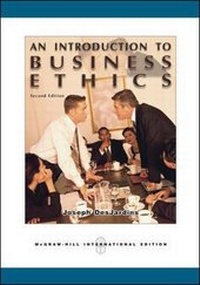
An Introduction to Business Ethics
2nd Edition
Published on 16. November 2005
Book
Paperback/Softback
288 pages
978-0-07-124437-4 (ISBN)
Description
Since its inception An Introduction to Business Ethics, by Joseph Desjardins has been a cutting-edge resource for the business ethics course. Desjardin's unique approach encompasses all that an introductory business ethics course is, from a multidisciplinary perspective. It offers critical analysis and integrated perspective of philosophy with management, law, economics, and public policy.
More details
Edition
2nd edition
Language
English
Place of publication
United States
Publishing group
McGraw-Hill Education - Europe
Target group
College/higher education
Illustrations
Illustrations
Dimensions
Height: 229 mm
Width: 152 mm
Thickness: 14 mm
Weight
383 gr
ISBN-13
978-0-07-124437-4 (9780071244374)
Copyright in bibliographic data and cover images is held by Nielsen Book Services Limited or by the publishers or by their respective licensors: all rights reserved.
Schweitzer Classification
Other editions
Previous edition

Joseph R. Desjardins
An Introduction to Business Ethics
Book
09/2002
McGraw-Hill Publishing Co.
€48.27
Article exhausted; check for reprint
Person
Joe DesJardins is Professor in the philosophy department formed jointly by the College of St. Benedict and St. Johns University in Minnesota. He presently serves as the Executive Director of the Society for Business Ethics. Among his publications are: An Introduction to Business Ethics (McGraw-Hill), Environmental Ethics: An Introduction to Environmental Philosophy (Wadsworth), Contemporary Issues in Business Ethics, co-editor, with John McCall, (Wadsworth) , and the forthcoming Business, Ethics, and Sustainability: Ethics for the Next Industrial Revolution (Prentice Hall). He received his Ph.D. from the University of Notre Dame and taught for many years at Villanova University before moving to Minnesota.
Content
Chapter One: Why Study Ethics?Chapter ObjectivesDiscussion Case: EnronDiscussion Questions1.1 Why Study Business Ethics?1.2 Values and Ethics: Doing Good and Doing Well1.3 The Nature and Goals of Business Ethics1.4 Business Ethics and the Law1.5 Ethics and Ethos1.6 Morality, Virtues, and Social Ethics1.7 Ethical Perspectives: Managers and Other StakeholdersReflections on the Chapter Discussion CaseReview Questions
Chapter Two: Ethical Theory and BusinessChapter ObjectivesDiscussion Case: Executive CompensationDiscussion Questions2.1 Introduction2.2 Ethical Relativism and Reasoning in Ethics2.3 Psychological Egoism2.4 Modern Ethical Theory: Utilitarian Ethics2.5 Challenges to Utilitarianism2.6 Utilitarianism and Business Policy2.7 Deontological Ethics2.8 Virtue Ethics2.9 Summary and ReviewReflections on the Chapter Discussion CaseReview Questions
Chapter Three: Corporate Social ResponsibilityChapter ObjectivesDiscussion Case: Wal-MartDiscussion Questions3.1 Introduction3.2 The Classical Model of Corporate Social Responsibility3.3 Critical Assessment of the Classical Model: The Utilitarian Defense3.4 Critical Assessment of the Classical Model: The Private Property Defense3.5 Modified Version of the Classical Model: The Moral Minimum3.6 The Stakeholder Theory3.7 Summary and ReviewReflections on the Chapter Discussion CaseReview Questions
Chapter Four: The Meaning and Value of WorkChapter ObjectivesDiscussion Case: Great Jobs and Meaningful JobsDiscussion Questions4.1 Introduction4.2 The Meanings of Work4.3 The Value of Work4.4 Conventional Views of Work4.5 The Human Fulfillment Model4.6 The Liberal Model of Work4.7 Business' Responsibility for Meaningful Work 4.8 Summary and ReviewReflections on the Chapter Discussion CaseReview Questions
Chapter Five: Moral Rights in the WorkplaceChapter ObjectivesDiscussion Case: Employee Rights and WrongsDiscussion Questions5.1 Introduction: Employee Rights5.2 The Right to Work5.3 Employment at Will5.4 Due Process in the Workplace5.5 Participation Rights5.6 Employee Health and Safety5.7 Privacy in the WorkplaceReflections on the Chapter Discussion CaseReview Questions
Chapter Six: Employee ResponsibilitiesChapter ObjectivesDiscussion Case: Professional and Managerial Responsibility at Enron and Arthur AndersenDiscussion Questions6.1 Introduction6.2 The Narrow View of Employee Responsibilities: Employee as Agents6.3 Professional Ethics and the Gatekeeper Function6.4 Managerial Responsibility and Conflicts of Interests6.5 Trust and Loyalty in the Workplace6.6 Responsibilities to Third Parties: Honesty, Whistleblowing, and Insider TradingHonestyWhistleblowingInsider TradingReflections on the Chapter Discussion CaseReview Questions
Chapter Seven: Marketing Ethics: Product Safety and PricingChapter ObjectivesDiscussion Case: Safety and Pricing in the Pharmaceutical IndustryDiscussion Questions7.1 Introduction: Marketing and Ethics7.2 Ethical Issues in Marketing: An Overview7.3 Product Safety: From Caveat Emptor to Negligence7.4 Strict Products Liability7.5 Ethics and PricingReflections on the Chapter Discussion CaseReview Questions
Chapter Eight: Marketing Ethics: Advertising and Target MarketingChapter ObjectivesDiscussion Case: Advertising and Marketing in the Pharmaceutical IndustryDiscussion Questions8.1 Introduction: Ethics of Sales, Advertising, and Product Placement8.2 Regulating Deceptive and Unfair Sales and Advertising8.3 Marketing Ethics and Consumer Autonomy8.4 Targeting the Vulnerable: Marketing and SalesReflections on the Chapter Discussion CaseReview Questions
Chapter Nine: Business' Environmental ResponsibilitiesChapter ObjectivesDiscussion Case: Interface Corporation and Sustainable BusinessDiscussion Questions9.1 Introduction: Environmental Responsibilities9.2 Environmental Pragmatism: Towards a Consensus on Environmental Responsibility9.3 Corporate Social Responsibility and the Environment9.4 Business' Responsibility and Environmental Regulation9.5 Business Ethics and Sustainable Economics9.6 Business Ethics in the Age of Sustainable Development9.7 ConclusionsReflections on the Chapter Discussion Case Review Questions
Chapter Ten: Diversity and DiscriminationChapter ObjectivesDiscussion Case: Female Foreman and the BrotherhoodDiscussion Questions10.1 Introduction: Diversity and Equality10.2 Discrimination, Equal Opportunity, and Affirmative Action10.3 Preferential Treatment in Employment10.4 Arguments against Preferential Hiring10.5 Arguments in Support of Preferential Hiring10.6 Sexual Harassment in the WorkplaceReflections on the Chapter Discussion Case Review Questions
Chapter Eleven: International Business and GlobalizationChapter ObjectivesDiscussion Case: SweatshopsDiscussion Questions11.1 Introduction11.2 Ethical Relativism and Cross-Cultural Values11.3 Cross-Cultural Values and International Rights11.4 Globalization and International Business11.5 Globalization and the Poor11.6 "Race to the Bottom"11.7 Democracy, Cultural Integrity, and Human RightsReflections on the Chapter Discussion Case Review Questions
GlossaryIndex
Chapter Two: Ethical Theory and BusinessChapter ObjectivesDiscussion Case: Executive CompensationDiscussion Questions2.1 Introduction2.2 Ethical Relativism and Reasoning in Ethics2.3 Psychological Egoism2.4 Modern Ethical Theory: Utilitarian Ethics2.5 Challenges to Utilitarianism2.6 Utilitarianism and Business Policy2.7 Deontological Ethics2.8 Virtue Ethics2.9 Summary and ReviewReflections on the Chapter Discussion CaseReview Questions
Chapter Three: Corporate Social ResponsibilityChapter ObjectivesDiscussion Case: Wal-MartDiscussion Questions3.1 Introduction3.2 The Classical Model of Corporate Social Responsibility3.3 Critical Assessment of the Classical Model: The Utilitarian Defense3.4 Critical Assessment of the Classical Model: The Private Property Defense3.5 Modified Version of the Classical Model: The Moral Minimum3.6 The Stakeholder Theory3.7 Summary and ReviewReflections on the Chapter Discussion CaseReview Questions
Chapter Four: The Meaning and Value of WorkChapter ObjectivesDiscussion Case: Great Jobs and Meaningful JobsDiscussion Questions4.1 Introduction4.2 The Meanings of Work4.3 The Value of Work4.4 Conventional Views of Work4.5 The Human Fulfillment Model4.6 The Liberal Model of Work4.7 Business' Responsibility for Meaningful Work 4.8 Summary and ReviewReflections on the Chapter Discussion CaseReview Questions
Chapter Five: Moral Rights in the WorkplaceChapter ObjectivesDiscussion Case: Employee Rights and WrongsDiscussion Questions5.1 Introduction: Employee Rights5.2 The Right to Work5.3 Employment at Will5.4 Due Process in the Workplace5.5 Participation Rights5.6 Employee Health and Safety5.7 Privacy in the WorkplaceReflections on the Chapter Discussion CaseReview Questions
Chapter Six: Employee ResponsibilitiesChapter ObjectivesDiscussion Case: Professional and Managerial Responsibility at Enron and Arthur AndersenDiscussion Questions6.1 Introduction6.2 The Narrow View of Employee Responsibilities: Employee as Agents6.3 Professional Ethics and the Gatekeeper Function6.4 Managerial Responsibility and Conflicts of Interests6.5 Trust and Loyalty in the Workplace6.6 Responsibilities to Third Parties: Honesty, Whistleblowing, and Insider TradingHonestyWhistleblowingInsider TradingReflections on the Chapter Discussion CaseReview Questions
Chapter Seven: Marketing Ethics: Product Safety and PricingChapter ObjectivesDiscussion Case: Safety and Pricing in the Pharmaceutical IndustryDiscussion Questions7.1 Introduction: Marketing and Ethics7.2 Ethical Issues in Marketing: An Overview7.3 Product Safety: From Caveat Emptor to Negligence7.4 Strict Products Liability7.5 Ethics and PricingReflections on the Chapter Discussion CaseReview Questions
Chapter Eight: Marketing Ethics: Advertising and Target MarketingChapter ObjectivesDiscussion Case: Advertising and Marketing in the Pharmaceutical IndustryDiscussion Questions8.1 Introduction: Ethics of Sales, Advertising, and Product Placement8.2 Regulating Deceptive and Unfair Sales and Advertising8.3 Marketing Ethics and Consumer Autonomy8.4 Targeting the Vulnerable: Marketing and SalesReflections on the Chapter Discussion CaseReview Questions
Chapter Nine: Business' Environmental ResponsibilitiesChapter ObjectivesDiscussion Case: Interface Corporation and Sustainable BusinessDiscussion Questions9.1 Introduction: Environmental Responsibilities9.2 Environmental Pragmatism: Towards a Consensus on Environmental Responsibility9.3 Corporate Social Responsibility and the Environment9.4 Business' Responsibility and Environmental Regulation9.5 Business Ethics and Sustainable Economics9.6 Business Ethics in the Age of Sustainable Development9.7 ConclusionsReflections on the Chapter Discussion Case Review Questions
Chapter Ten: Diversity and DiscriminationChapter ObjectivesDiscussion Case: Female Foreman and the BrotherhoodDiscussion Questions10.1 Introduction: Diversity and Equality10.2 Discrimination, Equal Opportunity, and Affirmative Action10.3 Preferential Treatment in Employment10.4 Arguments against Preferential Hiring10.5 Arguments in Support of Preferential Hiring10.6 Sexual Harassment in the WorkplaceReflections on the Chapter Discussion Case Review Questions
Chapter Eleven: International Business and GlobalizationChapter ObjectivesDiscussion Case: SweatshopsDiscussion Questions11.1 Introduction11.2 Ethical Relativism and Cross-Cultural Values11.3 Cross-Cultural Values and International Rights11.4 Globalization and International Business11.5 Globalization and the Poor11.6 "Race to the Bottom"11.7 Democracy, Cultural Integrity, and Human RightsReflections on the Chapter Discussion Case Review Questions
GlossaryIndex