

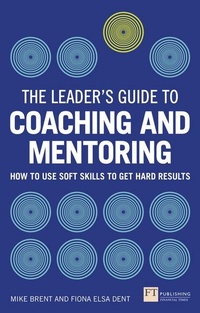
Leader's Guide to Coaching and Mentoring, The
How to Use Soft Skills to Get Hard Results
Published on 10. September 2015
Book
Paperback/Softback
256 pages
978-1-292-07434-4 (ISBN)
Description
The Leader's Guide to Coaching & Mentoring is a highly practical handbook that helps managers get the most out of their people. It includes grounded advice on the practicalities of both coaching and mentoring - such as how to structure a session - as well as core content on:
? The skills required for coaching and mentoring, including listening, questioning, observing body language, challenging and affirming
? The established processes for coaching and mentoring, such as GROW, relational coaching, reverse mentoring and solution-focused coaching
? The scenarios in which coaching and mentoring skills are particularly appropriate, for example, coaching under-performers, coaching star performers and coaching for career development
There is also a handy section on the 10 pitfalls to avoid when coaching or mentoring.
Written in the no-nonsense and engaging style of the other Leader's Guide books, this is the best tool on the market for managers wanting to coach their people to optimum performance.
'In this hands-on book, Mike and Fiona highlight the real difference between conventional management and effective leadership: management is a profession, while coaching is much wider; it encourages social interaction and a focus on human relationships at work. That's what new generations expect and respect.'
Laurent Choain, Chief People & Communication Officer, Mazars Group
'It's not always easy for managers to recognise what real coaching is, let alone its value. This book makes a compelling case for the Manager as Coach and contains real, usable examples of how to go about it.'
Ian Johnston, Chief Executive, Dubai Financial Services Authority
? The skills required for coaching and mentoring, including listening, questioning, observing body language, challenging and affirming
? The established processes for coaching and mentoring, such as GROW, relational coaching, reverse mentoring and solution-focused coaching
? The scenarios in which coaching and mentoring skills are particularly appropriate, for example, coaching under-performers, coaching star performers and coaching for career development
There is also a handy section on the 10 pitfalls to avoid when coaching or mentoring.
Written in the no-nonsense and engaging style of the other Leader's Guide books, this is the best tool on the market for managers wanting to coach their people to optimum performance.
'In this hands-on book, Mike and Fiona highlight the real difference between conventional management and effective leadership: management is a profession, while coaching is much wider; it encourages social interaction and a focus on human relationships at work. That's what new generations expect and respect.'
Laurent Choain, Chief People & Communication Officer, Mazars Group
'It's not always easy for managers to recognise what real coaching is, let alone its value. This book makes a compelling case for the Manager as Coach and contains real, usable examples of how to go about it.'
Ian Johnston, Chief Executive, Dubai Financial Services Authority
More details
Other editions
Additional editions
Fiona Dent | Mike Brent
Leader's Guide to Coaching & Mentoring, The
The Leader's Guide to Coaching & Mentoring
E-Book
09/2015
1st Edition
Pearson FT Press
from
€20.29
Available for download
Fiona Dent | Mike Brent
Leader's Guide to Coaching and Mentoring, The
How To Use Soft Skills To Get Hard Results
E-Book
08/2015
1st Edition
Pearson FT Press
from
€15.19
Available for download
Persons
Mike Brent is a Client and Programme Director at Ashridge. He's worked as a management trainer and consultant with GE, HP, Ericsson, France Telecom, ICI, Volvo and Bang & Olufsen and has run seminars in Japan, China, Uzbekistan, Thailand, Malaysia, Indonesia, USA, Canada and South America.
Fiona Dent is a former Director of Executive Education at Ashridge. She is currently a freelance tutor and consultant at Ashridge, teaching on a national and international basis.
Fiona Dent is a former Director of Executive Education at Ashridge. She is currently a freelance tutor and consultant at Ashridge, teaching on a national and international basis.
Content
Introduction & Overview
PART 1 - COACHING & MENTORING FUNDAMENTALS
Chapter 1: Coaching in Context
Chapter 2: Being a Mentor
Chapter 3: Identifying Your Personal Coaching Style
Chapter 4: Getting the Most Out of a Coaching Session
PART 2 - COACHING & MENTORING SKILLS
Chapter 5: Listening
Chapter 6: Questioning
Chapter 7: Observing Body Language and Non Verbal Behaviour
Chapter 8: Building Rapport and Trust
Chapter 9: Challenge
Chapter 10: Reflective Skills
Chapter 11: Reframing
Chapter 12: Supportive Skills
Chapter 13: Feedback
PART 3 - COACHING APPROACHES, MODELS & TOOLS
Chapter 14: Coaching Approaches
Chapter 15: Coaching Models
Chapter 16: Coaching Tools
PART 4 - COACHING SCENARIOS
Chapter 17: Peer to Peer Coaching
Chapter 18: Line Manager as a Coach
Chapter 19: Coaching Gen Y and Millenials
Chapter 20: Cross Cultural Coaching
Chapter 21: Coaching a Poor Performer
Chapter 22: Coaching Star Performers
Chapter 23: Coaching For Career Development
Chapter 24: Telephone/Virtual Coaching
Chapter 25: Coaching The Team
Chapter 26: Reverse Coaching
PART 5 - FINAL THOUGHTS
Chapter 27: Coaching Supervision
Chapter 28: 10 Tips for Excellence in Coaching & Mentoring
Chapter 29: 10 Traps to Avoid When Coaching or Mentoring
Conclusion
Resources
References
Index
PART 1 - COACHING & MENTORING FUNDAMENTALS
Chapter 1: Coaching in Context
Chapter 2: Being a Mentor
Chapter 3: Identifying Your Personal Coaching Style
Chapter 4: Getting the Most Out of a Coaching Session
PART 2 - COACHING & MENTORING SKILLS
Chapter 5: Listening
Chapter 6: Questioning
Chapter 7: Observing Body Language and Non Verbal Behaviour
Chapter 8: Building Rapport and Trust
Chapter 9: Challenge
Chapter 10: Reflective Skills
Chapter 11: Reframing
Chapter 12: Supportive Skills
Chapter 13: Feedback
PART 3 - COACHING APPROACHES, MODELS & TOOLS
Chapter 14: Coaching Approaches
Chapter 15: Coaching Models
Chapter 16: Coaching Tools
PART 4 - COACHING SCENARIOS
Chapter 17: Peer to Peer Coaching
Chapter 18: Line Manager as a Coach
Chapter 19: Coaching Gen Y and Millenials
Chapter 20: Cross Cultural Coaching
Chapter 21: Coaching a Poor Performer
Chapter 22: Coaching Star Performers
Chapter 23: Coaching For Career Development
Chapter 24: Telephone/Virtual Coaching
Chapter 25: Coaching The Team
Chapter 26: Reverse Coaching
PART 5 - FINAL THOUGHTS
Chapter 27: Coaching Supervision
Chapter 28: 10 Tips for Excellence in Coaching & Mentoring
Chapter 29: 10 Traps to Avoid When Coaching or Mentoring
Conclusion
Resources
References
Index