

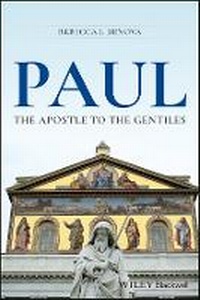
Paul
The Apostle to the Gentiles
1st Edition
Published on 4. November 2024
Book
Paperback/Softback
416 pages
978-1-394-23039-6 (ISBN)
Description
A detailed exploration of both Paul the Apostle and his world, providing an understanding of how the Christian faith originated in the first centuries
Paul the Apostle is often acclaimed as "the true founder of Christianity," but many Christians are unaware of Paul's teachings in their historical context. Paul: Apostle to the Gentiles explores both Paul and his world in the first century, investigating how he integrated his values, politics, and daily life through his teachings on the nature of God, how humans relate to God, and how to live God's commandments.
With a multidisciplinary Religious Studies approach and methodology, Rebecca I. Denova sheds light on the origin and evolution of the creation of a Christian "systematic theology" that became the basis for the establishment of Orthodox Christianity, the Catholic Church, and the Protestant Reformation. Accessible chapters provide the background and history of Judaism, analyze the Pauline epistles, and explore Paul's background as a Jewish Pharisee who became a believer in Christ within the context of the cities of the Eastern Roman Empire. Throughout the text, Denova offers insights into how Paul's engagement with the ancient world can help us understand the ways today's Christians articulate their own systems of meaning.
Helping readers fully understand the development of Paul's theology and its importance over the centuries, Paul: Apostle to the Gentiles:
Offers analyses of the Pastoral Epistles, I and II Corinthians, I Thessalonians, the Apocryphal Acts of Paul, Romans, and other key texts
Explores the ways Paul's letters established Christian hierarchy, set rules for Christian assemblies, and were used to both include and separate Christianity from Judaism
Discusses the shared concepts between Judaism and Greco-Roman religion, philosophy, and culture
Includes "Excurses" between chapters, detailed examinations and summaries of important topics and different perspectives
Contains numerous pedagogical tools, including historical timelines, maps and illustrations, definitions of concepts and terminology, references to traditional studies and recent scholarship, excerpts of ancient literature, and schematics of archaeological sites
Covering both the world of ancient Christianity and the scholarly methods used in analyses of Paul's letters, Paul: Apostle to the Gentiles is an excellent textbook for undergraduate students taking courses on the origins and history of Christianity, as well as general readers interested in Paul's life and letters.
Paul the Apostle is often acclaimed as "the true founder of Christianity," but many Christians are unaware of Paul's teachings in their historical context. Paul: Apostle to the Gentiles explores both Paul and his world in the first century, investigating how he integrated his values, politics, and daily life through his teachings on the nature of God, how humans relate to God, and how to live God's commandments.
With a multidisciplinary Religious Studies approach and methodology, Rebecca I. Denova sheds light on the origin and evolution of the creation of a Christian "systematic theology" that became the basis for the establishment of Orthodox Christianity, the Catholic Church, and the Protestant Reformation. Accessible chapters provide the background and history of Judaism, analyze the Pauline epistles, and explore Paul's background as a Jewish Pharisee who became a believer in Christ within the context of the cities of the Eastern Roman Empire. Throughout the text, Denova offers insights into how Paul's engagement with the ancient world can help us understand the ways today's Christians articulate their own systems of meaning.
Helping readers fully understand the development of Paul's theology and its importance over the centuries, Paul: Apostle to the Gentiles:
Offers analyses of the Pastoral Epistles, I and II Corinthians, I Thessalonians, the Apocryphal Acts of Paul, Romans, and other key texts
Explores the ways Paul's letters established Christian hierarchy, set rules for Christian assemblies, and were used to both include and separate Christianity from Judaism
Discusses the shared concepts between Judaism and Greco-Roman religion, philosophy, and culture
Includes "Excurses" between chapters, detailed examinations and summaries of important topics and different perspectives
Contains numerous pedagogical tools, including historical timelines, maps and illustrations, definitions of concepts and terminology, references to traditional studies and recent scholarship, excerpts of ancient literature, and schematics of archaeological sites
Covering both the world of ancient Christianity and the scholarly methods used in analyses of Paul's letters, Paul: Apostle to the Gentiles is an excellent textbook for undergraduate students taking courses on the origins and history of Christianity, as well as general readers interested in Paul's life and letters.
More details
Language
English
Place of publication
United States
Publishing group
John Wiley & Sons Inc
Target group
Professional and scholarly
Dimensions
Height: 226 mm
Width: 152 mm
Thickness: 25 mm
Weight
476 gr
ISBN-13
978-1-394-23039-6 (9781394230396)
Copyright in bibliographic data and cover images is held by Nielsen Book Services Limited or by the publishers or by their respective licensors: all rights reserved.
Schweitzer Classification
Other editions
Person
REBECCA I. DENOVA is Emeritus Lecturer in the Early History of Christianity at the University of Pittsburgh, where she has taught courses on the ancient religions of the Mediterranean Basin for three decades. Dr. Denova is the author of The Origins of Christianity and the New Testament, Greek and Roman Religions, and Varieties of Early Christianity: The Formation of the Western Christian Tradition.
Content
Preface ix
I Shared Concepts of Ancient Cultures and Religions 1
II the History of Israel 18
Excursus I The Origins and Evolution of Satan 45
III the Story of Jesus of Nazareth in the Gospels 51
IV Acts of the Apostles and the Origins of Christianity 65
V Studying Paul's Letters 89
Excursus II Paul the Pharisee 109
VI Life in the Mediterranean Cities 120
Excursus III The Ordeals and Sufferings of Paul 143
VII 1 Thessalonians 148
VIII Galatians: Paul and the Law of Moses 157
IX Philemon: What to Do About Slavery 178
X Philippians 182
XI 1 Corinthians, Part I: the Misunderstanding of the Corinthians 194
XII 1 and 2 Corinthians, Part II 212
XIII Romans: the Epitome of Paul's Teachings 230
Excursus IV Paul and Imperial Rome 251
XIV The Deutero-Pauline Letters 255
XV The Church Fathers' Interpretations of Paul: The Separation from Judaism 271
XVI Legends of the Apostles and Paul 297
Epilogue: The Legacy of Paul 312
Appendix I: Biblical Timeline for the History of Israel 347
Appendix II: Chronology of Paul's Life and Letters 349
Glossary 352
Index 377
I Shared Concepts of Ancient Cultures and Religions 1
II the History of Israel 18
Excursus I The Origins and Evolution of Satan 45
III the Story of Jesus of Nazareth in the Gospels 51
IV Acts of the Apostles and the Origins of Christianity 65
V Studying Paul's Letters 89
Excursus II Paul the Pharisee 109
VI Life in the Mediterranean Cities 120
Excursus III The Ordeals and Sufferings of Paul 143
VII 1 Thessalonians 148
VIII Galatians: Paul and the Law of Moses 157
IX Philemon: What to Do About Slavery 178
X Philippians 182
XI 1 Corinthians, Part I: the Misunderstanding of the Corinthians 194
XII 1 and 2 Corinthians, Part II 212
XIII Romans: the Epitome of Paul's Teachings 230
Excursus IV Paul and Imperial Rome 251
XIV The Deutero-Pauline Letters 255
XV The Church Fathers' Interpretations of Paul: The Separation from Judaism 271
XVI Legends of the Apostles and Paul 297
Epilogue: The Legacy of Paul 312
Appendix I: Biblical Timeline for the History of Israel 347
Appendix II: Chronology of Paul's Life and Letters 349
Glossary 352
Index 377