

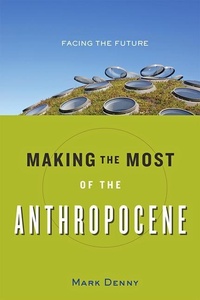
Making the Most of the Anthropocene
Facing the Future
Published on 27. October 2017
Book
Hardback
224 pages
978-1-4214-2300-5 (ISBN)
Description
Ever since Nobel Prize-winning atmospheric chemist Paul Crutzen coined the term "Anthropocene" to describe our current era-one in which human impact on the environment has pushed Earth into an entirely new geological epoch-arguments for and against the new designation have been raging. Finally, an official working group of scientists was created to determine once and for all whether we humans have tossed one too many plastic bottles out the car window and wrought a change so profound as to be on par with the end of the last ice age. In summer 2016, the answer came back: Yes. In Making the Most of the Anthropocene, scientist Mark Denny tackles this hard truth head-on and considers burning questions: How did we reach our present technological and ecological state? How are we going to cope with our uncertain future? Will we come out of this, or are we doomed as a species? Is there anything we can do about what happens next?
This book * explains what the Anthropocene is and why it is important* offers suggestions for minimizing harm instead of fretting about an impending environmental apocalypse * combines easy-to-grasp scientific, technological, economic, and anthropological analyses In Making the Most of the Anthopocene, there are no equations, no graphs, and no impenetrable jargon. Instead, you'll find a fascinating cast of characters, including journalists from outer space, peppered moths, and unjustly maligned Polynesians. In his bright, lively voice, Denny envisions a future that balances reaction and reason, one in which humanity emerges bloody but unbowed-and in which those of us who are prepared can make the most of the Anthropocene.
This book * explains what the Anthropocene is and why it is important* offers suggestions for minimizing harm instead of fretting about an impending environmental apocalypse * combines easy-to-grasp scientific, technological, economic, and anthropological analyses In Making the Most of the Anthopocene, there are no equations, no graphs, and no impenetrable jargon. Instead, you'll find a fascinating cast of characters, including journalists from outer space, peppered moths, and unjustly maligned Polynesians. In his bright, lively voice, Denny envisions a future that balances reaction and reason, one in which humanity emerges bloody but unbowed-and in which those of us who are prepared can make the most of the Anthropocene.
Reviews / Votes
Light in tone and often enjoyable reading, Making the Most of the Anthropocene presents good information on a variety of topics, from the sharing economy to smartphones.-Foreword Reviews Denny's humane tone makes reading his book feel good for the soul . . . chapter-essays are fascinating, opinionated, and subversive . . . In this book, Denny has expanded his scope to cover a lot more than science, and readers will benefit from his ambition.
-David De Haan, University of San Diego, Perspectives on Science and Christian Faith
More details
Language
English
Place of publication
Baltimore, MD
United States
Target group
College/higher education
Professional and scholarly
Product notice
sewn/stitched
Cloth over boards
Dimensions
Height: 234 mm
Width: 157 mm
Thickness: 18 mm
Weight
408 gr
ISBN-13
978-1-4214-2300-5 (9781421423005)
DOI
10.1353/book.52803
Copyright in bibliographic data and cover images is held by Nielsen Book Services Limited or by the publishers or by their respective licensors: all rights reserved.
Schweitzer Classification
Other editions
Additional editions
E-Book
10/2017
Johns Hopkins University Press
€18.99
Available for download
Person
Mark Denny is a theoretical physicist who has worked in academia and industry. He is the author of numerous books, including Lights On! The Science of Power Generation and Making Sense of Weather and Climate: The Science behind the Forecasts.
Content
Acknowledgments
Introduction
1. Stratigraphy-the Top Layer
2. Neptune versus Pluto
3. The Age of Man?
4. Martha
5. Industrial Revelations
6. Moore's Law
7. Building BRICS
8. Peppered Moths
9. Globalization
10. Smartphones Are (from) Everywhere
11. The Population Bomb
12. Manna from Science
13. Fat Americans
14. Climatology 101
15. Greenhouse Effects
16. Global Warning
17. 2 C or Not 2 C, That Is the Question
18. Tipping Points and Tipplers
19. Climate Change Protocols
20. Rapa Nui Not
21. Ozone Whole
22. The Good
23. The Bad
24. Frack Attack
25. The Ugly
26. Gridlock
27. Not Monsters, Inc., nor the Four Horsemen
28. Scottish Philosophy and Nuclear Power
29. You Suck at Statistics
30. On the Cusp
31. Four Fixes
32. UEber Alles
33. Sherlock Holmes and the Anthropocene Deduction
34. Ferguson versus Krugman
35. Nobody Understands Economics
36. Winners and Losers
37. The Prisoner's Dilemma
38. Deforestation
39. The Peter Principle
40. Collective Stupidity
41. ABC but Not D
42. Where Are You Going, My Little One?
Bibliography
Index
Introduction
1. Stratigraphy-the Top Layer
2. Neptune versus Pluto
3. The Age of Man?
4. Martha
5. Industrial Revelations
6. Moore's Law
7. Building BRICS
8. Peppered Moths
9. Globalization
10. Smartphones Are (from) Everywhere
11. The Population Bomb
12. Manna from Science
13. Fat Americans
14. Climatology 101
15. Greenhouse Effects
16. Global Warning
17. 2 C or Not 2 C, That Is the Question
18. Tipping Points and Tipplers
19. Climate Change Protocols
20. Rapa Nui Not
21. Ozone Whole
22. The Good
23. The Bad
24. Frack Attack
25. The Ugly
26. Gridlock
27. Not Monsters, Inc., nor the Four Horsemen
28. Scottish Philosophy and Nuclear Power
29. You Suck at Statistics
30. On the Cusp
31. Four Fixes
32. UEber Alles
33. Sherlock Holmes and the Anthropocene Deduction
34. Ferguson versus Krugman
35. Nobody Understands Economics
36. Winners and Losers
37. The Prisoner's Dilemma
38. Deforestation
39. The Peter Principle
40. Collective Stupidity
41. ABC but Not D
42. Where Are You Going, My Little One?
Bibliography
Index