

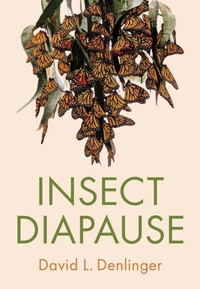
Insect Diapause
Published on 3. February 2022
Book
Hardback
464 pages
978-1-108-49752-7 (ISBN)
Description
Our highly seasonal world restricts insect activity to brief portions of the year. This feature necessitates a sophisticated interpretation of seasonal changes and enactment of mechanisms for bringing development to a halt and then reinitiating it when the inimical season is past. The dormant state of diapause serves to bridge the unfavourable seasons, and its timing provides a powerful mechanism for synchronizing insect development. This book explores how seasonal signals are monitored and used by insects to enact specific molecular pathways that generate the diapause phenotype. The broad perspective offered here scales from the ecological to the molecular and thus provides a comprehensive view of this exciting and vibrant research field, offering insights on topics ranging from pest management, evolution, speciation, climate change and disease transmission, to human health, as well as analogies with other forms of invertebrate dormancy and mammalian hibernation.
Reviews / Votes
'Insect Diapause guides the reader through an expansive library of historic and recent discoveries towards a synthesis of how diapause works, how it evolves, and how it might be the key to insect resilience or decline ... Denlinger makes it relatively easy to navigate a complex series of experiments ... [and] is adept at tracing the common thread without obscuring the variability and uncertainty of the results ... Insect Diapause provides a much-needed synthesis of modern diapause research and should find a home on the shelves of many entomologists. It covers a lot of territory yet throughout it reveals fertile ground for a new generation of breakthroughs in diapause biology.' Greg Ragland, American Entomologist 'Denlinger is a world leader in the study of insect diapause. The volume is heavily referenced and up to date. The book is appropriate for both experienced researchers and graduate students.' Goggy Davidowitz, The Quarterly Review of Biology 'Insect Diapause is a long awaited and excellent new monograph summarising basics and recent achievements of what we know about such a fascinating phenomenon as insect diapause. A must-read.' Dmitri L. Musolin, Royal Entomological Society (www.royensoc.co.uk)More details
Language
English
Place of publication
Cambridge
United Kingdom
Target group
Professional and scholarly
Illustrations
Worked examples or Exercises
Dimensions
Height: 246 mm
Width: 174 mm
Thickness: 27 mm
Weight
1020 gr
ISBN-13
978-1-108-49752-7 (9781108497527)
Copyright in bibliographic data and cover images is held by Nielsen Book Services Limited or by the publishers or by their respective licensors: all rights reserved.
Schweitzer Classification
Other editions
Additional editions
David L. Denlinger
Insect Diapause
E-Book
02/2022
Cambridge University Press
€52.49
Available for download
David L. Denlinger
Insect Diapause
E-Book
01/2022
Cambridge University Press
€52.49
Available for download
Person
David L. Denlinger is one of the world's leading researchers on insect diapause. He is a Distinguished University Professor, and Professor Emeritus of Entomology, at the Ohio State University, USA. He is a member of the National Academy of Sciences, a Fellow of the Entomological Society of America and an Honorary Fellow of the Royal Entomological Society. Professor Denlinger's current laboratory research focuses primarily on molecular mechanisms involved in insect overwintering. His interests range from the use of clock genes to perceive environmental signals through the endocrine and molecular events that result in expression of the diapause phenotype. He has received numerous awards for his research including the Gregor Mendel Medal from the Czech Academy of Sciences (2006), the Antarctic Service Medal (2006), and the ICIPE Achievement Award (2020).
Content
1. Confronting the challenges of a seasonal environment; 2. What seasons are being avoided?; 3. Variation in the diapause response; 4. The cost of diapause and some diapause alternatives; 5. Interpreting seasonal cues to program diapause entry; 6. Preparing for diapause; 7. The diapause state; 8. Ending diapause and reinitiating development; 9. Molecular signaling pathways that regulate diapause; 10. Genetic control of diapause; 11. Evolution of diapause; 12. Wider implications; References; Index.