

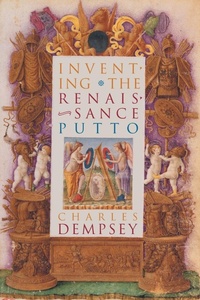
Inventing the Renaissance Putto
Published on 30. August 2015
Book
Paperback/Softback
312 pages
978-1-4696-2840-0 (ISBN)
Description
The figure of the putto (often portrayed as a mischievous baby) made frequent appearances in the art and literature of Renaissance Italy. Commonly called spiritelli, or sprites, putti embodied a minor species of demon, in their nature neither good nor bad. They included natural spirits, animal spirits, and the spirits of sight and sound, as well as hobgoblin fantasies, bogeys, and the spirits contained in wine. Among the sensations ascribed to spiritelli were feelings of love, erotic arousal, and startling frights.
After discussing the many manifestations of the putto-spiritello in fifteenth-century Italian art and literature, Charles Dempsey offers parallel interpretations of two works: Botticelli's Mars and Venus, a painting in which infant Satyr-putti appear as the panic-inducing spirits of the nightmare, and Politian's Stanze, a poem in which masked cupids appear to the hero in a deceiving dream. He concludes with an examination of the function of such masks in the poetry and public masquerades sponsored by Lorenzo de'Medici and in Michelangelo's scheme for the decoration of the Medici Chapel.
Throughout, Dempsey advances a larger argument about the nature of Italian Renaissance art. Rather than simply reviving classical forms, he says, the art accommodated and fused them within local, vernacular, and modern Italian traditions, both literary and pictorial.
After discussing the many manifestations of the putto-spiritello in fifteenth-century Italian art and literature, Charles Dempsey offers parallel interpretations of two works: Botticelli's Mars and Venus, a painting in which infant Satyr-putti appear as the panic-inducing spirits of the nightmare, and Politian's Stanze, a poem in which masked cupids appear to the hero in a deceiving dream. He concludes with an examination of the function of such masks in the poetry and public masquerades sponsored by Lorenzo de'Medici and in Michelangelo's scheme for the decoration of the Medici Chapel.
Throughout, Dempsey advances a larger argument about the nature of Italian Renaissance art. Rather than simply reviving classical forms, he says, the art accommodated and fused them within local, vernacular, and modern Italian traditions, both literary and pictorial.
More details
Series
Language
English
Place of publication
Chapel Hill
United States
Target group
Professional and scholarly
Dimensions
Height: 234 mm
Width: 156 mm
Thickness: 19 mm
Weight
524 gr
ISBN-13
978-1-4696-2840-0 (9781469628400)
Copyright in bibliographic data and cover images is held by Nielsen Book Services Limited or by the publishers or by their respective licensors: all rights reserved.
Schweitzer Classification
Person
Charles Dempsey is Professor of Italian Renaissance and Baroque Art at The Johns Hopkins University, USA.