

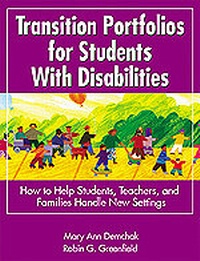
Transition Portfolios for Students With Disabilities
How to Help Students, Teachers, and Families Handle New Settings
1st Edition
Published on 6. November 2002
Book
Hardback
144 pages
978-0-7619-4583-3 (ISBN)
Description
"This book on transition portfolios provides state-of-the-art information on transitioning needs of a wide range of students with disabilities, including those with the most complex needs. Filled with practical ideas and strategies, this book supports the efforts of teachers and families to help the student progress successfully through the educational experience."
June Downing, Professor
California State University, Northridge
Students with mild to severe disabilities have special needs, including specific ways of learning and communicating. Teachers learn these cues and use them to effectively teach their students, but the lessons are often lost when the student moves to a new setting. This user-friendly guide helps teachers create a transition portfolio that will accompany the student to new classrooms and schools, and convey special needs, accommodations, and other vital information to a new team of teachers.
Transition Portfolios for Students With Disabilities offers practical details on gathering critical information, including tips on what to include, sources, and timelines. It also shows you how to collect and include
Educational components, including learning style, physical influences, and environmental influences
Accommodations to instruction, environment, or materials
Medical information
Students' communication styles
Positive behavior support plans
The authors also include a section on how to collect personal information about students, as well as sample mapping sessions. They also provide easy-to-use charts and tables to help you develop a successful transition portfolio for your students with disabilities.
June Downing, Professor
California State University, Northridge
Students with mild to severe disabilities have special needs, including specific ways of learning and communicating. Teachers learn these cues and use them to effectively teach their students, but the lessons are often lost when the student moves to a new setting. This user-friendly guide helps teachers create a transition portfolio that will accompany the student to new classrooms and schools, and convey special needs, accommodations, and other vital information to a new team of teachers.
Transition Portfolios for Students With Disabilities offers practical details on gathering critical information, including tips on what to include, sources, and timelines. It also shows you how to collect and include
Educational components, including learning style, physical influences, and environmental influences
Accommodations to instruction, environment, or materials
Medical information
Students' communication styles
Positive behavior support plans
The authors also include a section on how to collect personal information about students, as well as sample mapping sessions. They also provide easy-to-use charts and tables to help you develop a successful transition portfolio for your students with disabilities.
Reviews / Votes
"This book on transition portfolios provides state-of-the-art information on transitioning needs of a wide range of students with disabilities, including those with the most complex needs. Filled with practical ideas and strategies, this book supports the efforts of teachers and families to help the student progress successfully through the educational experience." -- June Downing, ProfessorMore details
Language
English
Place of publication
Thousand Oaks
United States
Publishing group
SAGE Publications Inc
Target group
Professional and scholarly
Dimensions
Height: 279 mm
Width: 216 mm
Weight
624 gr
ISBN-13
978-0-7619-4583-3 (9780761945833)
Copyright in bibliographic data and cover images is held by Nielsen Book Services Limited or by the publishers or by their respective licensors: all rights reserved.
Schweitzer Classification
Other editions
Additional editions
MaryAnn Demchak | Robin G. Greenfield
Transition Portfolios for Students With Disabilities
How to Help Students, Teachers, and Families Handle New Settings
Book
11/2002
1st Edition
SAGE Publications Inc
€38.70
Shipment within 15-20 days
Persons
MaryAnn Demchak has worked in the field of special education for over 20 years as a classroom teacher, project director, and university professor. She has direct experience with individuals with severe, multiple disabilities and experience with those who have mild disabilities. Currently, she teaches courses in severe, multiple disabilities at the Univeristy of Nevada, Reno as well as directs a technical assistance project for students who are deafblind. She has numerous publications and conference presentations related to various special education issues (e.g., instruction of students with severe, multiple disabilities; planning for students with challenging behaviors).
Content
About the Authors
Introduction
1. Gathering Information to Create a Transition Portfolio
Contents of a Portfolio
Sources of Information
Timelines for Developing a Portfolio
Summary
2. Collecting Personal Information About the Student
Information-Gathering Techniques
Summary
Additional Resources
3. Including Medical Information in a Portfolio
Components of a Medical Section
Summary
Additional Resources
4. Educational Programming
Educational Components of a Portfolio
Summary
Additional Resources
5. Adaptations and Supports
Assistive Technology
Individualized Accomodations to Instruction, Environment, or Materials
Specialized Accomodations for Visual and Hearing Impairments
Assistance From Other People
Summary
Additional Resources
6. Special Considerations for Students With Physical Impairments
Appropriate Positioning of Students With Physical Impairments
Summary
Additional Resources
7. Communication
Documenting the Student's Receptive and Expressive Communication
Communication Opportunities
Communication Partners and Communication Topics
Teaching Communication Skills
Summary
Additional Resources
8. Behavior Support and Reinforcement Strategies
Effective Reinforcement Strategies
Functional Behavior Assessment
Underlying Assumptions
Completing a Functional Behavior Assessment
Developing a Positive Behavior Support Plan
Summary
Additional Resources
9. Teaming, Problem Solving, and Keeping Notes
Elements of an Effective Collaborative Team
Getting Organized and Making Decisions
Collaborative Problem Solving
Writing It All Down
Summary
Additional Resources
Final Thoughts
Appendix A: Suzie's Case Study
Appendix B: Steve's Case Study
Appendix C: Patrick's Case Study
References
Index
Introduction
1. Gathering Information to Create a Transition Portfolio
Contents of a Portfolio
Sources of Information
Timelines for Developing a Portfolio
Summary
2. Collecting Personal Information About the Student
Information-Gathering Techniques
Summary
Additional Resources
3. Including Medical Information in a Portfolio
Components of a Medical Section
Summary
Additional Resources
4. Educational Programming
Educational Components of a Portfolio
Summary
Additional Resources
5. Adaptations and Supports
Assistive Technology
Individualized Accomodations to Instruction, Environment, or Materials
Specialized Accomodations for Visual and Hearing Impairments
Assistance From Other People
Summary
Additional Resources
6. Special Considerations for Students With Physical Impairments
Appropriate Positioning of Students With Physical Impairments
Summary
Additional Resources
7. Communication
Documenting the Student's Receptive and Expressive Communication
Communication Opportunities
Communication Partners and Communication Topics
Teaching Communication Skills
Summary
Additional Resources
8. Behavior Support and Reinforcement Strategies
Effective Reinforcement Strategies
Functional Behavior Assessment
Underlying Assumptions
Completing a Functional Behavior Assessment
Developing a Positive Behavior Support Plan
Summary
Additional Resources
9. Teaming, Problem Solving, and Keeping Notes
Elements of an Effective Collaborative Team
Getting Organized and Making Decisions
Collaborative Problem Solving
Writing It All Down
Summary
Additional Resources
Final Thoughts
Appendix A: Suzie's Case Study
Appendix B: Steve's Case Study
Appendix C: Patrick's Case Study
References
Index