

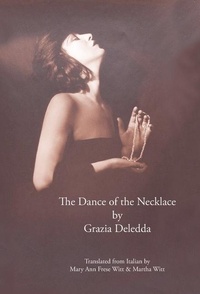
The Dance of the Necklace
Published on 1. March 2023
Book
Hardback
126 pages
978-1-59910-448-5 (ISBN)
Description
In The Dance of the Necklace, Grazia Deledda moves away from the countryside of her native Sardinia to create a classically modern, urban narrative. Writing in a more spare, experimental style, she uncovers the "vain anguish of our strongest passions: love, ambition, and the instinct to appear more than what we are."
A pearl necklace symbolizes the "dance" of jealousy, greed, and love, both erotic and familial, which unites and divides the three main characters: an aunt and her niece who share the same name and a young count seeking to regain his family's bartered string of pearls.
An innocent deception turns on itself to explore the nature of the double and the mask: two topoi of modernity. Like Virginia Woolf, Doris Lessing, and Annie Ernaux, Deledda delves into what it means to be a woman, alone and aging, living in a world where she is increasingly unwanted and invisible despite her lingering desires.
According to the critic Margherita Heyer-Caput, the novel is one of Deledda's "most conscious and disquieting expressions of modernity." It challenges the labels often applied to this writer and overturns established critical categories to question margin-center hierarchies applied to her work. The Dance of the Necklace is a remarkable and rare example of Deledda's modernism.
First English translation of La Danza della Collana (1924).
Introduction, notes, bibliography.
124 pages.
More details
Series
Language
English
Product notice
sewn/stitched
Cloth over boards
With dust jacket
Dimensions
Height: 222 mm
Width: 145 mm
Thickness: 11 mm
Weight
312 gr
ISBN-13
978-1-59910-448-5 (9781599104485)
Copyright in bibliographic data and cover images is held by Nielsen Book Services Limited or by the publishers or by their respective licensors: all rights reserved.
Schweitzer Classification
Persons
Grazia Deledda nasce a Nuoro nel 1871, in una famiglia di piccoli proprietari terrieri. Interrotti gli studi precocemente, la giovane Grazia approfondisce da autodidatta la sua passione per la letteratura, giungendo a pubblicare alcuni suoi racconti sulla rivista L¿Ultima Moda, a soli 19 anni. Nel 1900 si trasferisce a Roma con il marito, conosciuto a Cagliari l¿anno prima: rimarrà nella città fino alla morte, avvenuta nel 1936. E¿ proprio nella capitale che i suoi capolavori vedono la luce: Elias Portolu (1903), Cenere (1904), L¿Edera (1908), L¿incendio nell¿oliveto (1918), Il segreto di un uomo solitario (1914), Canne al vento (1913), Marianna Sirca (1915), Il Dio dei viventi (1922), e infine Cosima, pubblicato postumo. Ma è il 1926 a rappresentare una data significativa per la scrittrice, chiamata a ritirare il premio Nobel per la letteratura: Grazia Deledda, prima donna a ricevere tale onorificenza, fu premiata per la sua prosa idealisticamente ispirata che con chiarezza plastica dipinge la vita della sua isola nativa e con profondità e simpatia si confronta con i problemi umani in generale.