


Figurative Language, Genre and Register
Published on 7. March 2013
Book
Hardback
341 pages
978-1-107-00943-1 (ISBN)
Description
This book brings together methods from discourse analysis and corpus linguistics in a cutting-edge study of figurative language in spoken and written discourse. Figurative Language, Genre and Register brings together discourse analysis and corpus linguistics in a cutting-edge study of figurative language in spoken and written discourse. The authors explore a diverse range of communities from chronic pain sufferers to nursery staff to present a detailed framework for the analysis of figurative language. The reader is shown how figurative language is used between members of these communities to construct their own 'world view', and how this can change with a shift in perspective. Figurative language is shown to be pervasive and inescapable, but it is also suggested that it varies significantly across genres.
More details
Series
Language
English
Place of publication
Cambridge
United Kingdom
Target group
ELT/ESL
Illustrations
Worked examples or Exercises
Dimensions
Height: 234 mm
Width: 156 mm
Thickness: 23 mm
Weight
660 gr
ISBN-13
978-1-107-00943-1 (9781107009431)
Copyright in bibliographic data and cover images is held by Nielsen Book Services Limited or by the publishers or by their respective licensors: all rights reserved.
Schweitzer Classification
Other editions
New editions
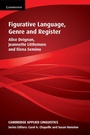
Alice Deignan | Jeannette Littlemore | Elena Semino
Figurative Language, Genre and Register
Book
03/2013
Cambridge University Press
€75.50
Article exhausted; check different version
Additional editions
Alice Deignan | Jeannette Littlemore | Elena Semino
Figurative Language, Genre and Register
Book
03/2013
Cambridge University Press
€75.50
Article exhausted; check different version
Content
Series editors' preface; Acknowledgements; Transcription conventions; 1. Figurative language; 2. A framework for analysing variation in figurative language use; 3. Using genre and register to analyse figurative language; 4. Figurative language use in specialized and popular scientific written texts; 5. Figurative language in spoken academic discourse between expert and non-expert interlocutors; 6. Figurative language in a children's nursery; 7. Figurative language in supporting and reporting on children's football; 8. Figurative language in the 'simplification' of canonical literary works: Shakespeare's Romeo and Juliet; 9. Figurative language, creativity, and multimodality in the communication of chronic pain in two different genres; 10. Conclusions; Index.