

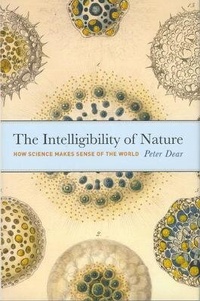
The Intelligibility of Nature
How Science Makes Sense of the World
Published on 29. August 2006
Book
Hardback
350 pages
978-0-226-13948-7 (ISBN)
Description
Throughout the history of the Western world, science has possessed an extraordinary amount of authority and prestige. And while its pedestal has been jostled by numerous evolutions and revolutions, science has always managed to maintain its stronghold as the knowing enterprise that explains how the natural world works: we treat such legendary scientists as Galileo, Newton, Darwin, and Einstein with admiration and reverence because they offer profound and sustaining insight into the meaning of the universe. In "The Intelligibility of Nature", Peter Dear considers how science as such has evolved and how it has marshaled itself to make sense of the world. His intellectual journey begins with a crucial observation: that the enterprise of science is, and has been, directed toward two distinct but frequently conflated ends - doing and knowing. The ancient Greeks developed this distinction of value between craft on the one hand and understanding on the other, and according to Dear, that distinction has survived to shape attitudes toward science ever since.
Teasing out this tension between doing and knowing during key episodes in the history of science - mechanical philosophy and Newtonian gravitation, elective affinities and the chemical revolution, enlightened natural history and taxonomy, evolutionary biology, the dynamical theory of electromagnetism, and quantum theory - Dear reveals how the two principles became formalized into a single enterprise, science, that would be carried out by a new kind of person, the scientist. Finely nuanced and elegantly conceived, ""The Intelligibility of Nature will be essential reading for aficionados and historians of science alike.
Teasing out this tension between doing and knowing during key episodes in the history of science - mechanical philosophy and Newtonian gravitation, elective affinities and the chemical revolution, enlightened natural history and taxonomy, evolutionary biology, the dynamical theory of electromagnetism, and quantum theory - Dear reveals how the two principles became formalized into a single enterprise, science, that would be carried out by a new kind of person, the scientist. Finely nuanced and elegantly conceived, ""The Intelligibility of Nature will be essential reading for aficionados and historians of science alike.
Reviews / Votes
"A very impressive and compelling book about the relationship between instrumentalism and realism in the sciences. Peter Dear argues for a fascinating reinterpretation of the Scientific Revolution and its aftermath, showing how between the time of Descartes and that of Lavoisier, natural philosophy and practical techniques merged: that process, this book shows, was decisive for the emergence of modern science. This is a lucid and intelligent history." - Simon Schaffer, University of Cambridge"More details
Language
English
Place of publication
Chicago
United States
Publishing group
The University of Chicago Press
Target group
Professional and scholarly
Illustrations
6 halftones, 20 line drawings
Dimensions
Height: 213 mm
Width: 186 mm
Weight
426 gr
ISBN-13
978-0-226-13948-7 (9780226139487)
Copyright in bibliographic data and cover images is held by Nielsen Book Services Limited or by the publishers or by their respective licensors: all rights reserved.
Schweitzer Classification
Other editions
Additional editions
E-Book
09/2008
1st Edition
University of Chicago Press
€25.49
Available for download
Person
Peter Dear is professor of science and technology studies and history at Cornell University. He is the author of Revolutionizing the Sciences: European Knowledge and Its Ambitions, 1500 - 1700 and Discipline and Experience: The Mathematical Way in the Scientific Revolution, the latter published by the University of Chicago Press.