

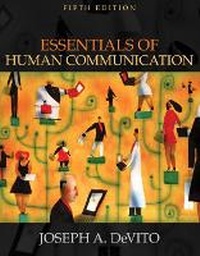
Essentials of Human Communication (with Study Card)
5th Edition
Published on 2. March 2006
Book
Paperback/Softback
400 pages
978-0-205-47203-1 (ISBN)
Description
This best-selling text presents the fundamental skills of interpersonal, small group, and public communication, emphasizing the areas of human communication skills, cultural awareness, listening, critical thinking, power, and ethics. Essentials of Human Communication fills the need for a brief, interesting, but serious text that places a strong focus on skill development.
More details
Edition
5th edition
Language
English
Place of publication
United States
Publishing group
Pearson Education (US)
Target group
Professional and scholarly
Weight
885 gr
ISBN-13
978-0-205-47203-1 (9780205472031)
Copyright in bibliographic data and cover images is held by Nielsen Book Services Limited or by the publishers or by their respective licensors: all rights reserved.
Schweitzer Classification
Other editions
New editions
Joseph A. DeVito
Essentials of Human Communication
Book
03/2007
6th Edition
Pearson
€75.70
Article exhausted; check for reprint
Content
Each Chapter ends with "Key Word Quiz," "Summary of Concepts and Skills" and "Skill Development Exercises." I. FOUNDATIONS OF HUMAN COMMUNICATION.
1. Introduction to Human Communication.
Communication Models and Concepts.
Principles of Communication.
Culture and Human Communication.
2. The Self in Human Communication.
Self-Concept.
Self-Awareness.
Self-Disclosure.
3. Perception in Human Communication.
The Stages of Perception.
Perceptual Processes.
Increasing Accuracy in Perception.
4. Listening in Human Communication.
The Listening Process.
Effective Listening.
Listening, Culture, and Gender.
5. Verbal Messages.
The Principles of Verbal Messages.
Disconfirmation and Confirmation.
Using Verbal Messages Effectively.
6. Nonverbal Messages.
The Functions of Nonverbal Communication.
The Channels of Nonverbal Communication.
Culture and Nonverbal Communication.
II. THE CONTEXTS OF HUMAN COMMUNICATION.
7. Interpersonal Communication: Conversation and Conflict.
Conversation.
Effective Conversation.
Conflict.
Effective Conflict Management.
8. Interpersonal Relationships.
Characteristics of Interpersonal Relationships.
Stages in Interpersonal Relationships.
Relationships in a Context of Culture and Gender, Technology, and Work.
9. Small Groups.
The Small Group.
The Brainstorming Group.
Information-Sharing Groups.
Problem-Solving Groups.
10. Members and Leaders in Group Communication.
Members in Small Group Communication.
Leaders in Small Group Communication.
Membership, Leadership, and Culture.
11. Public Speaking Preparation (Steps 1-6).
The Nature of Public Speaking.
Step 1: Select Your Topic and Purpose.
Step 2: Analyze Your Audience.
Step 3: Research Your Topic.
Step 4: Formulate Your Thesis and Identify Your Major Propositions.
Step 5: Support Your Propositions.
Step 6: Organize Your Information.
12. Public Speaking Preparation and Delivery (Steps 7-10).
Step 7: Word Your Speech.
Step 8: Construct Your Conclusion and Introduction.
Step 9: Rehearse Your Speech.
Step 10: Deliver Your Speech.
Critically Evaluating Speeches.
13. The Informative Speech.
Guidelines for Informative Speaking.
Types of Informative Speeches.
Amplifying Materials.
14. The Persuasive Speech.
Guidelines for Persuasive Speaking.
Types of Persuasion Speeches.
Logical Appeals.
Motivational Appeals.
Credibility Appeals.
Glossary of Human Communication Concepts.
Glossary of Human Communication Skills.
Bibliography.
Credits.
Index.
1. Introduction to Human Communication.
Communication Models and Concepts.
Principles of Communication.
Culture and Human Communication.
2. The Self in Human Communication.
Self-Concept.
Self-Awareness.
Self-Disclosure.
3. Perception in Human Communication.
The Stages of Perception.
Perceptual Processes.
Increasing Accuracy in Perception.
4. Listening in Human Communication.
The Listening Process.
Effective Listening.
Listening, Culture, and Gender.
5. Verbal Messages.
The Principles of Verbal Messages.
Disconfirmation and Confirmation.
Using Verbal Messages Effectively.
6. Nonverbal Messages.
The Functions of Nonverbal Communication.
The Channels of Nonverbal Communication.
Culture and Nonverbal Communication.
II. THE CONTEXTS OF HUMAN COMMUNICATION.
7. Interpersonal Communication: Conversation and Conflict.
Conversation.
Effective Conversation.
Conflict.
Effective Conflict Management.
8. Interpersonal Relationships.
Characteristics of Interpersonal Relationships.
Stages in Interpersonal Relationships.
Relationships in a Context of Culture and Gender, Technology, and Work.
9. Small Groups.
The Small Group.
The Brainstorming Group.
Information-Sharing Groups.
Problem-Solving Groups.
10. Members and Leaders in Group Communication.
Members in Small Group Communication.
Leaders in Small Group Communication.
Membership, Leadership, and Culture.
11. Public Speaking Preparation (Steps 1-6).
The Nature of Public Speaking.
Step 1: Select Your Topic and Purpose.
Step 2: Analyze Your Audience.
Step 3: Research Your Topic.
Step 4: Formulate Your Thesis and Identify Your Major Propositions.
Step 5: Support Your Propositions.
Step 6: Organize Your Information.
12. Public Speaking Preparation and Delivery (Steps 7-10).
Step 7: Word Your Speech.
Step 8: Construct Your Conclusion and Introduction.
Step 9: Rehearse Your Speech.
Step 10: Deliver Your Speech.
Critically Evaluating Speeches.
13. The Informative Speech.
Guidelines for Informative Speaking.
Types of Informative Speeches.
Amplifying Materials.
14. The Persuasive Speech.
Guidelines for Persuasive Speaking.
Types of Persuasion Speeches.
Logical Appeals.
Motivational Appeals.
Credibility Appeals.
Glossary of Human Communication Concepts.
Glossary of Human Communication Skills.
Bibliography.
Credits.
Index.