


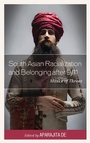
South Asian Racialization and Belonging after 9/11
Masks of Threat
Published on 23. March 2018
Book
Paperback/Softback
196 pages
978-1-4985-3814-5 (ISBN)
Description
This collection of essays interrogates literary and cultural narratives in the contexts of the incidents following 9/11. The collected essays underscore the new and (re)emerging racial, political, and socio-cultural discourse on identity related to terrorism and identity politics. Specifically, the collection examines South Asian American identities to understand culture, policy making, and the implicit gendered racialization, sexualization, and socio-economic classification of minority identities within the discourse of globalization. The essays included here relocate the discourse of race and cultural studies to an examination of transnational labor diasporas, reopen debate on critical constructions of U.S. racial and cultural formations, and question the reconfiguration of gendered and sexualized discourses of the South Asian diaspora within the context of national security and terrorism.
This book provides a multifaceted account of South Asian racialization and belonging by drawing from disciplines across the humanities and the social sciences. The scholars included here employ methods of ethnographic studies as well as literary, culture, film, and feminist analysis to examine a wide range of South Asian cultural sites: novels, short stories, cultural texts, documentaries, and sports. The rich intellectual, theoretical, methodological, and narrative tapestry of South Asians that emerges from this inquiry enables us to trace new patterns of South Asian cultural consumption post-9/11 as well as expand notions and histories of "terror." This volume makes an important contribution to renewing scholarship in the key areas of representations of race, labor, diaspora, class, and culture while implicating that there needs to be a simultaneous and critical dialogue on the scope and reconnections within postcolonial studies.
This book provides a multifaceted account of South Asian racialization and belonging by drawing from disciplines across the humanities and the social sciences. The scholars included here employ methods of ethnographic studies as well as literary, culture, film, and feminist analysis to examine a wide range of South Asian cultural sites: novels, short stories, cultural texts, documentaries, and sports. The rich intellectual, theoretical, methodological, and narrative tapestry of South Asians that emerges from this inquiry enables us to trace new patterns of South Asian cultural consumption post-9/11 as well as expand notions and histories of "terror." This volume makes an important contribution to renewing scholarship in the key areas of representations of race, labor, diaspora, class, and culture while implicating that there needs to be a simultaneous and critical dialogue on the scope and reconnections within postcolonial studies.
Reviews / Votes
Aparajita De has compiled an excellent collection of essays for understanding the predicament of the South Asian diaspora amidst the racialized perception in the West that the majority of South Asians are in some way affiliated with terrorism. . . . This anthology is a book that almost every diasporic South Asian professional working in different countries should add to his/her library and read carefully for his/her safety and for adjusting himself/herself in a significantly racialized society. . . Aparajita De's anthology opens up immense possibilities for studying the ambivalent contemporary imagery in the depiction of the South Asian and Middle Eastern diasporas in North America and Europe. * Journal Of Commonwealth And Postcolonial Studies * South Asian Racialization and Belonging after 9/11: Masks of Threat is a rich cross-disciplinary and multivoiced work that explores a post 9/11 world in which political and cultural edifices entrenched by imperial discourse have sanctified the convenient "first world-third world" dichotomy. Institutional transnational politics have facilitated the construction of the "third world" subject as an eternally feral being whose essential savagery is not amenable to socio-cultural conditioning. The dissemination of transnational practices in this world, effectively examined in South Asian Racialization and Belonging after 9/11: Masks of Threat, entails the transterritorialization of various socioeconomic, political, and cultural practices and identities that frequently bolster the formation and reconstruction of the nation-state. This collection of essays is a much needed sociological exploration of how transnational politics often emphasize a conception of identity polarized between the "authentic" and the "demonic." -- Nyla Ali Khan, Rose State College This book is a unique and timely collection that investigates the new racialization of South Asians after 9/11 through the rubric of culture. It complements socio-historical studies of Islamophobia while offering a specific contribution to cultural studies of Brown racialization after 9/11. Above all, this important book brings much-needed visibility to the diversity and resiliency of South Asian lives, far beyond the 'model minority' versus 'terrorist' dichotomy that fuels state policy and the media gaze. -- Pranav Jani, Ohio State UniversityMore details
Language
English
Place of publication
United States
Publishing group
Bloomsbury Publishing Plc
Target group
Professional and scholarly
Illustrations
1 BW Photo
Dimensions
Height: 230 mm
Width: 151 mm
Thickness: 15 mm
Weight
295 gr
ISBN-13
978-1-4985-3814-5 (9781498538145)
Copyright in bibliographic data and cover images is held by Nielsen Book Services Limited or by the publishers or by their respective licensors: all rights reserved.
Schweitzer Classification
Other editions
Additional editions
E-Book
05/2016
1st Edition
Bloomsbury eBooks US
€44.99
Available for download
Persons
Aparajita De is assistant professor of English at the University of the District of Columbia
Content
Introduction - South Asian Racialization and Belonging after 9/11: Masks of Threat
Aparajita De
Remembering the Air India Tragedy in an Age of TerrorChandrima Chakraborty
Sexy Sammy and Red Rosie? From Burning Books to the War on TerrorJohn Hutnyk
Managing Race, Class, and Gender: Atlanta's South Asian American Muslims and the Localized Management of the 'Global war on Terror'Stanley Thangaraj
'The city's changed': Home Boy, The Reluctant Fundamentalist and the Post 9/11 Urban ExperienceHasan al Zayed
Between Performativity and Representation: Post 9/11 Muslim Masculinity in Ayad Akhtar's DisgracedLopamudra Basu
'Sikhs aren't Terrorists, those Arabs are': Examining Solidarity along Racial and Generational Lines in Sharat Raju's American MadeSarah Wahab
Terror Narratives: Art, Music and the post 9/11 Surveillance CultureReshmi Dutt-Ballerstadt
Epilogue - Racialization and Resistance: The Double Bind of Post-9/11 Brown
Nitasha Sharma
Aparajita De
Remembering the Air India Tragedy in an Age of TerrorChandrima Chakraborty
Sexy Sammy and Red Rosie? From Burning Books to the War on TerrorJohn Hutnyk
Managing Race, Class, and Gender: Atlanta's South Asian American Muslims and the Localized Management of the 'Global war on Terror'Stanley Thangaraj
'The city's changed': Home Boy, The Reluctant Fundamentalist and the Post 9/11 Urban ExperienceHasan al Zayed
Between Performativity and Representation: Post 9/11 Muslim Masculinity in Ayad Akhtar's DisgracedLopamudra Basu
'Sikhs aren't Terrorists, those Arabs are': Examining Solidarity along Racial and Generational Lines in Sharat Raju's American MadeSarah Wahab
Terror Narratives: Art, Music and the post 9/11 Surveillance CultureReshmi Dutt-Ballerstadt
Epilogue - Racialization and Resistance: The Double Bind of Post-9/11 Brown
Nitasha Sharma