

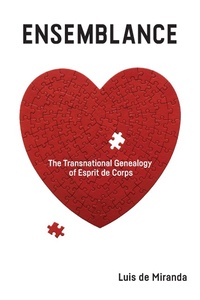
Ensemblance
The Transnational Genealogy of Esprit De Corps
Published on 31. March 2020
Book
Hardback
352 pages
978-1-4744-5419-3 (ISBN)
Description
Esprit de corps has played a significant role in the cultural and political history of the last 300 years. Through several historical case studies, Luis de Miranda shows how this phrase acts as a combat concept with a clear societal impact. He also reveals how interconnected, yet distinct, French, English and American modern intellectual and political thought is. In the end, this is a cautionary analysis of past and current ideologies of ultra-unified human ensembles, a recurrent historical and theoretical fabulation the author calls 'ensemblance'.
Reviews / Votes
Since Foucault, Deleuze and Guattari and, more recently, Badiou, there has been considerable interest in countervailing the history of individualism with others on the production of group subjectivities, where the individual emerges from out of, or is sacrificially sublimated into, a cog in the machine of a no-less manufactured collective identity. Luis de Miranda's enquiry into the origins and ambivalent spread of esprit de corps, or the subjectivation of 'ensembles', marks a major intervention in this debate. Ensemblance is a remarkable 'histosophical' achievement, a compellingly original mix of transnational history and philosophy, from the philosophes to the present, and beautifully written to boot. * Gerald Moore, Associate Professor in Digital Studies, Durham University *More details
Language
English
Place of publication
Edinburgh
United Kingdom
Product notice
sewn/stitched
Cloth over boards
Dimensions
Height: 234 mm
Width: 156 mm
Thickness: 19 mm
Weight
603 gr
ISBN-13
978-1-4744-5419-3 (9781474454193)
Copyright in bibliographic data and cover images is held by Nielsen Book Services Limited or by the publishers or by their respective licensors: all rights reserved.
Schweitzer Classification
Other editions
Additional editions
E-Book
01/2020
1st Edition
Edinburgh University Press
€0.00
Available for download
Person
Luis de Miranda is Researcher in the History of Ideas Department at OErebro University, Sweden. He is the author of Being and Neonness (MIT Press, 2019), Peut-on jouir du capitalisme? Lacan avec Heidegger et Marx (Max Milo, 2009) and Une vie nouvelle est-elle possible? Deleuze et les lignes (Nous, 2009).
Content
Esprit de Corps: A Timeline
Introduction: A Thousand Platoons - The Enduring Importance of Esprit de Corps
Team Spirits: Twenty-First Century Uses of 'Esprit de Corps'
Knowledge Aperture: Academic Literature on Esprit de Corps
Abstract Universalism: The Problem of a Philosophical Perspective When Studying Esprit de Corps
As Far as We Can Tell: A Longue Duree Intellectual History of the Uses of 'Esprit de Corps'
Surveying Large Issues Within a Small Compass: Digital Genealogy
1. Musketeers and Jesuits: The French Birth of 'Esprit de Corps' in the Eighteenth Century
Not Only in the Military: First Occurrences of the Phrase in Print
The Head of the World: A Short Prehistory of the Phrase 'Esprit de Corps'
One Hundred Fifty: A Quantification of Esprit de Corps?
Bad Grafts: Critical Uses of 'Esprit de Corps' in the Encyclopedie
Too Zealous to Be Honest? The Trial of the Jesuits
2. Adunation of the Nation: Towards a Republican Esprit de Corps
The Mask of Reason: Dialectics of Particularism and Patriotism
Collective Cogito: The Nation as a Natural and Spiritual Corps
Capitalism versus Esprit de Corps: The Suppression of the Corps de Metiers
Common Good: Revolution and the 'Adunation' of Society
3. We Must Hang Together: The English Appropriation of Esprit de Corps in the Eighteenth and Nineteenth Centuries
Exotic Flavour and Distinction: Linguistic and Semantic Observations
Unavoidable Zeal: Early Propagation of EdC in British English
The Honour of a Nation: Official Debates about EdC in the UK and the USA
The Natural Bond: Universalist and Familial Esprit de Corps
4. The Way of Napoleon: The Uniformization of Esprit de Corps in Early Nineteenth-Century France
Superiorly Normal: Renewal and Normalization of Esprit de Corps
Esprit de Corporation: The Decline of Labour Communities and the Spread of Individualist Competition
The Honour and Duty of the Soldier
Defend Your Flag: Napoleonic Esprit de Corps
The Cement of the Social Edifice: The Counter-Revolutionary Praise of Esprit de Corps
5. Collective Temperament: Esprit de Corps as Sociality and Individuation in the Second Half of the Nineteenth Century
Whose Norms? Conformative Esprit de Corps and Autonomist Esprit de Corps
'We Who Suffer': The Problematic Regulation of Solidarities
Esprit de Corps and The Spirit of Individuality: Tocqueville's Reminiscence
Esprit de Corps and the First French Sociologists: Fourier, Tarde, Durkheim
Self-Alienation: The Individualistic critique of Esprit de Corps
6. The Mystique of Esprit de Corps in France in the Twentieth Century
The Moral Empire: Permanence of the Ambiguity of Esprit de Corps in French
The Superior Self: Esprit de Corps as Honour in Terraillon and Bergson
Professional Habitus: French Esprit de Corps in Work, Management and French Education
Esprit de Corps as a War Machine: From De Gaulle to Deleuze
The future of a Gallicism: Canada as a Semantic Border Between French and English
7. The Way of Hilton: Esprit de Corps in the UK and the USA in the Twentieth Century
'A Happy Phrase': The Specificity of English Uses of 'Esprit de Corps'
Brothers in Arms: Esprit de Corps in Military Discourse
The Purpose of Unity: Political and Institutional Aspects of Esprit de Corps
Measure by Measure: Intellectual and Theoretical Uses of 'Esprit de Corps'
The Management of Men: Corporate and Managerial Discourse
Conclusion: Ensemblance
'Large issues within a small compass': Histosophy
Is a General Theory of Esprit de Corps Possible?
Drive, Discipline, Duty and Distinction: Four Scales of Esprit de Corps?
The Contigency of Ensembles: Six Questions Raised and Answered
BibliographyIndex
Introduction: A Thousand Platoons - The Enduring Importance of Esprit de Corps
Team Spirits: Twenty-First Century Uses of 'Esprit de Corps'
Knowledge Aperture: Academic Literature on Esprit de Corps
Abstract Universalism: The Problem of a Philosophical Perspective When Studying Esprit de Corps
As Far as We Can Tell: A Longue Duree Intellectual History of the Uses of 'Esprit de Corps'
Surveying Large Issues Within a Small Compass: Digital Genealogy
1. Musketeers and Jesuits: The French Birth of 'Esprit de Corps' in the Eighteenth Century
Not Only in the Military: First Occurrences of the Phrase in Print
The Head of the World: A Short Prehistory of the Phrase 'Esprit de Corps'
One Hundred Fifty: A Quantification of Esprit de Corps?
Bad Grafts: Critical Uses of 'Esprit de Corps' in the Encyclopedie
Too Zealous to Be Honest? The Trial of the Jesuits
2. Adunation of the Nation: Towards a Republican Esprit de Corps
The Mask of Reason: Dialectics of Particularism and Patriotism
Collective Cogito: The Nation as a Natural and Spiritual Corps
Capitalism versus Esprit de Corps: The Suppression of the Corps de Metiers
Common Good: Revolution and the 'Adunation' of Society
3. We Must Hang Together: The English Appropriation of Esprit de Corps in the Eighteenth and Nineteenth Centuries
Exotic Flavour and Distinction: Linguistic and Semantic Observations
Unavoidable Zeal: Early Propagation of EdC in British English
The Honour of a Nation: Official Debates about EdC in the UK and the USA
The Natural Bond: Universalist and Familial Esprit de Corps
4. The Way of Napoleon: The Uniformization of Esprit de Corps in Early Nineteenth-Century France
Superiorly Normal: Renewal and Normalization of Esprit de Corps
Esprit de Corporation: The Decline of Labour Communities and the Spread of Individualist Competition
The Honour and Duty of the Soldier
Defend Your Flag: Napoleonic Esprit de Corps
The Cement of the Social Edifice: The Counter-Revolutionary Praise of Esprit de Corps
5. Collective Temperament: Esprit de Corps as Sociality and Individuation in the Second Half of the Nineteenth Century
Whose Norms? Conformative Esprit de Corps and Autonomist Esprit de Corps
'We Who Suffer': The Problematic Regulation of Solidarities
Esprit de Corps and The Spirit of Individuality: Tocqueville's Reminiscence
Esprit de Corps and the First French Sociologists: Fourier, Tarde, Durkheim
Self-Alienation: The Individualistic critique of Esprit de Corps
6. The Mystique of Esprit de Corps in France in the Twentieth Century
The Moral Empire: Permanence of the Ambiguity of Esprit de Corps in French
The Superior Self: Esprit de Corps as Honour in Terraillon and Bergson
Professional Habitus: French Esprit de Corps in Work, Management and French Education
Esprit de Corps as a War Machine: From De Gaulle to Deleuze
The future of a Gallicism: Canada as a Semantic Border Between French and English
7. The Way of Hilton: Esprit de Corps in the UK and the USA in the Twentieth Century
'A Happy Phrase': The Specificity of English Uses of 'Esprit de Corps'
Brothers in Arms: Esprit de Corps in Military Discourse
The Purpose of Unity: Political and Institutional Aspects of Esprit de Corps
Measure by Measure: Intellectual and Theoretical Uses of 'Esprit de Corps'
The Management of Men: Corporate and Managerial Discourse
Conclusion: Ensemblance
'Large issues within a small compass': Histosophy
Is a General Theory of Esprit de Corps Possible?
Drive, Discipline, Duty and Distinction: Four Scales of Esprit de Corps?
The Contigency of Ensembles: Six Questions Raised and Answered
BibliographyIndex