

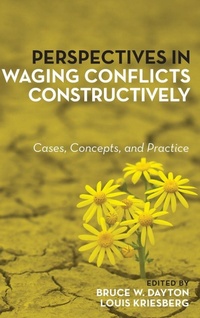
Perspectives in Waging Conflicts Constructively
Cases, Concepts, and Practice
Published on 12. January 2017
Book
Hardback
234 pages
978-1-4422-6550-9 (ISBN)
Description
Perspectives in Waging Conflicts Constructively offers diverse perspectives on how large-scale conflicts can be conducted with more positive benefits, minimizing their destructiveness. Distinguished analysts and practitioners review the core ideas of the innovative "constructive conflict approach" and examine cases where conflicts have been waged with fewer destructive consequences.
An introduction presents key concepts in constructive conflict resolution, and chapters offer cases of these theories in action. Cases feature both global and regional examples ranging from Israel to North Korea. The book also contains recommendations for policy makers, non-governmental organizations, and citizens about how stakeholders at all levels might help avoid destructive patterns that are common in large-scale conflict while working for positive change.
Contributors include Patrick G. Coy, Esra Cuhadar, Bruce W. Dayton, Martina Fischer, Galia Golan, Louis Kriesberg, Christopher Mitchell, Robert Murrett, Thania Paffenholz, Lee Smithey, and Steven Zunes.
An introduction presents key concepts in constructive conflict resolution, and chapters offer cases of these theories in action. Cases feature both global and regional examples ranging from Israel to North Korea. The book also contains recommendations for policy makers, non-governmental organizations, and citizens about how stakeholders at all levels might help avoid destructive patterns that are common in large-scale conflict while working for positive change.
Contributors include Patrick G. Coy, Esra Cuhadar, Bruce W. Dayton, Martina Fischer, Galia Golan, Louis Kriesberg, Christopher Mitchell, Robert Murrett, Thania Paffenholz, Lee Smithey, and Steven Zunes.
Reviews / Votes
At its heart, this book is about choices-choices about the outcomes we want from conflicts, and the strategies and tactics we employ to achieve them. The book offers a hopeful message about our ability to wage conflicts more constructively, while not shying away from hard questions about power, coercion, and injustice. One of the book's great strengths is the breadth of issues it addresses, including the recognition, in the conclusion, of the complex relationship between global climate change and conflict. -- Andrea Strimling Yodsampa, CEO, DEPLOY/US In times of rising tension and fear of violent conflicts, this is a timely set of cases that have been addressed constructively. The cases and their analyses provide solid evidence that the long-term benefits of handling conflicts constructively are far greater than handling conflict through violent modes. The text has an added value for scholars, students, and practitioners who want to counter arguments in favor of greater violence in responding to national, regional, or global conflicts. The book does not shy away from tackling complex cases such as: Israel Palestine, Northern Ireland, Yemen, and Korea. This is exactly the type of research that peace and conflict resolution scholars, students, and practitioners can equip themselves with when debating the "security and power politik" in classes and policy circles. -- Mohammed Abu-Nimer, School of International Service, American University This is a valuable book that brings together many of the most innovative and thoughtful writers in the field of constructive conflict analysis. It is a great contribution to an approach to conflict resolution that has never been more necessary. -- Paul Rogers, University of Bradford An inspiring supplement to their widely used Constructive Conflicts, Dayton and Kriesberg have assembled a superb team of scholars and practitioners to reflect conceptually and through case applications on the key factors that enable or prevent waging conflicts constructively. Anyone interested in non-violence and peace and conflict studies will benefit from the multitude of viewpoints and illustrative examples compiled in this comprehensive and easy to understand state-of-the art compendium. -- Volker Franke, Kennesaw State UniversityMore details
Language
English
Place of publication
United States
Publishing group
Bloomsbury Publishing Plc
Target group
College/higher education
US School Grade: From College Freshman to College Graduate Student
Illustrations
1 Chart, 3 Tables
Dimensions
Height: 235 mm
Width: 157 mm
Thickness: 17 mm
Weight
496 gr
ISBN-13
978-1-4422-6550-9 (9781442265509)
Copyright in bibliographic data and cover images is held by Nielsen Book Services Limited or by the publishers or by their respective licensors: all rights reserved.
Schweitzer Classification
Other editions
Additional editions
Bruce W. Dayton | Louis Kriesberg
Perspectives in Waging Conflicts Constructively
Cases, Concepts, and Practice
E-Book
01/2017
1st Edition
Rowman & Littlefield Publishers
€44.99
Available for download
Persons
Bruce W. Dayton is associate professor of peacebuilding and conflict transformation and director of the CONTACT Peacebuilding Program at the SIT Graduate Institute, School for International Training.
Louis Kriesberg is professor emeritus of sociology and Maxwell Professor Emeritus of Social Conflict Studies at Syracuse University. He is the founding director of the Program on the Analysis and Resolution of Conflicts and past president of the Society for the Study of Social Problems.
Together, Kriesberg and Dayton are the authors of Constructive Conflicts: From Escalation to Resolution, now in its fifth edition.
Louis Kriesberg is professor emeritus of sociology and Maxwell Professor Emeritus of Social Conflict Studies at Syracuse University. He is the founding director of the Program on the Analysis and Resolution of Conflicts and past president of the Society for the Study of Social Problems.
Together, Kriesberg and Dayton are the authors of Constructive Conflicts: From Escalation to Resolution, now in its fifth edition.
Content
Chapter 1
Introduction
Bruce W. Dayton and Louis Kriesberg
Chapter 2
Communication, Constructiveness, and Asymmetry in Nonviolent Action Theory and Practice
Patrick G. Coy
Chapter 3
Transitional Justice and Reconciliation: Prerequisite or Burden for Constructive Conflict Transformation?
Martina Fischer
Chapter 4
Strategic Nonviolent Action: Waging Constructive Conflict against Authoritarianism
Steven Zunes
Chapter 5
Peaceful Separation: The Politics of Constructive Dissolution
Christopher Mitchell
Chapter 6
Factors for De-escalation: Israel and a Shift to Constructive Conflict
Galia Golan
Chapter 7
The State of Constructive Conflict in Northern Ireland
Lee A. Smithey
Chapter 8
What Is a Constructive Peace Process?: Inclusion in Peace Negotiations
Cerag Esra Cuhadar and Thania Paffenholz
Chapter 9
Non-Provocative Defense in the Asia-Pacific Region
Robert Murrett
Chapter 10
Global Contexts for Waging Conflicts Constructively
Louis Kriesberg
Introduction
Bruce W. Dayton and Louis Kriesberg
Chapter 2
Communication, Constructiveness, and Asymmetry in Nonviolent Action Theory and Practice
Patrick G. Coy
Chapter 3
Transitional Justice and Reconciliation: Prerequisite or Burden for Constructive Conflict Transformation?
Martina Fischer
Chapter 4
Strategic Nonviolent Action: Waging Constructive Conflict against Authoritarianism
Steven Zunes
Chapter 5
Peaceful Separation: The Politics of Constructive Dissolution
Christopher Mitchell
Chapter 6
Factors for De-escalation: Israel and a Shift to Constructive Conflict
Galia Golan
Chapter 7
The State of Constructive Conflict in Northern Ireland
Lee A. Smithey
Chapter 8
What Is a Constructive Peace Process?: Inclusion in Peace Negotiations
Cerag Esra Cuhadar and Thania Paffenholz
Chapter 9
Non-Provocative Defense in the Asia-Pacific Region
Robert Murrett
Chapter 10
Global Contexts for Waging Conflicts Constructively
Louis Kriesberg