

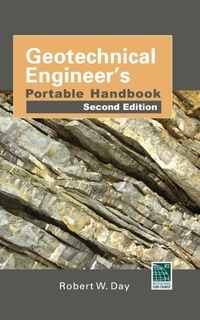
Geotechnical Engineers Portable Handbook, Second Edition
2nd Edition
Published on 16. May 2012
Book
Paperback/Softback
1088 pages
978-0-07-178971-4 (ISBN)
Description
Publisher's Note: Products purchased from Third Party sellers are not guaranteed by the publisher for quality, authenticity, or access to any online entitlements included with the product.
Instant access to the latest geotechnical engineering dataFully updated to include the 2012 International Building Code (IBC), Geotechnical Engineer's Portable Handbook, Second Edition, features a wealth of on-the-job geotechnical and construction related information in a convenient, quick-reference format. This practical resource is filled with essential data, formulas, and guidelines you can access right away. Detailed tables, charts, graphs, and illustrations are included throughout the book for ease of use in the field.
Coverage includes:
Field exploration
Laboratory testing
Soil and rock classification
Phase relationships
Effective stress and stress distribution
Shear strength
Permeability and seepage
Settlement analyses
Bearing capacity analyses
Pavement and pipeline design
Expansive soil
Slope stability
Geotechnical earthquake engineering
Erosion analyses
Retaining walls
Deterioration
Foundations
Grading and other site improvement methods
Groundwater and percolation tests
Excavation, underpinning, and field lead tests
Geosynthetics
Instrumentation
International Building Code regulations for soils
International Building Code regulations for foundations
Instant access to the latest geotechnical engineering dataFully updated to include the 2012 International Building Code (IBC), Geotechnical Engineer's Portable Handbook, Second Edition, features a wealth of on-the-job geotechnical and construction related information in a convenient, quick-reference format. This practical resource is filled with essential data, formulas, and guidelines you can access right away. Detailed tables, charts, graphs, and illustrations are included throughout the book for ease of use in the field.
Coverage includes:
Field exploration
Laboratory testing
Soil and rock classification
Phase relationships
Effective stress and stress distribution
Shear strength
Permeability and seepage
Settlement analyses
Bearing capacity analyses
Pavement and pipeline design
Expansive soil
Slope stability
Geotechnical earthquake engineering
Erosion analyses
Retaining walls
Deterioration
Foundations
Grading and other site improvement methods
Groundwater and percolation tests
Excavation, underpinning, and field lead tests
Geosynthetics
Instrumentation
International Building Code regulations for soils
International Building Code regulations for foundations
More details
Edition
2nd edition
Language
English
Place of publication
United States
Publishing group
McGraw-Hill Education - Europe
Target group
Professional and scholarly
Illustrations
45 Illustrations
Dimensions
Height: 203 mm
Width: 127 mm
Thickness: 58 mm
Weight
1141 gr
ISBN-13
978-0-07-178971-4 (9780071789714)
Schweitzer Classification
Other editions
Previous edition
Robert Day
Geotechnical Engineer's Portable Handbook
Book
11/1999
McGraw-Hill Professional
€51.98
Article exhausted; check for reprint
Person
Robert W. Day (San Diego, CA) has published over 200 papers, as is currently active on various committees with ASCE, ASTM, Tranportation Research Board, and received a design award from AIA. After completing his Bachelors and Masters degrees in Civil Engineering at Villanova specializing in Structural Engineering, he completed his masters in Civil Engineering and Engineer Degree at MIT.
Content
Part 1. Geotechnical Engineering
Chapter 1. Introduction
Chapter 2. Field Exploration
Chapter 3. Laboratory Testing
Chapter 4. Soil and Rock Classification
Chapter 5. Phase Relationships
Chapter 6. Effective Stress and Stress Distribution
Chapter 7. Shear Strength
Chapter 8. Permeability and Seepage
Chapter 9. Settlement Analyses
Chapter 10. Bearing Capacity Analyses
Chapter 11. Pavement and Pipeline Design
Chapter 12. Expansive Soil
Chapter 13. Slope Stability
Chapter 14. Geotechnical Earthquake Engineering
Chapter 15. Erosion Analyses
Chapter 16. Retaining Walls
Chapter 17. Deterioration
Chapter 18. Foundations
Part 2. Construction
Chapter 19. Grading and Other Site Improvement Methods
Chapter 20. Groundwater and Percolation Tests
Chapter 21. Excavation, Underpinning, and Field Load Tests
Chapter 22. Geosynthetics
Chapter 23. Instrumentation
Part 3. 2012 International Building Code
Chapter 24. International Building Code Regulations for Soils
Chapter 25. International Building Code Regulations for Foundations
Appendix A. Glossary
Appendix B. Examples of Grading Specifications and Foundation Engineering Report
Appendix C. Percolation Test Procedures
Appendix D. Conversion Factors
Appendix E. Example Problems and Solutions
Appendix F. References
Index
Chapter 1. Introduction
Chapter 2. Field Exploration
Chapter 3. Laboratory Testing
Chapter 4. Soil and Rock Classification
Chapter 5. Phase Relationships
Chapter 6. Effective Stress and Stress Distribution
Chapter 7. Shear Strength
Chapter 8. Permeability and Seepage
Chapter 9. Settlement Analyses
Chapter 10. Bearing Capacity Analyses
Chapter 11. Pavement and Pipeline Design
Chapter 12. Expansive Soil
Chapter 13. Slope Stability
Chapter 14. Geotechnical Earthquake Engineering
Chapter 15. Erosion Analyses
Chapter 16. Retaining Walls
Chapter 17. Deterioration
Chapter 18. Foundations
Part 2. Construction
Chapter 19. Grading and Other Site Improvement Methods
Chapter 20. Groundwater and Percolation Tests
Chapter 21. Excavation, Underpinning, and Field Load Tests
Chapter 22. Geosynthetics
Chapter 23. Instrumentation
Part 3. 2012 International Building Code
Chapter 24. International Building Code Regulations for Soils
Chapter 25. International Building Code Regulations for Foundations
Appendix A. Glossary
Appendix B. Examples of Grading Specifications and Foundation Engineering Report
Appendix C. Percolation Test Procedures
Appendix D. Conversion Factors
Appendix E. Example Problems and Solutions
Appendix F. References
Index