

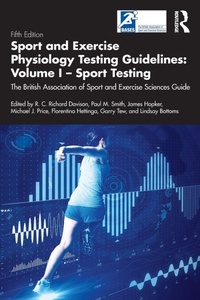
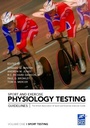
Sport and Exercise Physiology Testing Guidelines: Volume I - Sport Testing
The British Association of Sport and Exercise Sciences Guide
2nd Edition
Published on 23. March 2022
Book
Paperback/Softback
446 pages
978-0-367-49133-8 (ISBN)
Description
Since its first published edition more than 30 years ago, the BASES (British Association of Sport and Exercise Sciences) Physiological Testing Guidelines have represented the leading knowledge base of current testing methodology for sport and exercise scientists. Sport and exercise physiologists conduct physiological assessments that have proven validity and reliability, both in laboratory and sport-specific contexts. A wide variety of test protocols have been developed, adapted and refined to support athletes of all abilities reach their full potential. This book is a comprehensive guide to these protocols and to the key issues relating to physiological testing.
With contributions from leading specialist sport physiologists and covering a wide range of mainstream sports in terms of ethical, practical and methodological issues, this volume represents an essential resource for sport-specific exercise testing in both research and applied settings. This new edition draws on the authors' experience of supporting athletes from many sports through several Olympic cycles to achieve world leading performances. While drawing on previous editions, it is presented in a revised format matching the sport groupings used in elite sport support within the UK sport institutes. Building on the underpinning general procedures, these specific chapters are supported by appropriate up-to-date case studies in the supporting web resources.
With contributions from leading specialist sport physiologists and covering a wide range of mainstream sports in terms of ethical, practical and methodological issues, this volume represents an essential resource for sport-specific exercise testing in both research and applied settings. This new edition draws on the authors' experience of supporting athletes from many sports through several Olympic cycles to achieve world leading performances. While drawing on previous editions, it is presented in a revised format matching the sport groupings used in elite sport support within the UK sport institutes. Building on the underpinning general procedures, these specific chapters are supported by appropriate up-to-date case studies in the supporting web resources.
Reviews / Votes
"This is the Guideline provides the 'gold standard' for all methods used in assessing human fitness and performance in sport and exercise." - Professor Clyde Williams, Emeritus Professor of Sports Science, Loughborough University, UKMore details
Series
Edition
2nd edition
Language
English
Place of publication
London
United Kingdom
Publishing group
Taylor & Francis Ltd
Target group
College/higher education
Postgraduate
Illustrations
26 s/w Abbildungen, 20 farbige Abbildungen, 7 s/w Photographien bzw. Rasterbilder, 5 Farbfotos bzw. farbige Rasterbilder, 19 s/w Zeichnungen, 15 farbige Zeichnungen, 48 s/w Tabellen, 4 farbige Tabellen
4 Tables, color; 48 Tables, black and white; 15 Line drawings, color; 19 Line drawings, black and white; 5 Halftones, color; 7 Halftones, black and white; 20 Illustrations, color; 26 Illustrations, black and white
Dimensions
Height: 234 mm
Width: 156 mm
Thickness: 25 mm
Weight
711 gr
ISBN-13
978-0-367-49133-8 (9780367491338)
Copyright in bibliographic data and cover images is held by Nielsen Book Services Limited or by the publishers or by their respective licensors: all rights reserved.
Schweitzer Classification
Other editions
Additional editions
Richard Davison | Paul M. Smith | James Hopker
Sport and Exercise Physiology Testing Guidelines: Volume I - Sport Testing
The British Association of Sport and Exercise Sciences Guide
Book
03/2022
2nd Edition
Routledge
€244.10
Shipment within 15-20 days
Richard Davison | Paul M. Smith | James Hopker
Sport and Exercise Physiology Testing Guidelines: Volume I - Sport Testing
The British Association of Sport and Exercise Sciences Guide
E-Book
03/2022
2nd Edition
Routledge
€73.99
Available for download
Richard Davison | Paul M. Smith | James Hopker
Sport and Exercise Physiology Testing Guidelines: Volume I - Sport Testing
The British Association of Sport and Exercise Sciences Guide
E-Book
03/2022
2nd Edition
Routledge
€73.99
Available for download
Previous edition
Edward M. Winter | Andrew M. Jones | R.C. Richard Davison
Sport and Exercise Physiology Testing Guidelines: Volume I - Sport Testing
The British Association of Sport and Exercise Sciences Guide
Book
11/2006
1st Edition
Routledge
€90.55
Article exhausted; check for reprint
Persons
R.C. Richard Davison, PhD, FBASES, CSci, is Professor of Exercise Physiology in the School of Health and Life Sciences at the University of the West of Scotland, UK.
Paul M. Smith, PhD, FBASES, FHEA, is Senior Lecturer in Exercise Physiology in the School of Sport and Health Sciences at Cardiff Metropolitan University, UK.
James Hopker, PhD, is Professor of Sport and Exercise Science and Deputy Director of the Division of Natural Sciences at the University of Kent, UK.
Michael J. Price, PhD, FBASES, is Reader in Exercise Physiology at Coventry University, UK.
Florentina Hettinga, PhD, FACSM, FECSS, SFHEA, is Professor of Sport, Exercise and Rehabilitation and Director of Research and Knowledge Exchange of the Department of Sport, Exercise and Rehabilitation at Northumbria University, UK.
Garry Tew, PhD, FBASES, FHEA, is Professor of Clinical Exercise Science in the Department of Sport, Exercise and Rehabilitation at Northumbria University, UK.
Lindsay Bottoms, PhD, FBASES, is Reader in Exercise and Health Physiology at the University of Hertfordshire, UK, and the Director of the Research Centre for Psychology and Sports Sciences.
Paul M. Smith, PhD, FBASES, FHEA, is Senior Lecturer in Exercise Physiology in the School of Sport and Health Sciences at Cardiff Metropolitan University, UK.
James Hopker, PhD, is Professor of Sport and Exercise Science and Deputy Director of the Division of Natural Sciences at the University of Kent, UK.
Michael J. Price, PhD, FBASES, is Reader in Exercise Physiology at Coventry University, UK.
Florentina Hettinga, PhD, FACSM, FECSS, SFHEA, is Professor of Sport, Exercise and Rehabilitation and Director of Research and Knowledge Exchange of the Department of Sport, Exercise and Rehabilitation at Northumbria University, UK.
Garry Tew, PhD, FBASES, FHEA, is Professor of Clinical Exercise Science in the Department of Sport, Exercise and Rehabilitation at Northumbria University, UK.
Lindsay Bottoms, PhD, FBASES, is Reader in Exercise and Health Physiology at the University of Hertfordshire, UK, and the Director of the Research Centre for Psychology and Sports Sciences.
Content
Introduction
Part 1: Professional Best Practice
1.1. Professional Competency and Working with Others
1.2. Physiological Exercise Testing: Ethical Considerations
1.3. Health and Safety in Duty of Care: Evaluating and Stratifying Risk
1.4. Safeguarding in Physiological Testing
Part 2: Analysis and Reporting
2.1. Data Intelligence and Feedback to the Coach
2.2. Reliability and Measurement Error
2.3. Scaling: Adjusting Physiological and Performance Measures for Differences in Body Size
Part 3: General Procedures
3.1. Pre-Participation Evaluation for Athletes
3.2. Equipment Maintenance and Calibration Standards
3.3. Lung and Respiratory Muscle Function
3.4. Surface Anthropometry
3.5. Functional Screening
3.6. Respiratory Gas Analysis
3.7. Metabolic Threshold Testing, Interpretation and Its Prognostic Prescriptive Value
3.8. Ratings of Perceived Exertion
3.9. Strength Testing
3.10. Blood Sampling
3.11. Skeletal Muscle Biopsy: Techniques and Applications
3.12. Non-Invasive Assessment of the Neuromuscular System
3.13. Field Based Testing
3.14. Application of Dual Energy X-Ray Absorptiometry
Part 4: Racing Sports (Endurance, Middle-distance and Sprint)
4.1. Middle- and Long-distance Running
4.2. Triathlon
4.3. Swimming
4.4. Rowing
4.5. Cycling
4.6. Canoeing and Kayaking
4.7. Speed Skating (Long-Track and Short-Track)
4.8. Cross-Country Skiing and Biathlon
Part 5: Invasion Games
5.1. Soccer
5.2. Field Hockey
5.3. Rugby
5.4. Netball
5.5. Basketball
Part 6: Racket Sports
6.1. Squash
6.2. Table Tennis
Part 7: Bat and Ball Sports
7.1. Cricket
Part 8: Target Sports
8.1. Golf
8.2. Curling
Part 9: High intensity Skill Sports
9.1. Motorsports
9.2. Sport Climbing
Part 10: Aesthetic Physical Sports
10.1. Artistic Gymnastic
Part 11: Combat Sports
11.1. Judo
11.2. Amateur and Professional Boxing
11.3. Fencing
Part 12: Paralympic Specific
12.1. Ambulant Para-Athletes
12.2. Wheeled Para Sport
12.3. Intellectual Impairment
Part 13: Specific Populations
13.1. Testing the Master Athlete
13.2. Testing Considerations for Children
13.3. Testing the Female Athlete
Part 14: Environmental Specific Issues
14.1. Performing at Altitude
14.2. Performing in the Heat
14.3. Performing in Cold Environments
14.4. Swimming in Aquatic Environments
Part 15: Athlete Health and Wellbeing
15.1. The Travelling Athlete
15.2. Athlete Wellbeing
15.3. Training Load
15.4. Overreaching and Overtraining
15.5. Exercise Testing for the Pregnant Athlete
15.6. Methods in Exercise Immunology
Part 1: Professional Best Practice
1.1. Professional Competency and Working with Others
1.2. Physiological Exercise Testing: Ethical Considerations
1.3. Health and Safety in Duty of Care: Evaluating and Stratifying Risk
1.4. Safeguarding in Physiological Testing
Part 2: Analysis and Reporting
2.1. Data Intelligence and Feedback to the Coach
2.2. Reliability and Measurement Error
2.3. Scaling: Adjusting Physiological and Performance Measures for Differences in Body Size
Part 3: General Procedures
3.1. Pre-Participation Evaluation for Athletes
3.2. Equipment Maintenance and Calibration Standards
3.3. Lung and Respiratory Muscle Function
3.4. Surface Anthropometry
3.5. Functional Screening
3.6. Respiratory Gas Analysis
3.7. Metabolic Threshold Testing, Interpretation and Its Prognostic Prescriptive Value
3.8. Ratings of Perceived Exertion
3.9. Strength Testing
3.10. Blood Sampling
3.11. Skeletal Muscle Biopsy: Techniques and Applications
3.12. Non-Invasive Assessment of the Neuromuscular System
3.13. Field Based Testing
3.14. Application of Dual Energy X-Ray Absorptiometry
Part 4: Racing Sports (Endurance, Middle-distance and Sprint)
4.1. Middle- and Long-distance Running
4.2. Triathlon
4.3. Swimming
4.4. Rowing
4.5. Cycling
4.6. Canoeing and Kayaking
4.7. Speed Skating (Long-Track and Short-Track)
4.8. Cross-Country Skiing and Biathlon
Part 5: Invasion Games
5.1. Soccer
5.2. Field Hockey
5.3. Rugby
5.4. Netball
5.5. Basketball
Part 6: Racket Sports
6.1. Squash
6.2. Table Tennis
Part 7: Bat and Ball Sports
7.1. Cricket
Part 8: Target Sports
8.1. Golf
8.2. Curling
Part 9: High intensity Skill Sports
9.1. Motorsports
9.2. Sport Climbing
Part 10: Aesthetic Physical Sports
10.1. Artistic Gymnastic
Part 11: Combat Sports
11.1. Judo
11.2. Amateur and Professional Boxing
11.3. Fencing
Part 12: Paralympic Specific
12.1. Ambulant Para-Athletes
12.2. Wheeled Para Sport
12.3. Intellectual Impairment
Part 13: Specific Populations
13.1. Testing the Master Athlete
13.2. Testing Considerations for Children
13.3. Testing the Female Athlete
Part 14: Environmental Specific Issues
14.1. Performing at Altitude
14.2. Performing in the Heat
14.3. Performing in Cold Environments
14.4. Swimming in Aquatic Environments
Part 15: Athlete Health and Wellbeing
15.1. The Travelling Athlete
15.2. Athlete Wellbeing
15.3. Training Load
15.4. Overreaching and Overtraining
15.5. Exercise Testing for the Pregnant Athlete
15.6. Methods in Exercise Immunology