

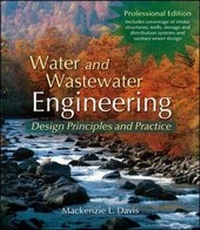
Water and Wastewater Engineering
Published on 16. May 2010
Book
Hardback
1296 pages
978-0-07-171384-9 (ISBN)
Description
Publisher's Note: Products purchased from Third Party sellers are not guaranteed by the publisher for quality, authenticity, or access to any online entitlements included with the product.
An In-Depth Guide to Water and Wastewater EngineeringThis authoritative volume offers comprehensive coverage of the design and construction of municipal water and wastewater facilities. The book addresses water treatment in detail, following the flow of water through the unit processes and coagulation, flocculation, softening, sedimentation, filtration, disinfection, and residuals management. Each stage of wastewater treatment--preliminary, secondary, and tertiary--is examined along with residuals management.
Water and Wastewater Engineering contains more than 100 example problems, 500 end-of-chapter problems, and 300 illustrations. Safety issues and operation and maintenance procedures are also discussed in this definitive resource.
Coverage includes:
Intake structures and wells
Chemical handling and storage
Coagulation and flocculation
Lime-soda and ion exchange softening
Reverse osmosis and nanofiltration
Sedimentation
Granular and membrane filtration
Disinfection and fluoridation
Removal of specific constituents
Drinking water plant residuals management, process selection, and integration
Storage and distribution systems
Wastewater collection and treatment design considerations
Sanitary sewer design
Headworks and preliminary treatment
Primary treatment
Wastewater microbiology
Secondary treatment by suspended and attached growth biological processes
Secondary settling, disinfection, and postaeration
Tertiary treatment
Wastewater plant residuals management
Clean water plant process selection and integration
An In-Depth Guide to Water and Wastewater EngineeringThis authoritative volume offers comprehensive coverage of the design and construction of municipal water and wastewater facilities. The book addresses water treatment in detail, following the flow of water through the unit processes and coagulation, flocculation, softening, sedimentation, filtration, disinfection, and residuals management. Each stage of wastewater treatment--preliminary, secondary, and tertiary--is examined along with residuals management.
Water and Wastewater Engineering contains more than 100 example problems, 500 end-of-chapter problems, and 300 illustrations. Safety issues and operation and maintenance procedures are also discussed in this definitive resource.
Coverage includes:
Intake structures and wells
Chemical handling and storage
Coagulation and flocculation
Lime-soda and ion exchange softening
Reverse osmosis and nanofiltration
Sedimentation
Granular and membrane filtration
Disinfection and fluoridation
Removal of specific constituents
Drinking water plant residuals management, process selection, and integration
Storage and distribution systems
Wastewater collection and treatment design considerations
Sanitary sewer design
Headworks and preliminary treatment
Primary treatment
Wastewater microbiology
Secondary treatment by suspended and attached growth biological processes
Secondary settling, disinfection, and postaeration
Tertiary treatment
Wastewater plant residuals management
Clean water plant process selection and integration
More details
Language
English
Place of publication
United States
Publishing group
McGraw-Hill Education - Europe
Target group
Professional and scholarly
Illustrations
200 Illustrations
Dimensions
Height: 241 mm
Width: 208 mm
Thickness: 51 mm
Weight
2289 gr
ISBN-13
978-0-07-171384-9 (9780071713849)
Schweitzer Classification
Other editions
New editions
Book
09/2019
2nd Edition
McGraw-Hill Education
€122.50
Shipment within 10-20 days
Person
Mackenzie L. Davis, Ph.D., P.E., BCEE, is an Emeritus Professor of Environmental Engineering at Michigan State University. He received all his degrees from the University of Illinois. From 1968 to 1971 he served as a Captain in the U.S. Army Medical Service Corps. During his military service he conducted air pollution surveys at Army ammunition plants. From 1971 to 1973 he was Branch Chief of the Environmental Engineering Branch at the U.S. Army Construction Engineering Research Laboratory. His responsibilities included supervision of research on air, noise, and water pollution control and solid waste management for Army facilities. In 1973, he joined the faculty at Michigan State University. He has taught and conducted research in the areas of air pollution control and hazardous waste management. His honors and awards include the State-of-the-Art Award from the ASCE, Chapter Honor Member of Chi Epsilon, Sigma Xi, election as a Fellow in the Air and Waste Management Association, and election as a Diplomate in the American Academy of Environmental Engi-neers with certification in hazardous waste management. He has received teaching awards from the American Society of Civil Engineers Student Chapter, Michigan State University College of Engineering, North Central Section of the American Society for Engineering Education, Great Lakes Region of Chi Epsilon, and the Amoco Corporation. In 1998, he received the Lyman A. Ripperton Award for distinguished achievement as an educator from the Air and Waste Management Association. In 2007, he was recognized as the Educational Professional of the Year by the Michigan Water Environment Association. He is a registered professional engineer in Michigan. Dr. Davis is the author of a student and professional edition of Water and Wastewater Engineering and co-author of Introduction to Environmental Engineering with Dr. David Cornwell. In 2003, Dr. Davis retired from Michigan State University.
Content
Chapter 1. The Design and Construction Processes; Chapter 2. General Water Supply Design Considerations; Chapter 3. Intake Structures; Chapter 4. Wells; Chapter 5. Chemical Handling and Storage; Chapter 6. Coagulation and Flocculation; Chapter 7. Lime-Soda Softening; Chapter 8. Ion Exchange; Chapter 9. Reverse Osmosis and Nanofiltration; Chapter 10. Sedimentation; Chapter 11. Granular Filtration; Chapter 12. Membrane Filtration; Chapter 13. Disinfection and Flouridation; Chapter 14. Removal of Specific Constituents; Chapter 15. Water Plant Residuals Management; Chapter 16. Drinking Water Plant Process Selection and Integration; Chapter 17. Storage and Distribution Systems; Chapter 18. General Wastewater Collection and Treatment DesignChapter 19. Sanitary Sewer Design; Chapter 20. Headworks and Preliminary Treatment; Chapter 21. Primary Treatment; Chapter 22. Wastewater Microbiology; Chapter 23. Secondary Treatment by Suspended Growth Biological Processes; Chapter 24. Secondary Treatment by Attached Growth and Hybrid Biological Processes; Chapter 25. Secondary Settling, Disinfection, and Postaeration; Chapter 26. Tertiary Treatment; Chapter 27. Wastewater Plant Residuals Management; Chapter 28. Clean Water Plant Process Selection and Integration; Appendix A. Properties of Air, Water, and Selected Chemicals; Appendix B. U.S. Standard and Sieve Sizes; Appendix C. Pipe, Fitting, and Valve Data; Appendix D. U.S. Environmental Protection Agency Ct Valves for Disinfectants; Index