

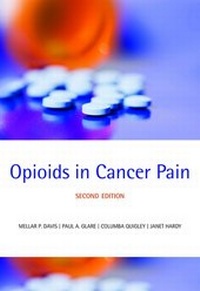
Opioids In Cancer Pain
2nd Edition
Published on 27. May 2009
Book
Hardback
504 pages
978-0-19-923664-0 (ISBN)
Description
Opioids have become invaluable in modern medicine but it is essential that they are prescribed with an understanding of the complex pharmacology behind their effectiveness; without this, they will frequently fail to achieve their enormous potential of pain relief, minimal side effects, and improved function. In addition, opioids come with problems, including side effects such as constipation, respiratory depression, and sedation, as well as the potential for substance abuse. Clinicians handling the complex pain problems of cancer patients must incorporate the insight of basic scientists and pharmacologists, and this new edition of this comprehensive text brings together a wealth of experience from those involved in all aspects of opioids, with a view to improving both clinician understanding and patient care. The text includes comprehensive coverage of the principles of opioid pharmacodynamics, pharmacokinetics, and pharmacogenetics. A chapter is dedicated to each of the main opioids, with topics such as structure, routes of administration, toxicity, drug interactions, and effects on organ function included within each one.
The book concludes with several chapters dedicated to discussion of the major issues relevant to opioid use, including substance abuse, dosing strategies for acute and chronic pain, patient controlled analgesia, equianalgesia, spinal opioids, pain that doesn't respond to opioids, and the terminal phase. This text is the most complete and extensive work available on the use of opioids for cancer pain, and is an important reference for those clinicians treating individuals with cancer.
The book concludes with several chapters dedicated to discussion of the major issues relevant to opioid use, including substance abuse, dosing strategies for acute and chronic pain, patient controlled analgesia, equianalgesia, spinal opioids, pain that doesn't respond to opioids, and the terminal phase. This text is the most complete and extensive work available on the use of opioids for cancer pain, and is an important reference for those clinicians treating individuals with cancer.
Reviews / Votes
Each chapter is well referenced, providing an excellent critical review of the literature in this field. American Journal of Epidemiology This is the best current textbook on the clinical use of opioids in cancer pain (and in chronic benign pain). BMA Medical Book Competition 2010 ...well set out with the good use of headings... well-referenced... the editors are to be congratualted for putting together what remains the premier reference on opioids in cancer pain Roger WoodruffMore details
Edition
2nd edition
Language
English
Place of publication
Oxford
United Kingdom
Target group
Professional and scholarly
Illustrations
33 black-and-white line drawings
Dimensions
Height: 253 mm
Width: 176 mm
Weight
1018 gr
ISBN-13
978-0-19-923664-0 (9780199236640)
Copyright in bibliographic data and cover images is held by Nielsen Book Services Limited or by the publishers or by their respective licensors: all rights reserved.
Schweitzer Classification
Other editions
Additional editions
Mellar P. Davis
Opioids in Cancer Pain
E-Book
05/2009
1st Edition
Oxford University Press
€556.83
Available for download
Previous edition
Mellar Davis
Opioids in Cancer Pain
Book
06/2005
Oxford University Press
€71.80
Article exhausted; check for reprint
Persons
Columba Quigley previously held the post of Deputy Coordinating Editor of the Cochrane Collaboration Pain Palliative and Supportive Care Group. She has lectured and published in a range of areas, including opioid switching, alternative opioids, inter-individual variability in opioid responsiveness and the genetics of opioid response.
Content
1. Opioid receptors and opioid pharmacodynamics ; 2. Opioid pharmacokinetics ; 3. Liver disease and exogenous opioid pharmacokinetics ; 4. Opioids in renal failure ; 5. Codeine ; 6. Hydrocodone ; 7. Tramadol ; 8. Dextropoxyphene ; 9. Morphine ; 10. Oxycodone ; 11. The lipophilic opioids - fentanyl, alfentanil, sufentanil and remifentanil ; 12. Buprenorphine ; 13. Methadone ; 14. Hydromorphone ; 15. Levorphanol ; 16. Diamorphine ; 17. Oxymorphone ; 18. Choice of opioids and the WHO ladder ; 19. Pharmacogenetics and opioids ; 20. Opioid rotation ; 21. Equianalgesia ; 22. Dosing strategies for acute pain ; 23. Opioid dosing strategies for chronic pain and the management of opioid side effects ; 24. Patient controlled analgesia ; 25. Spinal opioids in cancer pain ; 26. Opioid poorly responsive pain, physical dependence, tolerance and opioid-induced hyperalgesia ; 27. Opioids in special populations: developing countries ; 28. Opioids in special populations: pediatric population ; 29. Opioids in the terminal phase ; 30. Cancer pain and substance abuse