

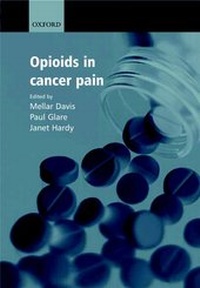
Opioids in Cancer Pain
Published in June 2005
Book
Hardback
350 pages
978-0-19-852943-9 (ISBN)
Description
There is a great deal of interest in the effective use of opioids for cancer pain due to concerns from both clinicians and patients about addiction. When used correctly, opioids are capable of relieving pain in more than 90 percent of cancer patients. In reality, patients world-wide continue to endure pain usually due to irrational fears about using them. Fear of addiction is fed by outdated knowledge about opioids and the unintended effects of the war on drugs. However, new research shows that using opioids appropriately for pain management is effective, safe, and has an extremely low potential to produce addiction. This book provides evidence (on which guidelines can be based) from an international group of editors and contributors on opioids in cancer pain management, aimed at palliative care doctors, pharmacists, pain specialists, and oncologists. It includes information on opioid pharmacokinetics as a basis for understanding opioid analgesia, dosing schedule, polymorphisms of analgesic receptors in relationship to tolerance, and intrinsic efficacy. The main body of the book covers individual opioids.
Topics within each chapter include structure, pharmacokinetics, pharmacodynamics, routes of administration, toxicity, drug interactions and influences of dosing and kinetics related to organ function. A chapter is dedicated to the WHO analgesic guidelines and opioid choices.
Topics within each chapter include structure, pharmacokinetics, pharmacodynamics, routes of administration, toxicity, drug interactions and influences of dosing and kinetics related to organ function. A chapter is dedicated to the WHO analgesic guidelines and opioid choices.
Reviews / Votes
Drs Davis, Glare and Hardy have produced an informative book providing the wide variety of clinicians and pharmacists who treat cancer patients with details of nearly every aspect of the clinical use of opioids in cancer pain...Opioids in cancer pain is a highly informative book that can be confidently recommended to all clinicians who treat cancer patients. Hong Kong Medical Journal Vol 12, No 3 The editors are to be congratulated for producing the premier reference on opioids in cancer pain. IAHPC Newsroom 2006, Volume 7, No 1More details
Language
English
Place of publication
Oxford
United Kingdom
Target group
Professional and scholarly
Aimed at palliative care doctors, oncologists, pain specialists, and pharmacists.
Illustrations
16 s/w Abbildungen
16 black & white line illustrations
Dimensions
Height: 240 mm
Width: 168 mm
ISBN-13
978-0-19-852943-9 (9780198529439)
Copyright in bibliographic data and cover images is held by Nielsen Book Services Limited or by the publishers or by their respective licensors: all rights reserved.
Schweitzer Classification
Other editions
New editions
Mellar P. Davis | Paul A. Glare | Janet Hardy
Opioids In Cancer Pain
Book
05/2009
2nd Edition
Oxford University Press
€90.37
Article exhausted; check different version
Persons
Edited by Mellar Davis, Director, The Harry R Horvitz Center for Palliative Medicine, The Cleveland Clinic Taussig Cancer Center, Cleveland, USA, Paul Glare, Director of Central Sydney Palliative Care Service, Royal Prince Alfred Hospital, Sydney, New South Wales, Australia, and J R Hardy, Associate Professor, Director of Palliative Care, Mater Health Services, South Brisbane, Queensland, Australia
Content
1. Introduction; 2. Opioid receptors and opioid pharmacodynamics; 3. Opioid pharmacokinetics; 4. Codeine; 5. Hydrocodone; 6. Tramadol; 7. Dextroproxyphene; 8. Morphine; 9. Hydromorphone; 10. Oxycodone; 11. The lipophilic opioids: fentanyl, alfentanil, sufentanil and remifentanil; 12. Methadone; 13. Levorphanol; 14. Diamorphine; 15. Oxymorphone; 16. Choice of opioids and WHO ladder; 17. Opioid rotation; 18. Opioids equinalgesia: dynamics and kinetics; 19. Opioid dosing strategies; 20. Patient controlled analgesia; 21. Spinal opioids in cancer pain; 22. Opioid-resistant pain