


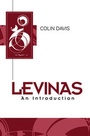
Levinas
An Introduction
1st Edition
Will be published approx. on 22. November 1996
Book
Paperback/Softback
176 pages
978-0-7456-1263-8 (ISBN)
Description
In recent years there has been a resurgence of interest in the work of Emmanuel Levinas, widely recognized as one of the most important yet difficult philosophers of the 20th century.
In this much-needed introduction, Davis unpacks the concepts at the centre of Levinas's thought - alterity, the Other, the Face, infinity - concepts which have previously presented readers with major problems of interpretation.
Davis traces the development of Levinas's thought over six decades, describing the context in which he worked, and the impact of his writings. He argues that Levinas's work remains tied to the ontological tradition with which he wants to break, and demonstrates how his later writing tries to overcome this dependency by its increasingly disruptive, sometimes opaque, textual practice. He discusses Levinas's theological writings and his relationship to Judaism, as well as the reception of his work by contemporary thinkers, arguing that the influence of his work has led to a growing interest in ethical issues among poststructuralist and postmodernist thinkers in recent years.
Comprehensive and clearly written, this book will be essential reading for students and researchers in continental philosophy, French studies, literary theory and theology.
In this much-needed introduction, Davis unpacks the concepts at the centre of Levinas's thought - alterity, the Other, the Face, infinity - concepts which have previously presented readers with major problems of interpretation.
Davis traces the development of Levinas's thought over six decades, describing the context in which he worked, and the impact of his writings. He argues that Levinas's work remains tied to the ontological tradition with which he wants to break, and demonstrates how his later writing tries to overcome this dependency by its increasingly disruptive, sometimes opaque, textual practice. He discusses Levinas's theological writings and his relationship to Judaism, as well as the reception of his work by contemporary thinkers, arguing that the influence of his work has led to a growing interest in ethical issues among poststructuralist and postmodernist thinkers in recent years.
Comprehensive and clearly written, this book will be essential reading for students and researchers in continental philosophy, French studies, literary theory and theology.
Reviews / Votes
"Davis's book has many merits. The style is spare, modest and clear. The scholarship is extremely accurate throughout, a task which is obviously helped by Davis's perfect knowledge of French, which enables him to comprehend and convey the singular quality of Levinas's prose. Davis's attention to the detail of Levinas's language is admirable and this is the first book I have read on Levinas in English that adequately explores the rhetorical dimension of his work. Davis manages to provide the reader with a systematic overview of Levinas's philosophical work ... he has a fine sense of what is philosophically at stake in Levinas's mature thought, and achieves this task of elucidation without passing over the textual complexities and even contradictions of Levinas's writing." The Times Literary Supplement"Excellent introduction." Le'ela
"Easily accessible to the undergraduate audience." Radical Philosophy
More details
Series
Language
English
Place of publication
Oxford
United Kingdom
Publishing group
John Wiley and Sons Ltd
Target group
College/higher education
Professional and scholarly
Dimensions
Height: 229 mm
Width: 154 mm
Thickness: 13 mm
Weight
255 gr
ISBN-13
978-0-7456-1263-8 (9780745612638)
Copyright in bibliographic data and cover images is held by Nielsen Book Services Limited or by the publishers or by their respective licensors: all rights reserved.
Schweitzer Classification
Other editions
Additional editions


Book
11/1996
Polity Press
€82.00
Article exhausted; check different version
Person
Colin Davis is the author of Levinas: An Introduction, published by Wiley.
Content
Abbreviations. Introduction.
1. Phenomenology.
2. Same and Other: Totality and Infinity.
3. Ethical Language: Otherwise than Being or Beyond Essence.
4. Religion.
5. Levinas and his Readers.
Conclusion.
Notes.
Bibliography.
Index.
1. Phenomenology.
2. Same and Other: Totality and Infinity.
3. Ethical Language: Otherwise than Being or Beyond Essence.
4. Religion.
5. Levinas and his Readers.
Conclusion.
Notes.
Bibliography.
Index.