

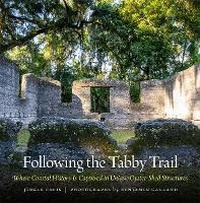
Following the Tabby Trail
Where Coastal History Is Captured in Unique Oyster-Shell Structures
Will be published approx. on 1. June 2022
Book
Hardback
352 pages
978-0-8203-5749-2 (ISBN)
Description
Following the Tabby Trail provides a guided tour of some of the most significant tabby structures found along the southeastern coast and includes more than two hundred illustrations that highlight the human and architectural histories of forty-eight specific sites. Jingle Davis explains how tabby-a unique oyster-shell concrete-helps us to understand the complex past of the coast. A tabby structure is, as the author puts it, "a storehouse of history." Each of the site descriptions includes the intriguing profile of a historic figure associated in some way with the tabby.
Though the first documented use of tabby in North America was in 1672 in what is now St. Augustine, Florida, Spanish colonists had used many of its constituent parts a century earlier. In addition to their Spanish-speaking competitors, colonizers from France and the British Isles also enthusiastically adopted the building material for their colonial missions. This meant, of course, that enslaved Africans and Indigenous peoples built with the material. Tabby remained a fashionable, effective, and enduring building material until shortly after the Civil War.
This richly photographed work provides readers with a guide to the underexplored string of tabby structures still standing along the stretch of coast between Florida and South Carolina, an approximately 275-mile trail traced by the book from just south of St. Augustine north to the dead town of Dorchester near Summerville. Sites include such varied structures as ancient Late Archaic shell mounds called middens and rings of shells thousands of years old; Fort Matanzas, built in 1742 but named for a sixteenth-century massacre of French colonists by St. Augustine's Spanish founder Pedro Menendez de Aviles; Fort Mose, a significant feature of Florida's Black Heritage Trail; and homes of the enslaved, warehouses, Charleston's seawall, churches, and cemeteries.
Though the first documented use of tabby in North America was in 1672 in what is now St. Augustine, Florida, Spanish colonists had used many of its constituent parts a century earlier. In addition to their Spanish-speaking competitors, colonizers from France and the British Isles also enthusiastically adopted the building material for their colonial missions. This meant, of course, that enslaved Africans and Indigenous peoples built with the material. Tabby remained a fashionable, effective, and enduring building material until shortly after the Civil War.
This richly photographed work provides readers with a guide to the underexplored string of tabby structures still standing along the stretch of coast between Florida and South Carolina, an approximately 275-mile trail traced by the book from just south of St. Augustine north to the dead town of Dorchester near Summerville. Sites include such varied structures as ancient Late Archaic shell mounds called middens and rings of shells thousands of years old; Fort Matanzas, built in 1742 but named for a sixteenth-century massacre of French colonists by St. Augustine's Spanish founder Pedro Menendez de Aviles; Fort Mose, a significant feature of Florida's Black Heritage Trail; and homes of the enslaved, warehouses, Charleston's seawall, churches, and cemeteries.
Reviews / Votes
From my perspective, the single most valuable contribution of Following the Tabby Trail is that it brings the history of Spanish Florida into the realm of Georgia and Carolina history. By shining a different light on well-established stories, Davis is tying together a diverse region with all that this implies in terms of understanding people and their cultures. -- Paul M. Pressly * coeditor of Coastal Nature, Coastal Culture: Environmental Histories of the Georgia Coast * Like dinosaur bones, tabby ruins litter the coastal plain from St. Augustine to Charleston, silent sentinels of a distant time when Europeans and enslaved Natives and Africans left permanent marks on the Atlantic coast. In this monumental undertaking, Following the Tabby Trail, Jingle Davis brings to light stories from our past that have been locked in stone for centuries. Enhanced by Ben Galland's striking photography, this book represents a significant addition to the collective history of the Southeast coast. -- Stephen Doster * author Cumberland Island: Footsteps in Time (Georgia) *More details
Series
Language
English
Place of publication
Georgia
United States
Target group
Professional and scholarly
Product notice
With dust jacket
Illustrations
4 Maps; 4 Maps; 4 Maps; 4 Maps; 4 Maps; 4 Maps; 4 Maps
Dimensions
Height: 211 mm
Width: 208 mm
Thickness: 20 mm
Weight
1043 gr
ISBN-13
978-0-8203-5749-2 (9780820357492)
Copyright in bibliographic data and cover images is held by Nielsen Book Services Limited or by the publishers or by their respective licensors: all rights reserved.
Schweitzer Classification
Persons
Jingle Davis (Author)
JINGLE DAVIS was a retired journalist who worked for the Atlanta Journal-Constitution for over twenty years, often covering South Georgia and the coast. She is the author of Island Time: An Illustrated History of St. Simons Island, Georgia and Island Passages: An Illustrated History of Jekyll Island, Georgia (both Georgia).
Benjamin Galland (Photographer)
BENJAMIN GALLAND, born and raised on St. Simons Island, is a photographer and partner with the h2o Creative Group in Brunswick and the photographer for Jingle Davis's Island Time: An Illustrated History of St. Simons Island, Georgia and Island Passages: An Illustrated History of Jekyll Island, Georgia as well as Buddy Sullivan's Sapelo: People and Place on a Georgia Sea Island (all Georgia).
JINGLE DAVIS was a retired journalist who worked for the Atlanta Journal-Constitution for over twenty years, often covering South Georgia and the coast. She is the author of Island Time: An Illustrated History of St. Simons Island, Georgia and Island Passages: An Illustrated History of Jekyll Island, Georgia (both Georgia).
Benjamin Galland (Photographer)
BENJAMIN GALLAND, born and raised on St. Simons Island, is a photographer and partner with the h2o Creative Group in Brunswick and the photographer for Jingle Davis's Island Time: An Illustrated History of St. Simons Island, Georgia and Island Passages: An Illustrated History of Jekyll Island, Georgia as well as Buddy Sullivan's Sapelo: People and Place on a Georgia Sea Island (all Georgia).