

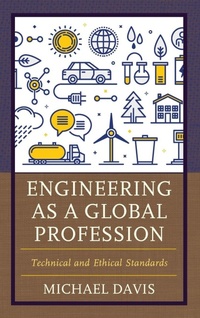
Engineering as a Global Profession
Technical and Ethical Standards
Published on 21. September 2021
Book
Hardback
324 pages
978-1-5381-5504-2 (ISBN)
Description
While this book begins with the analysis of engineering as a profession, it concentrates on a question that the last two decades seem to have made critical: Is engineering one global profession (like medicine) or many national or regional professions (like law)? While science and technology studies (STS) have increasingly taken an "empirical turn", much of STS research is unclear enough about the professional responsibility of engineers that STS still tends to avoid the subject, leaving engineering ethics without the empirical research needed to teach it as a global profession. The philosophy of technology has tended to do the same. This book's intervention is to improve the way STS, as well as the philosophy of technology, approaches the study of engineering. This is work in the philosophy of engineering and the attempt to understand engineering as a reasonable undertaking.
Reviews / Votes
One practical benefit of philosophy is that it can clarify thought. Davis has spent his career clarifying thoughts about engineering-his own as well as those of others. In this volume, he offers a book-length exploration of what engineering is, what professions are, and why philosophers, engineers, and the public should care about such ideas.... Not an engineering ethics textbook as such, the work nevertheless keeps ethics in the foreground, examining engineering in various contexts, ranging from how engineering ethics is taught to whether software engineering will ever become engineering. Davis disagrees with many commonplace cliches about engineering, yet his statements of disagreement are always illuminating and provide food for deeper thought. Philosophers and thoughtful engineers will find much to ponder in this book. Recommended. Upper-division undergraduates. Graduate students, faculty, and professionals. * Choice Reviews * Engineering as a Global Profession is a timely and extremely relevant contribution to our attempts to come to grips with the nature of engineering as an activity and the prominent role and responsibilities of engineers as professionals in the 21st century. Anyone who wants to have a better understanding of engineering is well advised to read Michael Davis' wide ranging and well written book. Davis eloquently draws upon a life-long study of the Philosophy of Engineering and provides both the relevant facts and insightful philosophical analysis in a coherent account. A must read. -- Jeroen van den Hoven, Professor of Ethics and Technology, Delft University of Technology Michael Davis is one of the pioneers in engineering ethics and the philosophy of engineering. This book cogently brings his views together. He argues that engineering is a profession and should not be understood as a derivate of either science or technology. A must-read for anyone interested in the field. -- Ibo van de Poel, Antoni van Leeuwenhoek Professor in Ethics and Technology, Delft University of TechnologyMore details
Language
English
Place of publication
United States
Publishing group
Bloomsbury Publishing Plc
Target group
Professional and scholarly
Dimensions
Height: 235 mm
Width: 157 mm
Thickness: 24 mm
Weight
685 gr
ISBN-13
978-1-5381-5504-2 (9781538155042)
Copyright in bibliographic data and cover images is held by Nielsen Book Services Limited or by the publishers or by their respective licensors: all rights reserved.
Schweitzer Classification
Other editions
Additional editions
E-Book
09/2021
1st Edition
Rowman & Littlefield Publishers
€36.99
Available for download
Person
Michael Davis is senior fellow at the Center for the Study of Ethics in the Professions and professor emeritus of philosophy, Illinois Institute of Technology. Among his publications are Conflict of Interest in the Professions; Profession, Code, and Ethics; Engineering Ethics; and Ethics and the Legal Profession.
Content
Preface
Part I: Distinguishing Engineering from other Professions
1.Profession
2.Engineering-From Chicago to Shantou
3.Why Architects Are Not Engineers
4.Distinguishing Chemists from Engineers
5.Will Software Engineers ever be Engineers?
6.Engineering and Business Management: The Odd Couple
Part II: The Study of Engineering as a Profession
7.Methodological Problems in the Study of Engineering
8.Profession as a Lens for Studying Technology
Part III: Professional Responsibility of Engineers
9."Ain't No One Here But Us Social Forces"
10.Engineering Ethics, Individuals, and Organizations
11."Social Responsibility" of Engineers
12.Macro-, Micro-, and Meso-Ethics
13.Doing the Minimum
14.Re-inventing the Wheel: "Global Engineering Ethics"
15.In Praise of Emotion in Engineering
Part IV: Engineering's Globalism
16.The Whistle Not Blown: WV, Diesels, and Engineers
17.Three Nuclear Disasters and a Hurricane: Reflections
18.Ethical Issues in the Global Arms Industry
19.Temporal Limits
Part I: Distinguishing Engineering from other Professions
1.Profession
2.Engineering-From Chicago to Shantou
3.Why Architects Are Not Engineers
4.Distinguishing Chemists from Engineers
5.Will Software Engineers ever be Engineers?
6.Engineering and Business Management: The Odd Couple
Part II: The Study of Engineering as a Profession
7.Methodological Problems in the Study of Engineering
8.Profession as a Lens for Studying Technology
Part III: Professional Responsibility of Engineers
9."Ain't No One Here But Us Social Forces"
10.Engineering Ethics, Individuals, and Organizations
11."Social Responsibility" of Engineers
12.Macro-, Micro-, and Meso-Ethics
13.Doing the Minimum
14.Re-inventing the Wheel: "Global Engineering Ethics"
15.In Praise of Emotion in Engineering
Part IV: Engineering's Globalism
16.The Whistle Not Blown: WV, Diesels, and Engineers
17.Three Nuclear Disasters and a Hurricane: Reflections
18.Ethical Issues in the Global Arms Industry
19.Temporal Limits