


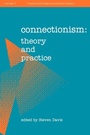
Connectionism
Theory and Practice
Published on 21. January 1993
Book
Hardback
336 pages
978-0-19-507665-3 (ISBN)
Description
This is the third volume in the Vancouver Studies in Cognitive Science Series. It is based on a conference that was held in 1990, which was sponsored by the Cognitive Science Program and Linguistics Department of Simon Fraser University.
Over the last decade, there has emerged a paradigm of cognitive modeling that has been hailed by many researchers as a radically new and promising approach to cognitive science. This new paradigm has come to be known by a number of names, including "connectionism", "neural networks", and "parallel distributed processing", (or PDP). This method of computation attempts to model the neural processes that are thought to underlie cognitive functions in human beings. Unlike the digital computation methods used by AI researchers, connectionist models claim to approximate the kind of spontaneous, creative and somewhat unpredicatable behavior of human agents. However, over the last few years, a heated controversy has arisen over the extent to which connectionist models are able to provide successful explanations for higher cognitive processes. A central theme of this book reviews the adequacy of recent attempts to implement higher cognitive processes in connectionist networks.
Over the last decade, there has emerged a paradigm of cognitive modeling that has been hailed by many researchers as a radically new and promising approach to cognitive science. This new paradigm has come to be known by a number of names, including "connectionism", "neural networks", and "parallel distributed processing", (or PDP). This method of computation attempts to model the neural processes that are thought to underlie cognitive functions in human beings. Unlike the digital computation methods used by AI researchers, connectionist models claim to approximate the kind of spontaneous, creative and somewhat unpredicatable behavior of human agents. However, over the last few years, a heated controversy has arisen over the extent to which connectionist models are able to provide successful explanations for higher cognitive processes. A central theme of this book reviews the adequacy of recent attempts to implement higher cognitive processes in connectionist networks.
More details
Series
Language
English
Place of publication
New York
United States
Target group
Professional and scholarly
Illustrations
line drawings
Dimensions
Height: 235 mm
Width: 157 mm
Thickness: 24 mm
Weight
691 gr
ISBN-13
978-0-19-507665-3 (9780195076653)
Copyright in bibliographic data and cover images is held by Nielsen Book Services Limited or by the publishers or by their respective licensors: all rights reserved.
Schweitzer Classification
Other editions
Additional editions
Book
01/1993
Oxford University Press Inc
€42.30
Shipment within 15-20 days
E-Book
08/1992
1st Edition
OUP eBook
€21.99
Available for download
Person
Content
1: G.E. Hinton and S. Becker: Using Coherence Assumptions to Discover the Underlying Causes of the Sensory Input
Michael I. Jordan and Robert A. Jacobs: Comment
2: Paul M. Churchland: A Deeper Unity: Some Feyerabendian Themes in Neurocomputational Form
Charles Travis: Comment
3: David E. Rumelhart: Towards a Microstructural Account of Human Reasoning
4: Mark S. Seidenberg: Connectionism without Tears
Comment: Michael E.J. Masson
5: Jeffrey L. Elman: Grammatical Structure and Distributed Representations
6: Terence Horgan and John Tienson: Structured Representations in Connectionist Systems
7: John Goldsmith: Local Modelling in Phonology
8: William Ramsey: Connectionism and the Philosophy of Mental Representation
9: Steven W. Zucker, Allan Dobbins, and Lee Iverson: Connectionism and the Computational Neurobiology of Curve Detection
10: David Kirsch: PDP Learnability and Innate Knowledge of Language
Michael I. Jordan and Robert A. Jacobs: Comment
2: Paul M. Churchland: A Deeper Unity: Some Feyerabendian Themes in Neurocomputational Form
Charles Travis: Comment
3: David E. Rumelhart: Towards a Microstructural Account of Human Reasoning
4: Mark S. Seidenberg: Connectionism without Tears
Comment: Michael E.J. Masson
5: Jeffrey L. Elman: Grammatical Structure and Distributed Representations
6: Terence Horgan and John Tienson: Structured Representations in Connectionist Systems
7: John Goldsmith: Local Modelling in Phonology
8: William Ramsey: Connectionism and the Philosophy of Mental Representation
9: Steven W. Zucker, Allan Dobbins, and Lee Iverson: Connectionism and the Computational Neurobiology of Curve Detection
10: David Kirsch: PDP Learnability and Innate Knowledge of Language