


Cognitive Therapy for Personality Disorders
A Guide for Clinicians
2nd Edition
Published on 24. August 2007
Book
Paperback/Softback
208 pages
978-0-415-41558-3 (ISBN)
Description
It is increasingly recognized that a significant number of individuals with personality disorders can benefit from therapy. In this new edition - based on the treatment of over a hundred patients with antisocial and borderline personality disorders - Kate Davidson demonstrates that clinicians using cognitive therapy can reduce a patient's tendency to deliberately self-harm and to harm others; it also improves their psychological well-being. Case studies and therapeutic techniques are described as well as current evidence from research trials for this group of patients.
Cognitive Therapy for Personality Disorders provides a thorough description of how to apply cognitive behavioural therapy to patients who are traditionally regarded as being difficult to treat: those with borderline personality disorders and those with antisocial personality disorders. The book contains detailed descriptions and strategies of how to:
formulate a case within the cognitive model of personality disorders
overcome problems encountered when treating personality disordered patients
understand how therapy may develop over a course of treatment.
This clinician's guide to cognitive behavioural therapy in the treatment of borderline and antisocial personality disorder will be essential reading for psychiatrists, clinical and counselling psychologists, therapists, mental health nurses, and students on associated training courses.
Cognitive Therapy for Personality Disorders provides a thorough description of how to apply cognitive behavioural therapy to patients who are traditionally regarded as being difficult to treat: those with borderline personality disorders and those with antisocial personality disorders. The book contains detailed descriptions and strategies of how to:
formulate a case within the cognitive model of personality disorders
overcome problems encountered when treating personality disordered patients
understand how therapy may develop over a course of treatment.
This clinician's guide to cognitive behavioural therapy in the treatment of borderline and antisocial personality disorder will be essential reading for psychiatrists, clinical and counselling psychologists, therapists, mental health nurses, and students on associated training courses.
Reviews / Votes
"Kate Davidson brings a wealth of clinical experience to this concise guide, which conveys a sense of clarity and sound, practical advice. The sections on antisocial and borderline personality types, and the detailed case studies and therapy extracts, ensure that cognitive therapists will feel better prepared and more confident for work with clients with complex problems." - Ken Gordon, Consultant Clinical Psychologist, Hampshire Partnership Trust, UK"Cognitive Therapy for Personality Disorders has proven and invaluable resource for our Specialist Personality Disorders Recovery Team. We regularly reach for it during CBT supervision sessions and case discussions as a quick refresher for our practice. However, Davidson's audience need not be limited to clinicians with such specific clientele. This text would also serve as an appropriate starting point for CBT therapists or clinical trainees who wish to expand their expertise to work with clients with personality disorders." - Shelley L. Kerr, The Journal of Behavioural and Cognitive Psychotherapy, Vol. 39, 2011 "Kate Davidson brings a wealth of clinical experience to this concise guide, which conveys a sense of clarity and sound, practical advice. The sections on antisocial and borderline personality types, and the detailed case studies and therapy extracts, ensure that cognitive therapists will feel better prepared and more confident for work with clients with complex problems." - Ken Gordon, Consultant Clinical Psychologist, Hampshire Partnership Trust, UK
"Cognitive Therapy for Personality Disorders has proven and invaluable resource for our Specialist Personality Disorders Recovery Team. We regularly reach for it during CBT supervision sessions and case discussions as a quick refresher for our practice. However, Davidson's audience need not be limited to clinicians with such specific clientele. This text would also serve as an appropriate starting point for CBT therapists or clinical trainees who wish to expand their expertise to work with clients with personality disorders." - Shelley L. Kerr, The Journal of Behavioural and Cognitive Psychotherapy, Vol. 39, 2011
More details
Edition
2nd edition
Language
English
Place of publication
London
United Kingdom
Publishing group
Taylor & Francis Ltd
Target group
College/higher education
Professional and scholarly
Postgraduate, Professional, and Professional Practice & Development
Edition type
New edition
Illustrations
39 s/w Zeichnungen
39 Line drawings, black and white
Dimensions
Height: 234 mm
Width: 156 mm
Thickness: 12 mm
Weight
327 gr
ISBN-13
978-0-415-41558-3 (9780415415583)
Copyright in bibliographic data and cover images is held by Nielsen Book Services Limited or by the publishers or by their respective licensors: all rights reserved.
Schweitzer Classification
Other editions
New editions
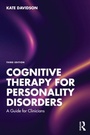
Book
approx. 08/2026
3rd Edition
Routledge
€43.50
Not yet published
Additional editions
E-Book
09/2007
2nd Edition
Routledge
€59.49
Available for download
E-Book
09/2007
2nd Edition
Routledge
€59.49
Available for download
Book
09/2007
2nd Edition
Routledge
€178.27
Shipment within 15-20 days
Person
Content
Introduction. What is Personality Disorder? The Cognitive Model of Personality Disorder. Key Characteristics of Cognitive Therapy for Personality Disorders. Basic Structure and Style of Cognitive Therapy for Personality Disorders. Arriving at a Formulation. Identifying Core Beliefs. Changing Core Beliefs. Typical Behavioural Problems: Antisocial Personality Disorder. Typical Behavioural Problems: Borderline Personality Disorder. Clinical Evaluation of Change. Ending Treatment. Therapy in Action: A Case Illustration of Antisocial Personality Disorder. Therapy in Action: A Case Illustration of Borderline Personality Disorder.