

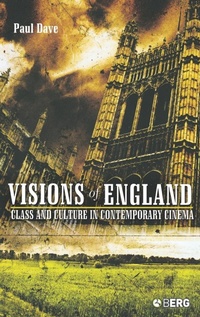
Visions of England
Class and Culture in Contemporary Cinema
Published on 1. March 2006
Book
Hardback
224 pages
978-1-84520-292-7 (ISBN)
Description
Visions of England is a provocative and original exploration of Englishness, in particular English class, in contemporary cinema. Class has been a central part, whether consciously or not, of much of English social analysis and artistic production for over a century. But as a way of interpreting society, class has found itself sidelined in a postmodern world. Visions of England presents a detailed analysis of the changing landscape of English class and culture. Visions of England explores a wide range of film production - from gangster thrillers like Lock, Stock Two Smoking Barrels to the period cinema of Elizabeth, from cult classics like Performance and Trainspotting to the mainstream romantic comedy of Notting Hill and Bridget Jones, from the social realist drama of Billy Elliot and The Full Monty to the multicultural comedy of Bend it like Beckham, and the experimentalism of films such as London Orbital and Robinson in Space. An extraordinarily wide-ranging and incisive study, Visions of England rewrites the relationship of film and Englishness.
Reviews / Votes
A genuinely groundbreaking book. Its subtle and perceptive account of class in a number of British films breathes new life into a key topic in British Cinema Studies. Steve Neale, author of Genre and Hollywood Visions of England moves delicately but incisively through significant contemporary political and cultural concerns that have engaged critics of media, culture, and politics in the last decades. At the center of the book is an examination of how social class is coded in films. The breadth of readings as well as the discussion of a wide range of popular and experimental films is astounding. A fascinating book and one of the best studies of national identity and cinema available. Marcia Landy, author of British Genres and Fascism in Film Visions of England reinvigorates class analysis in film studies, mirroring Kracauer and Benjamin in its sensitivity to film aesthetics and film scenarios. Delving into mainstream and obscure films alike, it offers something entirely different to celebrity-driven film gabble, dully-empirical accounts of audiences or high-theory shenanigans with little reference to the filmic-ness of film. Esther Leslie, author of Hollywood Flatlands: Animation, Critical Theory and the Avant Garde Visions of England reinvents the study of British cinema with talent, intelligence, clearness and style through a sociological point of view that makes his work not only useful to cinephiles and searchers, but also for everyone who wishes to learn more about a revealing aspect of what constitutes the contemporary History of United Kingdom. Thierry Attard, Objectif Cinema Visions of England' is a very welcome addition to British Cinema Studies.' Cineaste 'The book covers and impressive range of films with in-depth analysis that fuels a thirst for a fuller reading of the films selected. David Archibald, CINEASTE Visions of England is a provocative and original exploration of Englishness, in particular English class, in contemporary cinema. Bolletino del CIRTMore details
Series
Language
English
Place of publication
London
United Kingdom
Publishing group
Bloomsbury Publishing PLC
Target group
College/higher education
Illustrations
30 bw illus
Dimensions
Height: 240 mm
Width: 161 mm
Thickness: 17 mm
Weight
505 gr
ISBN-13
978-1-84520-292-7 (9781845202927)
Copyright in bibliographic data and cover images is held by Nielsen Book Services Limited or by the publishers or by their respective licensors: all rights reserved.
Schweitzer Classification
Person
Paul Dave is Senior Lecturer in Film at the University of East London.
Content
1. Preface 2. Introduction: British Cinema and Class: Pastoral Visions 3. The Upper Classes: The Heritage Film 4. The Middle Classes: Fairy Tales and Idylls 5. The Working Class: Elegies 6. The Underclass: Fantasy and Realism 7. The Lumpenproletariat; Countercultural Performances 8. The Problem of England: Aesthetics of the Everyday 9. Peculiar Capitalism: Occult Heritage 10. Epilogue.