


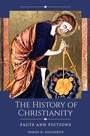
The History of Christianity
Facts and Fictions
Published on 8. July 2019
Book
Hardback
256 pages
978-1-4408-6337-0 (ISBN)
Description
Christianity has been accused of being misogynistic, pro-slavery, and anti-science, and some say it is finally beginning its long decline. This book provides an entirely different side to the stories about this faith.
Why did Christianity become the largest religion in the world? Is it because it was misogynistic, pro-slavery, anti-science, and set on condemning those who didn't join it? This book investigates many of the misconceptions about Christianity and argues that there are good reasons this faith has become the world's largest.
The book includes chapters on various misconceptions related to the history of Christianity, such as the beliefs that Jesus was a meek and mild carpenter, the Roman emperor Constantine was insincere in his Christian faith, medieval Europe was devoutly Christian, and Christianity was anti-science. Each chapter explores how the historical misconception developed and spread, and offers what we now believe to be the historical truth contradicting the fiction. Excerpts from primary source documents provide evidence for the historical misconceptions and truths and help readers to respond critically to claims about Christian history.
Why did Christianity become the largest religion in the world? Is it because it was misogynistic, pro-slavery, anti-science, and set on condemning those who didn't join it? This book investigates many of the misconceptions about Christianity and argues that there are good reasons this faith has become the world's largest.
The book includes chapters on various misconceptions related to the history of Christianity, such as the beliefs that Jesus was a meek and mild carpenter, the Roman emperor Constantine was insincere in his Christian faith, medieval Europe was devoutly Christian, and Christianity was anti-science. Each chapter explores how the historical misconception developed and spread, and offers what we now believe to be the historical truth contradicting the fiction. Excerpts from primary source documents provide evidence for the historical misconceptions and truths and help readers to respond critically to claims about Christian history.
More details
Series
Language
English
Place of publication
United States
Publishing group
Bloomsbury Publishing Plc
Target group
College/higher education
Primary & secondary/elementary & high school
Dimensions
Height: 240 mm
Width: 161 mm
Thickness: 18 mm
Weight
552 gr
ISBN-13
978-1-4408-6337-0 (9781440863370)
Copyright in bibliographic data and cover images is held by Nielsen Book Services Limited or by the publishers or by their respective licensors: all rights reserved.
Schweitzer Classification
Other editions
Additional editions
E-Book
07/2019
1st Edition
ABC-CLIO
€108.99
Available for download
Person
Dyron B. Daughrity is professor of religion at Pepperdine University in Malibu, California. He is author of many books and articles dealing with the history of Christianity.
Content
Preface
Acknowledgments
Introduction: Did Jesus Christ Even Exist?
1. Jesus Was a Meek and Mild Carpenter
2. Early Christians Were Poor and Marginalized People
3. Early Christianity Was Bigoted toward Women
4. Constantine Was Insincere in His Christian Faith
5. Medieval Europe Was a Profoundly Christian Society
6. The Crusades Were a Series of Brutal, Unprovoked Attacks
7. Christianity Is Anti-Science
8. The United States Is Abandoning Christianity
9. Christianity Is Currently in Decline
Bibliography
Index
Acknowledgments
Introduction: Did Jesus Christ Even Exist?
1. Jesus Was a Meek and Mild Carpenter
2. Early Christians Were Poor and Marginalized People
3. Early Christianity Was Bigoted toward Women
4. Constantine Was Insincere in His Christian Faith
5. Medieval Europe Was a Profoundly Christian Society
6. The Crusades Were a Series of Brutal, Unprovoked Attacks
7. Christianity Is Anti-Science
8. The United States Is Abandoning Christianity
9. Christianity Is Currently in Decline
Bibliography
Index