

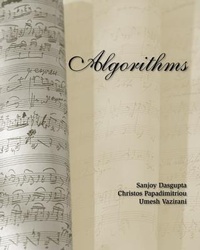
Algorithms
Published on 16. October 2006
Book
Paperback/Softback
336 pages
978-0-07-352340-8 (ISBN)
Description
This text, extensively class-tested over a decade at UC Berkeley and UC San Diego, explains the fundamentals of algorithms in a story line that makes the material enjoyable and easy to digest. Emphasis is placed on understanding the crisp mathematical idea behind each algorithm, in a manner that is intuitive and rigorous without being unduly formal.Features include:The use of boxes to strengthen the narrative: pieces that provide historical context, descriptions of how the algorithms are used in practice, and excursions for the mathematically sophisticated.Carefully chosen advanced topics that can be skipped in a standard one-semester course, but can be covered in an advanced algorithms course or in a more leisurely two-semester sequence.An accessible treatment of linear programming introduces students to one of the greatest achievements in algorithms. An optional chapter on the quantum algorithm for factoring provides a unique peephole into this exciting topic. In addition to the text, DasGupta also offers a Solutions Manual, which is available on the Online Learning Center."Algorithms is an outstanding undergraduate text, equally informed by the historical roots and contemporary applications of its subject. Like a captivating novel, it is a joy to read." Tim Roughgarden Stanford University
More details
Language
English
Place of publication
London
United States
Publishing group
McGraw-Hill Education - Europe
Target group
College/higher education
Product notice
Paperback (trade)
Unsewn / adhesive bound
Illustrations
189 Illustrations
Dimensions
Height: 233 mm
Width: 187 mm
Thickness: 13 mm
Weight
503 gr
ISBN-13
978-0-07-352340-8 (9780073523408)
Schweitzer Classification
Content
0 Prologue1 Algorithms with Numbers2 Divide-and-Conquer Algorithms3 Decompositions of Graphs4 Paths in Graphs5 Greedy algorithms6 Dynamic Programming7 Linear Programming and Reductions8 NP-complete Problems9 Coping with NP-completeness10 Quantum Algorithms